





For many individuals over the age of 60, the first few minutes of the morning are often characterized by a familiar, unwelcome sensation: stiffness. Whether it is the struggle to rise from a deep chair, the tentative nature of the first few steps toward the kitchen, or a general sense of joint rigidity, these moments are often dismissed as an inevitable consequence of aging. However, sports science and geriatric physical therapy suggest that this stiffness is not merely a byproduct of time, but a clear indicator that the hips—the body’s central engine for movement—are losing their functional strength and stability.
The Foundation of Movement: Why Hip Strength Matters
Hip strength is the silent arbiter of your daily quality of life. Long before you consider a formal workout, your hips are already hard at work facilitating your ability to stand, navigate stairs, maintain balance on uneven surfaces, and manage the shift of your center of gravity. When these muscles—specifically the glutes, hamstrings, and hip stabilizers—weaken, the body begins to compensate, leading to a gait that feels cautious, labored, or less powerful.
Unlike isolated training on gym machines, which often targets a single muscle group while the body remains stabilized by a seat or pad, "functional" morning hip work engages the entire kinetic chain. By training the glutes, hamstrings, outer hips, and core simultaneously, you are teaching your body to perform the way it does in the real world: stabilizing, generating force, and maintaining alignment during the dynamic tasks of daily living.
Chronology of Decline and the Case for Morning Intervention
The decline in hip function often follows a predictable, albeit slow, trajectory. As individuals reach their 60s, a sedentary lifestyle—exacerbated by extended periods of sitting—leads to "gluteal amnesia" and shortened hip flexors.
- The Sedentary Cycle: Years of prolonged sitting lead to weakened gluteal muscles and tightness in the front of the hip.
- The Loss of Pattern Recognition: Without regular engagement, the brain loses the neural pathway efficiency required to fire the glutes properly during movement.
- The Morning Stiffness: After hours of inactivity during sleep, the lack of blood flow and the accumulation of joint fluid stiffness make the first movements of the day feel restrictive.
By introducing a dedicated, five-minute routine first thing in the morning, you disrupt this cycle. This is not about building bodybuilder-level mass; it is about "waking up" the neuromuscular pathways that stabilize the pelvis, ensuring that by the time you reach the coffee pot, your joints are lubricated and your muscles are primed for action.
Supporting Data: The Science of Stabilization
Recent research published in journals such as the PMC (PubMed Central) indicates that targeted resistance training for the hips is one of the most effective interventions for fall prevention and mobility maintenance in older adults.
Studies show that resistance training for the hip stabilizers does more than just increase strength; it improves proprioception—the body’s ability to sense its position in space. When the hip stabilizers are weak, the pelvis tilts, putting unnecessary stress on the lower back and knees. By engaging in exercises that force the hips to resist inward collapse, individuals can significantly reduce the risk of common injuries and maintain their independence well into their 70s and 80s.
The Five-Move Morning Reset
To rebuild hip strength without the fatigue of a full-scale gym session, implement the following five movements. These exercises are designed to be low-impact, highly effective, and easily performed in your own home.
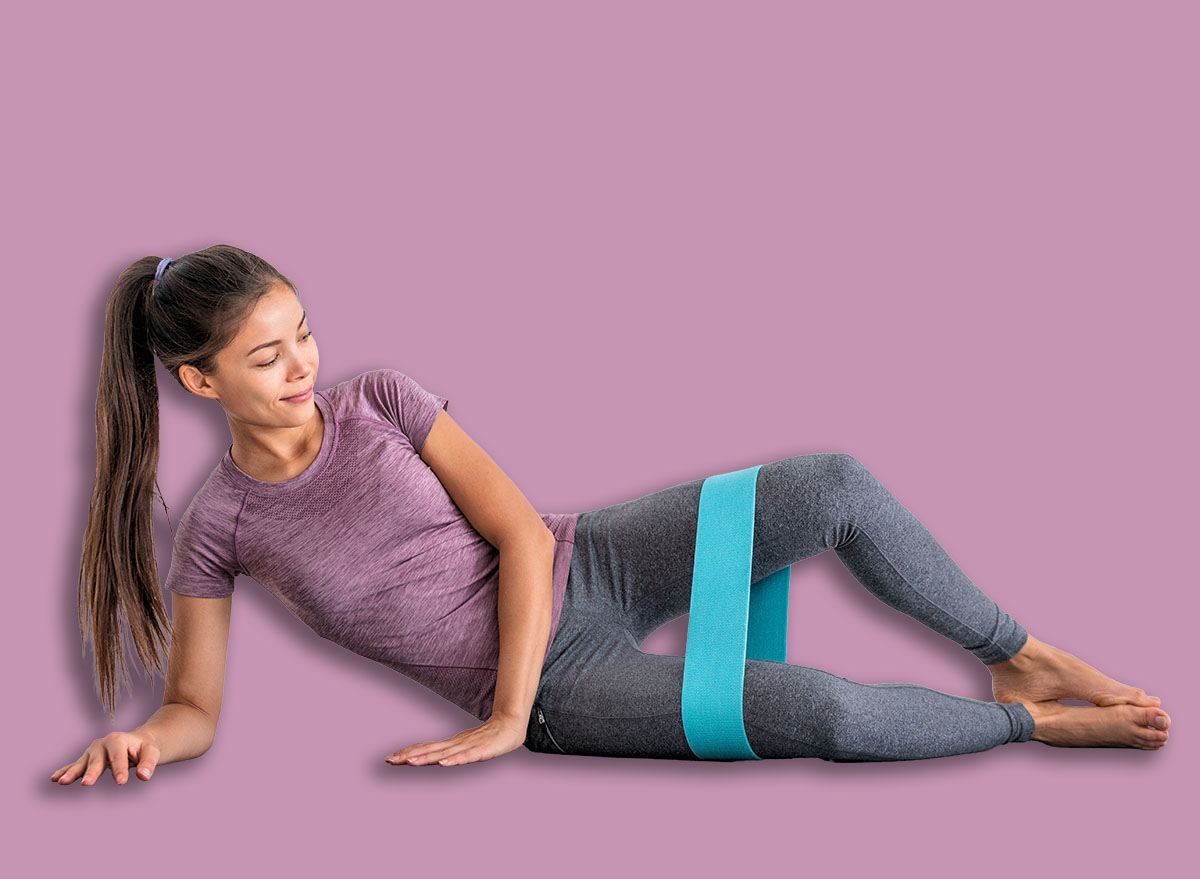
1. Mini-Band Lateral Walks
Lateral walks are the gold standard for targeting the gluteus medius, the muscle responsible for pelvic stability.
- The Science: The band creates external tension, forcing your outer hips to resist the band’s pull, which in turn trains the knees to track correctly over the toes.
- Execution: Place a mini-band just above your knees. Adopt a quarter-squat position. Step laterally, maintaining tension on the band.
- Frequency: 2–3 sets of 10–15 steps per direction.
2. Banded Good Mornings
This movement teaches the "hip hinge," a fundamental pattern often lost in older age.
- The Science: It strengthens the posterior chain—the hamstrings and lower back—which are crucial for standing up from a seated position.
- Execution: Stand with a band under your feet and looped over your shoulders. Keep your back flat and push your hips backward as if reaching for a wall behind you.
- Frequency: 3 sets of 10–15 reps.
3. Glute Bridge Hold
The glute bridge is the most effective way to isolate the glutes without straining the lower back.
- The Science: Holding the bridge at the top forces the muscles to maintain peak contraction, which is essential for building the endurance needed for standing tall.
- Execution: Lie on your back, knees bent. Drive through your heels to lift your pelvis, keeping your ribs tucked and glutes squeezed. Hold for 20–30 seconds.
- Frequency: 3 sets of 20–30 second holds.
4. Side-Lying Clam Shells
This is a precise, low-intensity movement that targets deep hip stabilizers that are often neglected in standard workouts.
- The Science: By keeping the pelvis still, you isolate the muscles that control rotation at the hip, essential for walking on uneven ground.
- Execution: Lie on your side, knees bent at 90 degrees. Keep your feet touching as you open your top knee like a clam shell.
- Frequency: 3 sets of 12–15 reps per side.
5. Bodyweight Squats
The squat is the ultimate "functional" movement, mimicking the act of sitting into and rising from a chair.
- The Science: It integrates the quadriceps, glutes, and core, ensuring that the hips and knees work in harmony.
- Execution: Feet shoulder-width apart, sit back into your hips while keeping your chest upright. Stand with control.
- Frequency: 3 sets of 10–15 reps.
Official Perspectives on Mobility
Physical therapists and geriatric fitness experts agree: the "use it or lose it" mantra is not a cliché; it is a physiological reality. According to recent expert consensus, the goal for those over 60 should not be "maximum load," but "maximum control." When you perform these exercises with deliberate, slow movements, you are signaling to your central nervous system that these muscles are vital for survival, preventing the atrophy that otherwise accelerates with age.
Implications for Long-Term Health
The implications of maintaining hip strength are profound. Beyond the immediate benefit of a smoother morning, consistent hip training has been linked to:
- Reduced Chronic Back Pain: By strengthening the hips, the load on the lumbar spine is significantly reduced.
- Improved Balance and Fall Prevention: A stable pelvis is the primary defense against losing one’s balance.
- Increased Independence: The ability to perform activities of daily living (ADLs) without assistance is the single greatest predictor of longevity and life satisfaction in the elderly population.
Conclusion: Making the Habit Stick
To make these exercises work, consistency is more important than intensity. Treat these five moves as a "morning hygiene" routine, similar to brushing your teeth. By dedicating just a few minutes each morning to this hip-focused regimen, you are not just alleviating stiffness—you are investing in the strength, stability, and confidence required to navigate the world with ease. Start with a light band, focus on your form, and watch how quickly your perception of "morning stiffness" fades into a memory of the past.