









For decades, the public health mantra for aging gracefully has been centered almost exclusively on aerobic fitness. We have been told to walk, swim, and cycle to keep our hearts healthy and our longevity prospects high. However, a landmark study led by researchers at the University at Buffalo (UB) suggests that we may have been missing a critical piece of the puzzle: muscular strength.
According to findings published in JAMA Network Open, muscle strength is not merely a byproduct of physical activity; it is a fundamental, independent indicator of life expectancy in women over the age of 60. The study, which analyzed data from over 5,000 women, indicates that strength—measured through simple tasks like grip tests and rising from a chair—serves as a primary predictor of mortality risk, regardless of how much traditional aerobic exercise a person performs.
The Core Findings: Strength as a Predictor of Survival
The research represents one of the most comprehensive investigations to date into the relationship between musculoskeletal function and long-term survival in older women. By tracking 5,000 participants aged 63 to 99 over an eight-year period, the research team sought to decouple the effects of "fitness" from "strength."
The study utilized two clinical benchmarks for strength: grip strength and the sit-to-stand chair test. Grip strength is a common proxy for overall muscular integrity, while the chair test measures functional lower-body power—a necessity for independent living.
The statistical correlation between these metrics and mortality was stark:
- Grip Strength: For every 7-kilogram increase in grip strength, participants experienced a 12% reduction in the risk of death.
- Chair Stand Performance: Faster completion of five unassisted sit-to-stand movements was linked to improved survival, with a 4% decrease in mortality for every 6-second improvement in speed.
Crucially, these findings held firm even when researchers controlled for variables that typically confound such studies: cardiovascular fitness (measured by gait speed), sedentary behavior (tracked via accelerometers), and chronic inflammation (measured by C-reactive protein levels).
A Chronology of the Research Process
The journey to these findings involved a multi-institutional effort, drawing on data from across the United States.
Phase 1: Data Collection and Standardization
The researchers gathered longitudinal data from women enrolled in large-scale health cohorts. The challenge was ensuring that the data accounted for "body size" bias. Historically, skeptics argued that larger individuals might appear stronger simply due to mass. However, the team scaled strength measures against both total body weight and lean body mass, finding that the protective benefits of strength remained statistically significant regardless of the participant’s physical stature.
Phase 2: Accounting for the "Inflammation Factor"
One of the most innovative aspects of the study was the inclusion of C-reactive protein (CRP) data. Inflammation is a known catalyst for muscle wasting (sarcopenia) and premature death. By adjusting for this biological marker, the team proved that strength is a distinct protective mechanism, not just a symptom of a body free from systemic inflammation.
Phase 3: The Eight-Year Follow-up
By tracking participants over nearly a decade, the researchers could observe the actual mortality outcomes rather than relying on short-term markers. The consistency of the data across this duration reinforced the conclusion that muscular strength is a long-term "life insurance policy" for the aging body.
Supporting Data: Why "Aerobic Only" is Insufficient
One of the most provocative revelations of the study is that strength training provides a survival advantage even for those who do not meet the gold-standard physical activity guidelines. Current public health recommendations—such as those from the American Heart Association—advise 150 minutes of moderate-intensity aerobic activity per week.
The UB study found that even among women who fell below this aerobic threshold, those with higher grip strength and chair-stand capability maintained significantly lower mortality rates than their weaker counterparts. This suggests that for many older adults, the physiological benefits of resistance training can mitigate the risks associated with a lower volume of aerobic activity.
The Mechanism: Fighting Gravity
"Muscular strength, in many ways, enables one to move their body from one point to another, particularly when moving against gravity," explains Michael LaMonte, PhD, the study’s lead author and a research professor of epidemiology and environmental health at UB’s School of Public Health and Health Professions.
LaMonte emphasizes that strength acts as the "enabler" for all other forms of activity. "If you don’t have enough muscle strength to get up, it is going to be hard to do aerobic activities, such as walking, which is the most commonly reported recreational activity in U.S. adults ages 65 and older."
When the ability to stand, balance, and move against gravity is compromised, the body enters a cycle of decline. The inability to rise from a chair is often a "canary in the coal mine" for the onset of frailty, which is why the chair-stand test is such a powerful diagnostic tool.
Official Responses and Clinical Implications
The medical community has reacted with significant interest to these findings, as they suggest a shift in how physicians should monitor geriatric health.
The "Strength-First" Approach
Dr. LaMonte and his colleagues argue that public health messaging needs a radical update. While walking clubs and cardiovascular programs remain vital, clinicians should be actively screening for muscle strength during routine wellness visits.
"Because women ages 80 and older are the fastest-growing U.S. age group, the importance of monitoring and maintaining muscular strength will have huge public health implications in the coming decades," LaMonte notes.
Implications for Public Policy
The study suggests that muscle-strengthening should be elevated to an equal tier with aerobic activity in national health guidelines. For decades, the focus has been on "getting the heart rate up." Now, the focus must shift to "maintaining the structural integrity of the frame." By implementing simple, accessible strength testing in primary care, providers could identify high-risk patients long before they suffer a fall or a mobility-related health crisis.
Practical Steps: Building Strength Without the Gym
One of the most common barriers to strength training among older adults is the perception that it requires heavy barbells, expensive gym memberships, or an athletic background. The researchers are keen to dispel this myth.
Accessible Strength Training
The study underscores that the stimulus required to maintain or build muscle can be achieved through a variety of accessible, low-cost means:
- Bodyweight Exercises: Modified push-ups (against a wall or counter), knee bends, and lunges use gravity to create resistance.
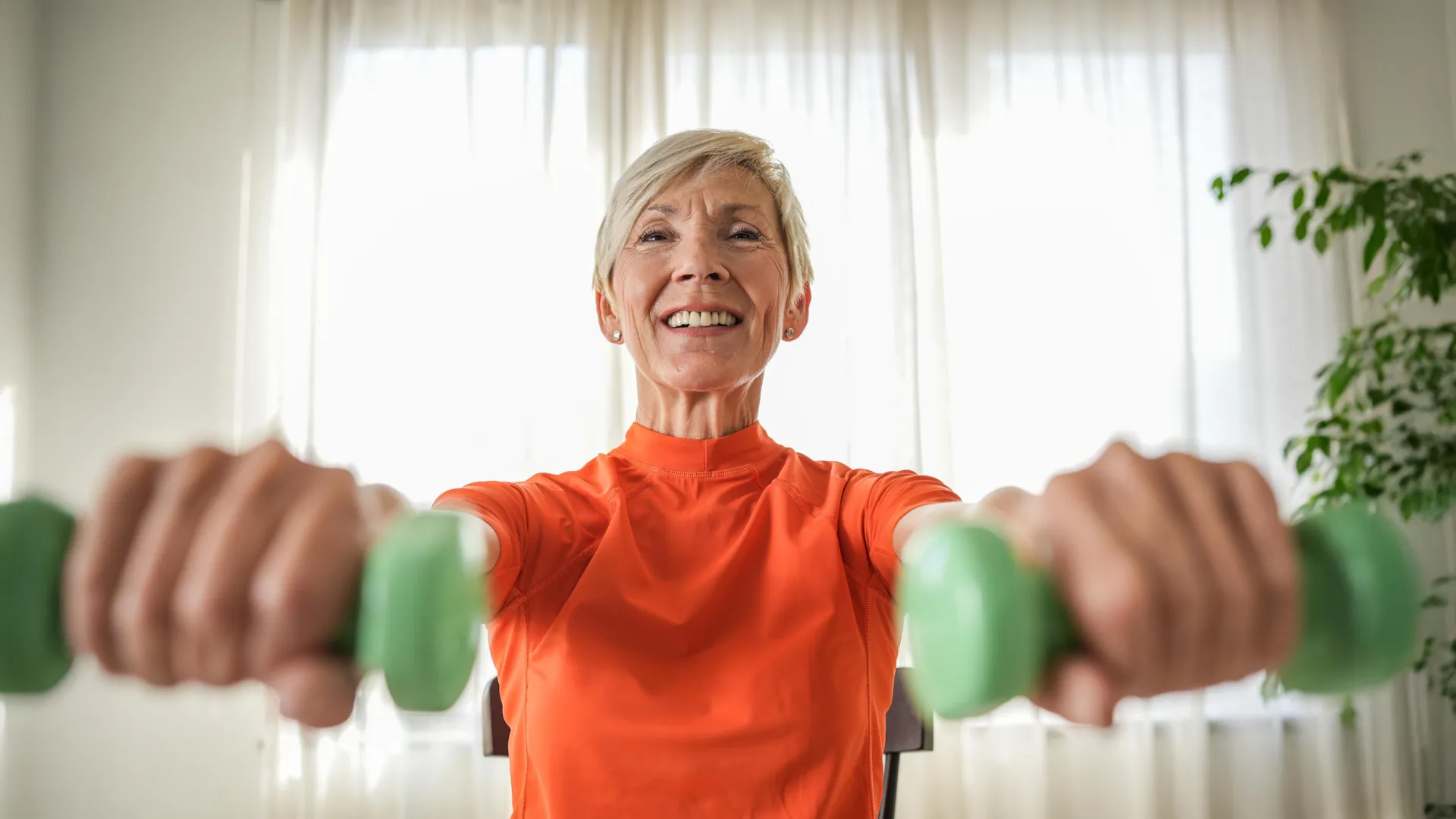
- Household Resistance: Items such as soup cans, water bottles, or books can serve as effective, free hand weights for bicep curls or shoulder raises.
- Consistency over Intensity: For older adults, the goal is not to train for a powerlifting competition but to provide enough resistance to stimulate muscle maintenance.
A Note of Caution
While the benefits are clear, the researchers emphasize safety. Before beginning any new resistance regimen, older adults—particularly those with pre-existing conditions—should consult with their primary care physician. Working with a physical therapist or a certified exercise specialist is highly recommended for those who are new to strength training. A professional can ensure that movements are performed with proper form, reducing the risk of injury and ensuring that the exercises target the correct muscle groups for functional independence.
Conclusion: Redefining Healthy Aging
The University at Buffalo study serves as a wake-up call. Healthy aging is not a passive process of avoiding illness; it is an active, structural pursuit. By viewing muscular strength as a vital sign—no different than blood pressure or heart rate—we can empower older women to maintain their independence and longevity.
As the population ages, the focus must shift from merely "living longer" to "living stronger." Whether through a structured weight-training program or the simple, consistent act of performing chair stands in the living room, building muscle is perhaps the most effective way to ensure that the later years of life are characterized by mobility, dignity, and vitality. The data is clear: when we can no longer get out of the chair, we are in trouble. But as long as we can stand, we have the power to change our trajectory.
This study was a collaborative effort involving researchers from the University at Buffalo, the National Cancer Institute, the University of California San Diego, Texas A&M University, Brown University, Stanford University, and the Fred Hutch Cancer Center.