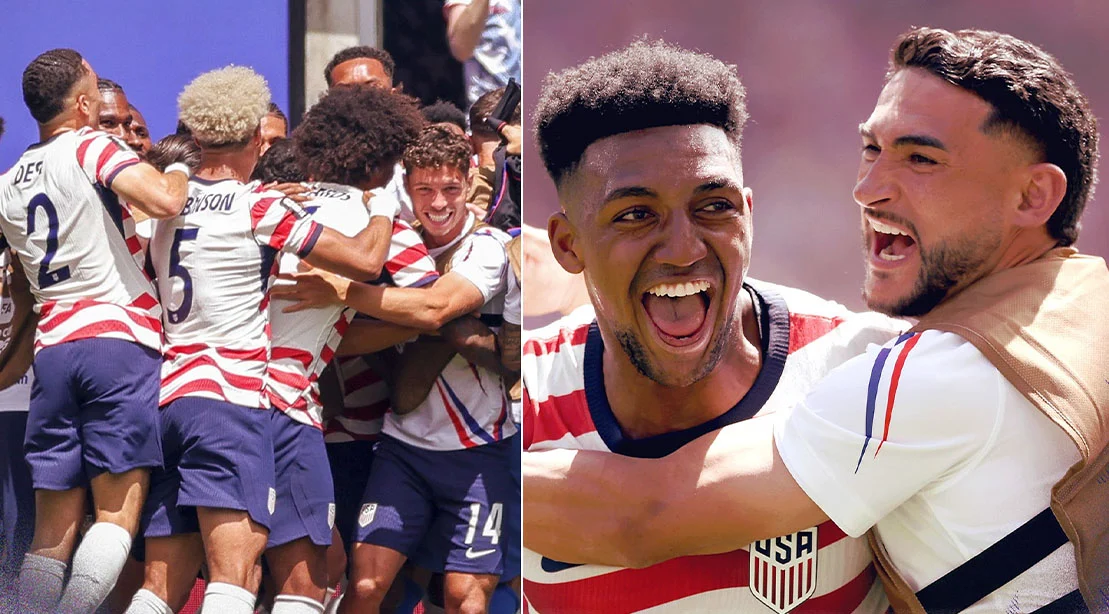
The landscape of American soccer has shifted irrevocably. On June 19, 2026, beneath the electric atmosphere of Seattle Stadium, the United States Men’s National Team (USMNT) did more than just win a match; they dismantled a statistical ghost that had haunted the program since the dawn of the FIFA World Cup. By securing a clinical 2-0 victory over Australia, the U.S. squad achieved back-to-back wins in the tournament for the first time since 1930, cementing their status as a legitimate force in the modern era of the sport.
Main Facts: A Statistical Milestone
The victory against the Socceroos followed a dominant 4-1 opening performance against Paraguay, marking the first time in 96 years that the United States has strung together consecutive victories on the world’s grandest stage. To put the feat into perspective, the last time the Stars and Stripes tasted consecutive success, the world was in the throes of the Great Depression, and the inaugural World Cup was being contested in Uruguay.
This current campaign has seen the USMNT rise to the pinnacle of Group D. With this result, the host nation has mathematically secured its passage into the knockout stages. This early qualification provides the team with a rare luxury: the ability to manage squad fatigue and tactical exposure before the high-stakes pressure of the Round of 16.
The Chronology of a Breakthrough
The journey to this historic moment began with the statement win against Paraguay. That match served as a declaration of intent, with the U.S. offense firing on all cylinders to overcome a stubborn South American side.
However, the match against Australia on June 19 presented a different challenge. The Aussies, known for their physical intensity and tactical discipline, looked to stifle the American momentum early on. The breakthrough arrived in the 11th minute, not through a surgical strike, but through the pressure applied by the American front line. Australian defender Cameron Burgess, caught in a frantic scramble to clear his lines, inadvertently directed the ball into his own net.
Rather than sitting on a slim lead, the U.S. continued to press. The insurance goal came in the second half when Villarreal standout Alex Freeman rose above the Australian defense to bury a header. The stadium erupted, as fans realized they were witnessing a piece of history that had eluded every generation of American players for nearly a century.
Supporting Data: By the Numbers
The 2026 campaign has been defined by efficiency. While the 1930 team saw their momentum cut short by a 6-1 drubbing at the hands of Argentina, the current squad displays a level of tactical cohesion that suggests a higher ceiling.
- Group D Standing: The USMNT currently sits at the top of the table with 6 points from two matches.
- Goal Differential: The team has recorded a +5 differential, having scored six goals and conceded only one.
- Historical Context: In 1930, the U.S. defeated Belgium (3-0) and Paraguay (3-0) before their exit. This current iteration of the team has demonstrated similar clinical finishing, albeit against a more diverse global field.
- Squad Depth: The ability to rotate players effectively, as recommended by analysts, will be key to maintaining this form throughout the rigorous knockout schedule.
Official Responses and Player Perspectives
The mood within the U.S. camp is one of focused jubilation. For many of these players, competing on home soil adds a layer of emotional weight that is difficult to articulate.
"What dreams are made of," said Alex Freeman, who has quickly become the face of the team’s attacking prowess. "To do this all on home soil means so much more! Unreal performance from the boys. We aren’t just here to participate; we’re here to rewrite the history books."
Coaching staff and pundits alike have noted that the composure shown by the team during the closing minutes of the Australia match was the most impressive aspect of the evening. The team did not panic; they maintained their shape, managed the clock, and neutralized the Australian counter-attack.
The Road Ahead: Implications of the Turkey Match
As the team prepares for their final group stage match against Turkey in Los Angeles on June 26, the conversation has shifted toward long-term strategy. Because the U.S. has already clinched advancement, the coaching staff faces a classic "rest vs. rhythm" dilemma.
The Case for Rotation
Critics and tactical analysts are urging the manager to rest key starters. The tournament schedule is unforgiving, and the physical toll of high-intensity group matches can lead to injuries or burnout during the knockout stages. By giving minutes to depth players against Turkey, the coaching staff could ensure that their primary stars are at peak physical condition for the sudden-death rounds.
The Risk of Complacency
Conversely, there is the argument that winning is a habit. To lose or draw against Turkey could dampen the momentum and psychological edge the team has spent the last week cultivating. Keeping the starters in—even for a shortened duration—might be necessary to maintain the "winning feeling" that has propelled them thus far.
The Cultural Impact: A New Era for U.S. Soccer
The significance of this performance extends far beyond the pitch. In the United States, soccer has often struggled to carve out space in a crowded market dominated by the NFL, NBA, and MLB. However, the 2026 World Cup, hosted on American soil, has provided the perfect catalyst for a cultural shift.
Young players across the country are watching these games, seeing that the "impossible" record of 1930 is not a permanent barrier, but a milestone that can be surpassed. The level of engagement on social media platforms, including the official USMNT Instagram account, has reached record highs, signaling that the sport is finally capturing the American imagination in a way that is both sustainable and profound.
Looking Toward the Knockout Stages
As the tournament moves toward the knockout phase, the U.S. team is no longer a dark horse; they are a team to be feared. The lessons of 1930 remain a cautionary tale—the U.S. must avoid the defensive lapses that once allowed Argentina to dismantle their hopes.
The preparation for the Turkey match in Los Angeles will be meticulous. Training sessions will focus on tactical discipline, recovery protocols, and set-piece efficiency. Whether the team chooses to rotate the squad or play for the win, the objective remains clear: to continue the historic trajectory that started in Seattle.
For the fans, the upcoming match in Los Angeles is more than just a game; it is a celebration of a team that has finally stepped out from the shadow of the past. Regardless of the outcome against Turkey, the 2026 USMNT has already secured its place in the annals of sporting history. They have proven that with the right blend of talent, tactical acumen, and the support of a home crowd, the barriers of the past can be dismantled.
The eyes of the world are now fixed on the United States. As the team travels to the West Coast, they carry the hopes of a nation that is finally, truly, falling in love with the beautiful game. The 96-year wait is over; the era of American contention has officially begun.
For ongoing coverage of the 2026 World Cup, including exclusive player interviews and tactical breakdowns, stay tuned to our sports desk. To join the conversation and follow the journey of the USMNT, visit their official Instagram page.