




The landscape of non-small cell lung cancer (NSCLC) treatment is undergoing a potential paradigm shift. New data presented this Sunday at the American Society of Clinical Oncology (ASCO) meeting has brought the investigational drug ivonescimab into the global spotlight. In a closely watched clinical trial conducted in China, the dual-action immunotherapy, developed by Akeso and licensed to Summit Therapeutics, demonstrated a statistically significant extension of life for patients newly diagnosed with advanced NSCLC.
This development is more than a regional success; it is a critical bellwether for the entire class of "bispecific" PD-1/VEGF inhibitors. As the medical community looks for successors to the current gold-standard treatments, ivonescimab represents a bold attempt to combine two potent anti-cancer mechanisms into a single, cohesive therapy.
The Core Findings: Defining Clinical Benefit
The trial, which evaluated the efficacy of ivonescimab paired with chemotherapy against the current standard-of-care immunotherapy-chemo combination, provided the "gold standard" evidence that investors and clinicians have been waiting for.
Key metrics from the study reveal a 34% relative risk reduction in death among patients receiving the ivonescimab regimen. Specifically, the median overall survival for the treatment group reached 28 months, compared to 24 months in the control group. While the four-month absolute difference has ignited a nuanced debate among market analysts, the clinical community views the result as a robust, statistically significant victory in a notoriously difficult-to-treat patient population.
The study confirms that ivonescimab is not merely delaying disease progression—a milestone previously established—but is actively extending the lives of patients. By successfully hitting the 20% to 30% reduction in death risk benchmark set by Wall Street analysts, the drug has solidified its status as a leading contender in the next generation of lung cancer therapeutics.
Chronology of a High-Stakes Development
The path to the current ASCO presentation has been defined by rapid clinical acceleration and high-stakes data releases:
- Initial Proof of Concept: Early studies in China focused on the safety and preliminary efficacy of the bispecific molecule, proving that the PD-1/VEGF dual-targeting approach was not only feasible but manageable from a toxicity standpoint.
- The "HARMONi-6" Milestone: Last year, Akeso and Summit Therapeutics reported that the ivonescimab regimen reduced the risk of disease progression by 40% compared to chemo and Tevimbra (sintilimab). This was a major signal of the drug’s potency, yet it left open the burning question of whether this progression-free survival (PFS) would translate into overall survival (OS).
- The China Trial (The Proxy): The recent data presented at ASCO was derived from this China-based trial. It serves as a vital proxy for the larger, global HARMONi-3 study, which remains the primary catalyst for the drug’s potential entry into the lucrative U.S. and European markets.
- Regulatory Status: Ivonescimab has already secured regulatory approval in China. Meanwhile, the U.S. Food and Drug Administration (FDA) is currently reviewing the drug for specific EGFR-mutated lung cancer indications, with a decision anticipated in November of this year.
- The Horizon: The industry now turns its gaze toward the final analysis of the global HARMONi-3 trial, expected later this year, which will provide the definitive data required for potential global dominance.
Supporting Data: Understanding the "Double-Barreled" Mechanism
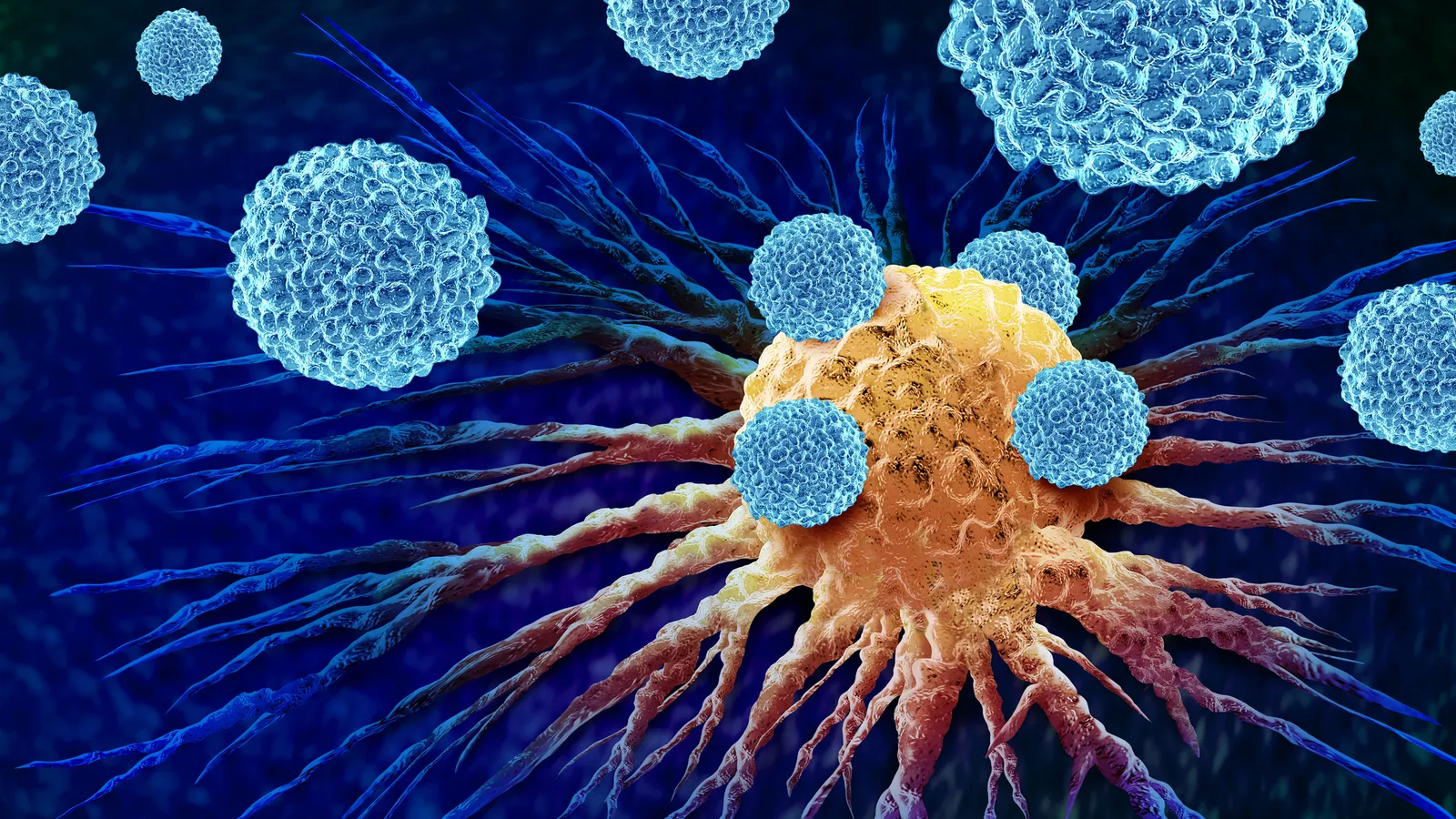
To understand why ivonescimab is causing such a stir, one must look at its biological design. Traditional immunotherapy, such as Merck’s Keytruda (pembrolizumab), typically targets the PD-1 protein, which essentially "takes the brakes off" the immune system, allowing T-cells to identify and attack cancer cells.
Ivonescimab, however, is a PD-1/VEGF bispecific antibody. By simultaneously blocking the PD-1 pathway and the VEGF pathway—which promotes the formation of new blood vessels that tumors rely on to grow—the drug acts as a "double-barreled" weapon. The VEGF inhibition effectively starves the tumor while the PD-1 inhibition primes the immune system for a more aggressive assault.
Safety and Toxicity Profiles
One of the most significant arguments in favor of ivonescimab is its manageable safety profile. While the study noted that ivonescimab recipients experienced slightly higher rates of low red and white blood cell counts compared to the control group, the difference was not considered prohibitive.
Compared to newer, more aggressive therapies like antibody-drug conjugates (ADCs)—which often come with high toxicity burdens that can lead to treatment discontinuation—ivonescimab’s toxicity levels remain relatively low. This is a crucial factor for oncologists, as it allows for longer-term patient adherence, which is vital for chronic cancer management.
Official Responses and Expert Perspective
The medical community has been cautiously optimistic regarding the ASCO findings. Dr. John Heymach, chair of thoracic and head and neck cancer care at the MD Anderson Cancer Center, emphasized the clinical significance of the results.
"The demonstration of both improved progression-free survival by a substantial margin, as well as a significant overall survival benefit, is a real step forward because it comes at the cost of very little additional toxicity," Heymach noted in an interview. He further highlighted that the drug’s profile could make it a preferred choice over more toxic regimens that are currently crowding the pipeline.
Dr. Lee Hong, a thoracic oncologist at City of Hope, addressed the debate regarding the four-month survival improvement. While some market analysts expressed disappointment that the gap was not wider, Dr. Hong provided a clinical perspective: "A few months may not seem like a lot of time for patients who already have very limited options, but it does add to what becomes a cumulative benefit over time. Extending survival with an initial medication just opens up many doors for these patients, even when thinking about subsequent lines of therapy."
Implications: The Multi-Billion Dollar Stakes
The success or failure of ivonescimab carries profound implications for the pharmaceutical sector and the future of oncology.
1. The Challenge to Keytruda
Keytruda has long been the primary treatment for many lung tumors, generating tens of billions in revenue. The global HARMONi-3 trial specifically pits ivonescimab against a Keytruda-chemo regimen. If ivonescimab proves superior in a global, diverse population, it could signal the beginning of the end for the current standard of care.
2. Market Expectations vs. Reality
The discrepancy between the 4-month survival benefit observed and the 6-month benefit predicted by firms like Cantor Fitzgerald highlights the volatile relationship between clinical science and financial speculation. Investors often look for "blockbuster" numbers to justify high valuations, but the oncology space is increasingly defined by incremental, yet meaningful, improvements.
3. The Geographic Nuance
Analysts at Leerink Partners have previously raised concerns that survival numbers in Chinese trials might be influenced by factors such as access to subsequent lines of care or regional standard-of-care variations. This is why the global HARMONi-3 study is so critical; it will include "non-squamous" lung cancer patients and provide a more standardized environment to judge the drug’s performance against Western benchmarks.
4. Setting the Standard for Bispecifics
If ivonescimab becomes a cornerstone of cancer care, it will validate the entire class of bispecific inhibitors. Many startups and established biotech firms are betting their futures on this dual-targeting technology. A clear success here would provide a roadmap for the development of future drugs that combine immunotherapy with anti-angiogenic or other targeted mechanisms.
Conclusion: A Path Forward
The data presented at ASCO confirms that ivonescimab is a potent, viable, and relatively safe treatment option for advanced non-small cell lung cancer. While it may not have provided the "home run" that some overly optimistic market forecasts demanded, it has delivered a significant, statistically sound benefit that will undeniably change the lives of many patients.
As the industry prepares for the final results of the HARMONi-3 trial later this year, the focus remains on whether this dual-action drug can truly displace the existing giants of the immunotherapy world. For patients, the arrival of such a treatment represents a critical extension of time—time that, in the world of oncology, is the most precious commodity of all. Whether or not it hits the aggressive targets of Wall Street, the clinical narrative suggests that ivonescimab has secured its place in the future of cancer medicine.