




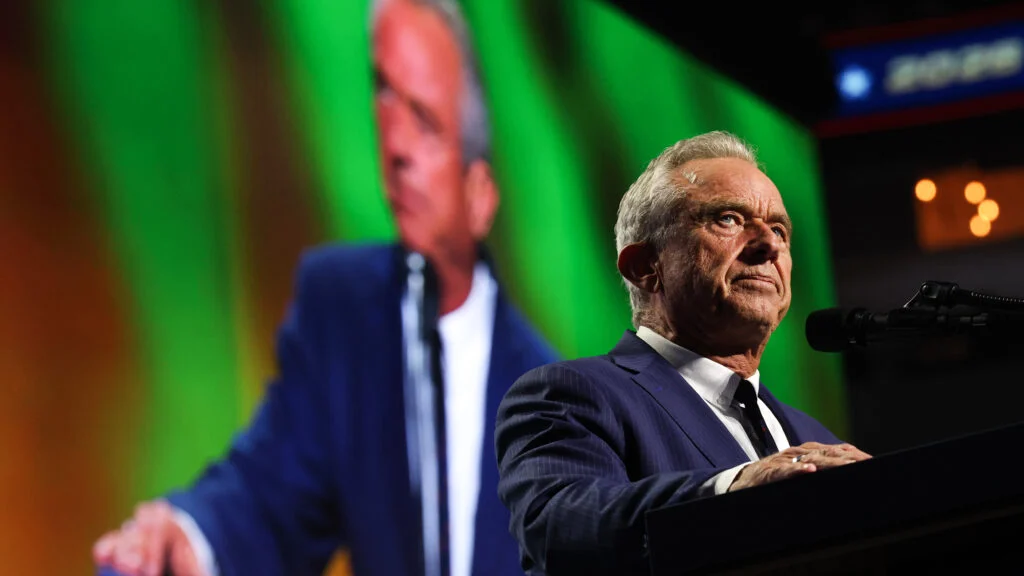
WASHINGTON — In a move that signals a profound shift in the tone of federal public health leadership, Health and Human Services (HHS) Secretary Robert F. Kennedy Jr. is slated to deliver the keynote address at a conference hosted by Children’s Health Defense (CHD) in the nation’s capital this week. The appearance marks the secretary’s first public embrace of the organization—which he founded and led for years—since assuming his role at the helm of the federal health apparatus.
The conference, scheduled to take place at the Grand Hyatt Washington, serves as a high-profile homecoming for Kennedy. For the organization, which has long operated on the periphery of mainstream scientific discourse, the event represents an unprecedented elevation of their platform. For critics, however, the appearance is a confirmation of fears that the boundary between evidence-based public health policy and vaccine skepticism has been irrevocably blurred.
A Legacy of Advocacy: The Origins of CHD
The relationship between Kennedy and Children’s Health Defense is foundational to his political identity. Kennedy joined the organization in 2015, transforming it from a niche advocacy group into a potent political machine. Under his leadership, which lasted until December 2024, CHD became a central engine for legal and cultural challenges to the American vaccine schedule.
Financial disclosures filed by Kennedy reveal that his tenure at CHD was not merely ideological but professional; he earned a six-figure salary while spearheading a litigation strategy that saw the group file dozens of lawsuits targeting state-level vaccine mandates and policies. During this period, the organization aggressively promoted skepticism regarding the safety and efficacy of childhood immunizations, consistently highlighting the debunked theory that vaccines are linked to autism—a claim that has been repeatedly refuted by the global scientific community.
When Kennedy launched his presidential bid, he took a formal leave of absence from the organization, and he severed all official ties shortly before President Trump’s inauguration. Yet, as this week’s keynote confirms, the philosophical alignment between the secretary and his former organization remains intact.
Chronology: From Candidate to Cabinet Secretary
The trajectory of Kennedy’s relationship with CHD is a study in political evolution.
- 2015–2024: Kennedy serves as the chairman and public face of Children’s Health Defense, overseeing a massive expansion in its donor base and litigation activity.
- 2024: Kennedy steps down from his leadership role to pursue the presidency, later joining the Trump administration’s transition team.
- January 2025: During his contentious confirmation hearings before the Senate, Kennedy is pressed repeatedly on his history with CHD. Facing skepticism from members of both parties, he attempts to distance himself from the group’s more radical messaging.
- January 2025 (Confirmation): Kennedy explicitly tells the Senate that he would not use his position to discourage Americans from getting vaccines, seeking to alleviate concerns about his fitness to oversee the Centers for Disease Control and Prevention (CDC) and the Food and Drug Administration (FDA).
- February–September 2025: Members of the CHD leadership, including attorney Mary Holland, are seen participating in high-level meetings within the administration. Reports emerge that individuals aligned with the organization have secured advisory roles within the Department of Health and Human Services.
- October 2025: Kennedy prepares to address the CHD conference, cementing the group’s influence in the current administration.
The Senate Confirmation: A Promise of Neutrality
The most significant tension currently facing the Secretary is the contrast between his current actions and his promises during his confirmation process. In January, the Senate hearings were dominated by questioning regarding his past activism.
In one of the most widely cited exchanges, Sen. Bernie Sanders (I-Vt.) confronted Kennedy with physical evidence of the organization’s messaging. Sanders held up images of "Unvaxxed, Unafraid" onesies sold by the Children’s Health Defense store, asking directly if Kennedy supported such merchandise.
"Are you supportive of these onesies?" Sanders asked repeatedly.
Kennedy, maintaining a calm demeanor, replied, "I am supportive of vaccines," and insisted that he had "no power" over the nonprofit’s marketing decisions. His testimony was instrumental in securing the necessary Republican votes for his confirmation, as he framed his past work as a push for "transparency" rather than an outright rejection of immunization. The upcoming keynote, however, is being viewed by many as an abandonment of that neutral stance, suggesting that his previous testimony may have been a tactical maneuver rather than a change of heart.
Shifting Paradigms: From Fringe to the White House
Perhaps the most striking development of the current administration is the rapid mainstreaming of ideas once relegated to the fringe. The "Make America Healthy Again" (MAHA) movement, which shares significant overlap with CHD’s ideological goals, has found a receptive audience in the White House.
President Trump has, on multiple occasions, echoed sentiments championed by Kennedy and CHD. By questioning the timing of the childhood vaccine schedule and casting doubt on established safety standards, the President has provided a level of legitimacy to these theories that was previously unimaginable in a presidential administration.
This ideological alignment has had tangible effects on the composition of the federal bureaucracy. With experts and activists from the CHD sphere now occupying positions of influence within the Department of Health and Human Services, the day-to-day operations of public health agencies are undergoing a fundamental transformation. Public health officials, many of whom have spent decades adhering to consensus-based science, have expressed alarm at what they describe as the systematic dismantling of evidence-based health policy.
The Implications for Public Health
The implications of this shift are profound, particularly regarding public trust and immunization rates. Epidemiologists warn that when the leader of the nation’s health department aligns himself with an organization that fundamentally distrusts the pharmaceutical and medical establishment, the ripple effects can be catastrophic for herd immunity.
If the rhetoric coming from the Secretary’s office continues to mirror the talking points of Children’s Health Defense, the medical community fears a resurgence of vaccine-preventable diseases. The "full-circle" moment Kennedy is experiencing this week is, for many in the medical establishment, a warning sign that the era of institutionalized, science-led public health policy is being replaced by an era of populist skepticism.
Furthermore, the integration of CHD figures into the HHS apparatus creates a potential conflict of interest that will likely be the subject of intense oversight in the coming months. Critics argue that the organization’s previous reliance on litigation to block government policy is now being replaced by a "top-down" approach, where the same individuals who once fought the HHS from the outside are now empowered to reshape it from the inside.
Looking Ahead: The Future of the HHS
As the conference begins at the Grand Hyatt, all eyes will be on the podium. Observers are looking for clues as to whether Kennedy will maintain the "pro-vaccine" veneer he adopted for his confirmation or if he will pivot back to the aggressive anti-establishment rhetoric that defined his career at Children’s Health Defense.
The administration’s embrace of these ideas suggests that the conflict between the scientific establishment and the MAHA movement is far from over. As the Secretary prepares to speak, the nation waits to see how the highest-ranking health official in the land will reconcile his duties to protect the public health with his long-standing commitment to a movement that has dedicated itself to questioning the very tools—vaccines—used to safeguard that health.
For the administration, this is a consolidation of their base; for the scientific community, it is a point of no return. As Kennedy takes the stage, he is not just returning to an old organization; he is signaling that the influence of that organization has now reached the highest echelons of American power.