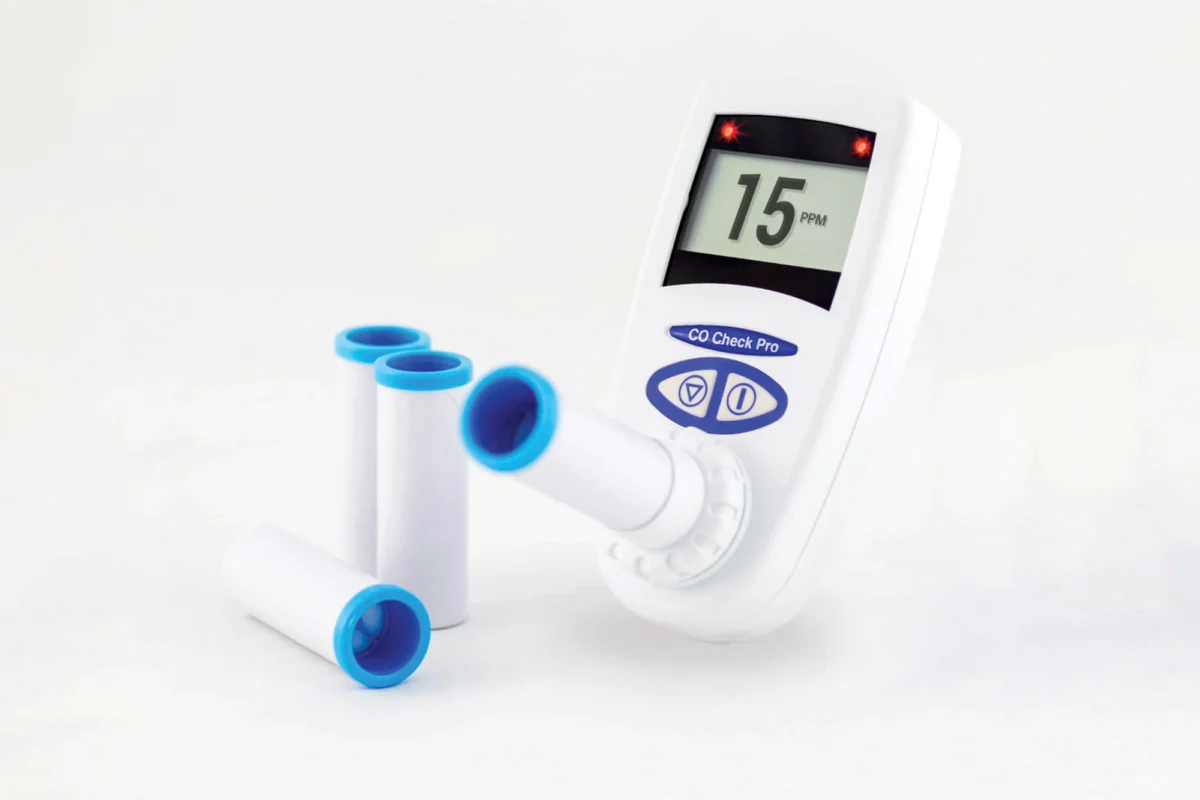
In the evolving landscape of respiratory care, the ability to rapidly assess patient health through noninvasive diagnostics is becoming a cornerstone of both preventative medicine and emergency intervention. Micro Direct, a leader in specialized respiratory instrumentation, has announced the rollout of its latest innovation: the CO Check Pro (model #CO20). This breath carbon monoxide (CO) monitor is engineered to bridge the gap between high-cost clinical equipment and the practical needs of smoking cessation programs and emergency response teams.
By providing instantaneous, reliable data on carbon monoxide levels, the CO Check Pro aims to empower clinicians to make informed, real-time decisions, whether they are counseling a patient on the long-term health benefits of quitting smoking or triaging a potential case of carbon monoxide poisoning.
Main Facts: The Technology Behind the CO Check Pro
The CO Check Pro represents a strategic shift in how healthcare facilities approach CO monitoring. Traditionally, high-precision diagnostic tools have carried a significant capital expenditure, often limiting their availability in smaller clinics or community-based smoking cessation programs. Micro Direct has positioned the CO Check Pro as an accessible alternative that does not compromise on clinical accuracy.
Core Functionality
The device operates on a straightforward, patient-friendly mechanism: a single, controlled exhaled breath. Upon expiration into the device, the CO Check Pro processes the sample and provides immediate feedback in two critical metrics:
- Parts Per Million (ppm): The standard unit for measuring gas concentration.
- Percentage of Carboxyhemoglobin (%COHb): A vital measurement of how much CO has bound to the hemoglobin in the patient’s blood, effectively displacing oxygen and compromising respiratory efficiency.
These results are presented on a high-visibility, custom liquid crystal display (LCD). Beyond raw data, the device integrates intuitive audio-visual indicators—including configurable traffic-light signals—that allow clinicians to instantly classify a patient’s risk level without needing to manually interpret complex data sets.
Key Technical Specifications
- Concentration Range: 0 to 99 ppm.
- Accuracy: +/- 2 ppm or +/- 5% (whichever is greater), ensuring clinical-grade reliability.
- Portability: Weighing only 6 ounces (inclusive of a standard 9-volt battery), the device is optimized for mobility.
- Maintenance: The sensor is rated for a lifespan of two to five years, significantly reducing the total cost of ownership compared to legacy models.
Chronology: The Evolution of Breath CO Monitoring
The trajectory of carbon monoxide monitoring in clinical settings has moved steadily toward miniaturization and non-invasiveness. Decades ago, assessing COHb levels required invasive arterial blood gas (ABG) analysis—a procedure that is not only painful for the patient but also time-consuming and prone to processing delays in laboratory settings.
The Shift to Non-Invasive Diagnostics
In the early 2000s, the medical community began validating breath CO monitoring as a surrogate for blood analysis. Research confirmed that the lungs act as an effective window into the core CO levels of the body, allowing for a correlation between exhaled gas and blood concentration.
Micro Direct’s development of the CO Check Pro marks a culmination of this historical shift. By refining the electrochemical sensor technology used in earlier iterations, the company has managed to reduce the "noise" and variability that plagued early portable monitors. This evolution has allowed the technology to transition from a niche research tool into a ubiquitous diagnostic instrument found in urgent care clinics, pharmacies, and public health outreach vans.
Supporting Data: Why CO Monitoring Matters
The utility of the CO Check Pro is rooted in two distinct medical applications: chronic habit modification and acute poisoning intervention.
1. Smoking Cessation and Patient Compliance
For individuals enrolled in smoking cessation programs, the psychological barrier to quitting is significant. Traditional methods of measuring progress often rely on self-reporting, which can be inaccurate due to social desirability bias. The CO Check Pro provides an objective, tangible "score" that patients can see.
Data suggest that when smokers are presented with their specific CO levels—often elevated significantly above non-smoker baselines—the visualization of the toxicity serves as a powerful motivator. Because CO levels in the blood drop rapidly within 24 to 48 hours of cessation, patients can witness their own physiological improvement in real-time, reinforcing the immediate benefits of their decision to quit.
2. Emergency Settings and Poisoning
Carbon monoxide is often referred to as the "silent killer" because it is colorless, odorless, and tasteless. In an emergency room or a scene response, time is the most critical variable. Standard pulse oximeters often fail to distinguish between oxygenated hemoglobin and carboxyhemoglobin, potentially leading to false reassurances in poisoning cases.
The CO Check Pro provides a rapid, non-invasive estimate of COHb concentrations, allowing first responders to identify potential poisoning incidents before the patient shows advanced symptoms like syncope or cognitive decline. By measuring CO from the lungs, the device provides a reliable assessment of the patient’s core exposure, facilitating faster administration of oxygen therapy or transfer to hyperbaric treatment facilities.
Official Perspectives: The Clinical Outlook
Micro Direct has framed the CO Check Pro as a democratization of diagnostic technology. In a statement regarding the product’s launch, the company emphasized that "The NEW CO Check Pro (#CO20) breath CO Monitor offers all the features of the more expensive breath carbon monoxide monitors at a fraction of the cost."
Medical professionals who have piloted the device note that its ease of use is its greatest clinical asset. In high-pressure environments, such as emergency departments or busy community health centers, there is little room for complex calibration or maintenance protocols. The CO Check Pro is designed to be "plug-and-play," ensuring that nursing staff and health counselors can focus on patient care rather than troubleshooting hardware.
Furthermore, the integration of audio-visual alerts is seen as a key safety feature. By configuring the device to emit specific sounds or color-coded light patterns based on patient ppm thresholds, hospitals can standardize their response protocols, ensuring that all clinicians—regardless of their level of expertise—interpret patient risk in the same way.
Implications: The Future of Preventative Respiratory Care
The introduction of the CO Check Pro has broad implications for the healthcare industry. As the focus shifts from reactive treatment to proactive disease management, the need for cost-effective, portable diagnostic tools will only grow.
Impact on Public Health Initiatives
Government-funded smoking cessation programs, which often operate on limited budgets, stand to benefit most from this development. By lowering the entry price for reliable monitoring equipment, health departments can scale their programs, deploying more devices across multiple locations to reach a broader segment of the population. This increase in screening frequency is correlated with higher long-term quit rates.
Advancements in Diagnostic Reliability
The longevity of the sensor (two to five years) addresses a common frustration in clinical procurement: the rapid obsolescence of digital diagnostic tools. By extending the service life of the device, Micro Direct is supporting the sustainability of clinical practices that may lack the overhead for frequent equipment upgrades.
A Holistic Approach to Respiratory Health
The CO Check Pro is more than just a measurement tool; it is a communication device. It bridges the gap between the clinician and the patient, turning abstract physiological data into a clear conversation starter. For the patient, it represents a path to understanding their own health; for the clinician, it represents a robust, data-driven methodology for monitoring chronic and acute conditions.
In conclusion, as healthcare providers continue to seek ways to optimize patient outcomes while managing fiscal responsibility, the CO Check Pro stands out as a pragmatic solution. Its combination of accuracy, affordability, and portability positions it as a vital asset in the ongoing battle against respiratory illness and CO-related medical emergencies. Whether used to confirm a patient’s commitment to a smoke-free life or to save a patient from the dangers of CO exposure, the device serves as a testament to the power of targeted, user-centric diagnostic engineering.