










By Medical News Desk
October 26, 2026
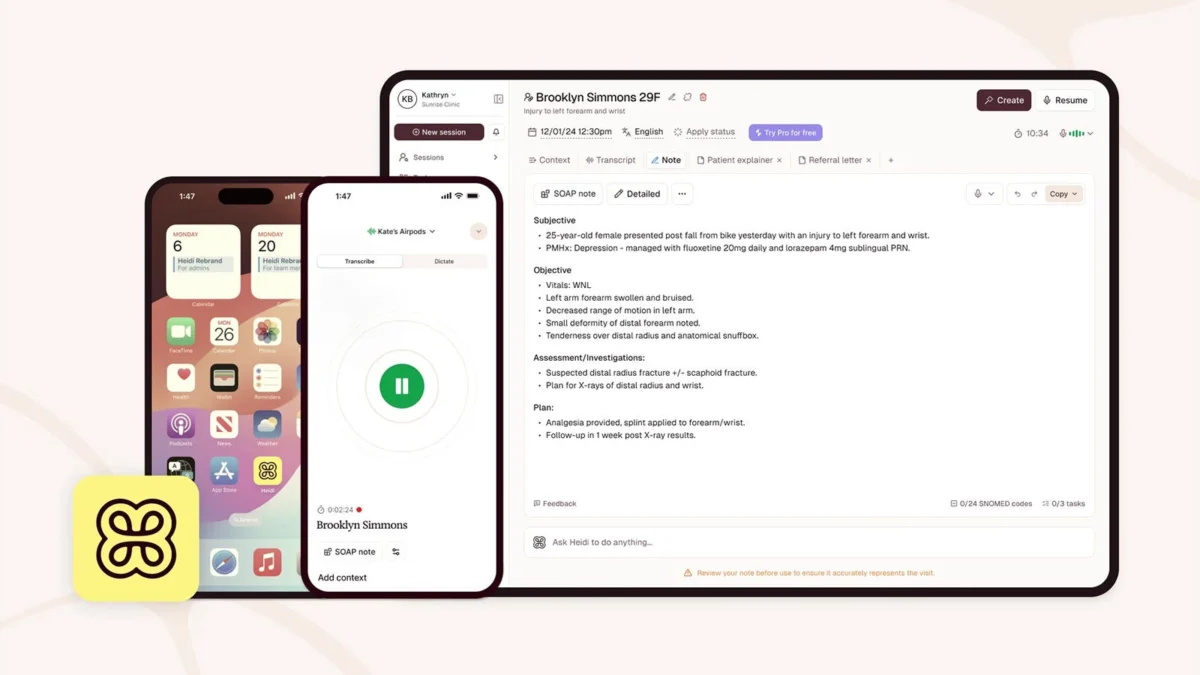
As the healthcare industry grapples with an unrelenting epidemic of clinician burnout—a crisis that saw 43.2% of practitioners reporting symptoms as recently as 2024—the promise of artificial intelligence has moved from the laboratory to the examination room. A new study published in Annals of Internal Medicine offers a critical, data-driven look at the real-world performance of "Heidi," an ambient scribe system deployed across the Beth Israel Lahey Health network. While the technology successfully reduced the time physicians spent tethered to their keyboards, the findings suggest that the integration of AI into clinical workflows is far from a simple panacea.
The Core Findings: Efficiency Gains vs. Documentation Creep
The study, led by Jennifer P. Stevens, MD, of Beth Israel Deaconess Medical Center, sought to determine whether AI-driven ambient scribes could effectively mitigate the administrative "pajama time"—the hours clinicians spend finishing electronic health record (EHR) tasks long after their patients have left.
The research paints a nuanced picture. Among clinicians who adopted the Heidi system, the median time spent actively working on notes dropped from 21 minutes to 18.6 minutes. Simultaneously, the average note length expanded, growing from 4,854 characters to 5,187.
At first glance, these numbers appear positive: faster documentation and more detailed records. However, the study revealed that these benefits were not uniform. The most significant gains in efficiency were reserved for "high users"—those who integrated the tool deeply into their practice. High users saw a 2.5-minute reduction in note-active time, whereas "low users" and "enrolled nonusers" saw negligible or statistically insignificant improvements.
Perhaps most counterintuitively, the increase in note length—which might signal more comprehensive documentation—was concentrated specifically among high users, while low users actually saw a decrease in note length. This suggests that the AI’s influence on clinical output is highly dependent on how a clinician chooses to interact with the tool.
Chronology of Implementation: A Voluntary Rollout
The rollout of the Heidi system at Beth Israel Lahey Health was designed to mimic the organic adoption patterns of clinical software. Understanding the timeline is essential to interpreting the study’s findings:
- January 2025: The health system officially launched the Heidi ambient scribe platform across its 14-hospital network.
- January–November 2025: A massive, voluntary enrollment phase took place. Eligibility was broad, encompassing attending physicians, nurse practitioners, trainees, and allied health professionals.
- Study Inclusion Phase: Researchers identified 4,993 clinicians who met the threshold of 10 or more patient encounters per month. Of this group, 1,140 chose to enroll. After filtering for those with sufficient data and consistent usage, 902 clinicians remained for the final analysis.
- Usage Patterns: The cohort was notably diverse: 60.2% female, 70.6% attending physicians, and 30% primary care providers.
The implementation was intentionally "decoupled" from the core EHR workflow. This allowed clinicians to adopt the tool at their own pace and in their own way. By November 2025, the data revealed that 67% of enrolled clinicians had used the tool at least once, while 33% had never actually used it after enrollment, highlighting the barrier to entry even for those interested in the technology.
Supporting Data: The "High User" Advantage
The study’s stratified analysis provides the most compelling evidence regarding the utility of ambient AI. By dividing the cohort into "high," "low," and "nonusers," the investigators uncovered a "learning curve" or "intensity" effect.
| User Category | Note-Active Time Reduction | Note Length Change |
|---|---|---|
| High Users | -2.50 minutes | +160.26 characters |
| Low Users | -0.78 minutes | -110.44 characters |
| Enrolled Nonusers | -0.29 minutes | -10.63 characters |
The data confirms that the "ambient" nature of the tool requires a certain level of commitment to yield measurable time savings. For clinicians who used the system sporadically, the cognitive load of managing the AI tool may have outweighed the time saved during the actual writing process.
Expert Perspectives and Unintended Consequences
While Dr. Stevens and her team advocate for the continued exploration of AI to solve documentation burdens, the editorial commentary provided by Kirsten Ostherr, PhD, MPH, of Rice University, sounds a note of caution.
Dr. Ostherr argues that we may be falling into a "substitution trap." If an AI scribe saves five minutes of writing but requires five minutes of careful review and editing to ensure accuracy, the net burden on the clinician remains unchanged. Furthermore, the study failed to account for the time clinicians spent editing notes within the Heidi interface before they even reached the EHR.
"This ambiguity may impact the true measure of note-active time," Dr. Ostherr noted. "It raises an important question about whether ambient scribes relocate documentation burden rather than reduce it."
There is also the matter of "note bloat." The increase in character count observed in the study is a potential red flag. If AI is generating longer notes, is it adding value, or is it simply adding "noise"? Dr. Ostherr warns that longer, AI-generated notes could lead to clinical misinterpretations, omissions, or even hallucinations—where the AI confidently asserts information that was never discussed during the patient encounter.
Regulatory and Clinical Implications
The regulatory landscape remains a significant concern. Currently, ambient scribe systems are categorized as low-risk medical devices, meaning they bypass the rigorous pre-market oversight typical of higher-risk health technologies.
However, as these tools become standard, the stakes increase. The study noted that the researchers could not analyze the quality of the notes, only the length and the time taken to produce them. As we move forward, the medical community must address several key areas:
- AI Regulation: Should ambient scribes be subjected to FDA-level review, given that they are now the "first draft" of a patient’s legal medical record?
- Health Equity: If AI tools are more effective for certain specialties (such as primary care) but less effective for others (like surgery), could this exacerbate existing disparities in clinical documentation quality?
- Long-term Patient Outcomes: The "downstream consequences" of AI-generated content remain entirely unknown. If a physician spends less time writing and more time reading, are they actually absorbing the same clinical nuance?
Conclusion: The Path Forward
The Beth Israel Lahey Health study serves as a milestone in the digitalization of medicine. It confirms that ambient scribes are not a "magic button" that will instantly solve the burnout crisis. Instead, they are a powerful, sophisticated tool that requires thoughtful implementation, rigorous oversight, and a clear understanding of the new workflows they create.
As Dr. Stevens concluded, the goal is to reduce the administrative burden to reclaim the physician-patient relationship. "A flexible, clinician-driven, implementation strategy can support rapid deployment," she noted. Yet, the findings remind us that the human element—the physician’s final sign-off and clinical judgment—remains the most important variable in the equation. Future research will need to look beyond the clock and the character count to ensure that in our quest to save time, we do not inadvertently compromise the accuracy or the empathy of the care we provide.