










In the rapidly advancing landscape of respiratory medicine, the quest for diagnostic precision, patient comfort, and cost-effectiveness has brought one tool to the forefront of clinical practice: Overnight Pulse Oximetry (OPO). Once considered a rudimentary screening measure, OPO has evolved into a sophisticated, multidisciplinary instrument that serves as a cornerstone for patient management.
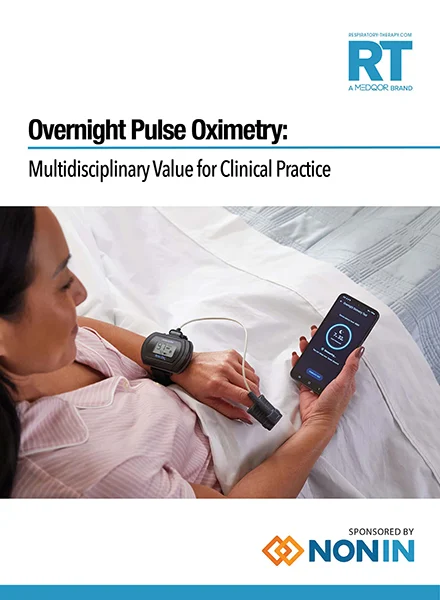
As respiratory care professionals navigate the complexities of managing chronic conditions, the need for noninvasive, reliable, and accessible monitoring has never been greater. A new featured report, titled “Overnight Pulse Oximetry: Multidisciplinary Value for Clinical Practice,” sponsored by Nonin, sheds light on the expanding applications of this technology, emphasizing its role in bridging the gap between hospital-grade diagnostics and home-based patient care.
The Core Applications: A Multidisciplinary Perspective
The utility of OPO extends far beyond the traditional hospital setting. By providing a longitudinal view of oxygen saturation levels during the critical hours of sleep, clinicians can derive actionable insights that inform treatment pathways for a variety of patient populations.
1. Monitoring Cardiorespiratory and Hypoxic Patients
For patients suffering from chronic obstructive pulmonary disease (COPD), interstitial lung disease, or heart failure, sleep can be a period of significant physiological vulnerability. Nocturnal hypoxemia—a drop in blood oxygen levels during sleep—is often silent but carries profound long-term risks, including pulmonary hypertension and right-sided heart failure. OPO allows clinicians to accurately assess whether a patient requires nocturnal supplemental oxygen or if their existing therapeutic regimen requires titration, thereby preventing the systemic damage associated with chronic hypoxia.
2. Prescreening for Obstructive Sleep Apnea (OSA)
Obstructive Sleep Apnea remains one of the most underdiagnosed conditions in modern medicine, with millions of patients living with undiagnosed sleep-disordered breathing. While polysomnography remains the "gold standard" for diagnosis, the logistical barriers—including wait times and costs—have positioned OPO as a vital prescreening tool. By capturing significant desaturation events, OPO helps clinicians identify high-risk individuals, streamlining the referral process for definitive diagnostic testing and reducing the time-to-treatment for those suffering from OSA.
![[Featured Report] Overnight Pulse Oximetry](https://respiratory-therapy.com/wp-content/uploads/2026/05/MONITORING__Nonin__NoninHealthWristOx2.jpg)
3. Evaluating Dental Sleep Appliances
The integration of dental sleep medicine into the broader respiratory care framework has introduced new challenges in monitoring efficacy. Oral appliance therapy (OAT) is a popular alternative for patients with mild to moderate OSA or those intolerant to continuous positive airway pressure (CPAP). OPO serves as a cost-effective, objective method to assess the therapeutic efficacy of these devices. By monitoring oxygen trends while the patient uses their appliance, practitioners can objectively verify whether the device is successfully mitigating nocturnal respiratory distress, facilitating more personalized and responsive care.
Chronology: The Evolution of Oximetry Technology
The history of pulse oximetry is a testament to the power of engineering to change medical outcomes.
- The 1970s (The Foundation): The development of the first commercial pulse oximeters revolutionized anesthesia and critical care, allowing for continuous, real-time monitoring of arterial oxygen saturation ($SpO_2$) without the need for arterial blood gas (ABG) sampling.
- The 1990s (Miniaturization): As microprocessor technology advanced, devices became smaller and more durable. This era marked the transition of oximetry from the intensive care unit to the general ward and eventually the outpatient setting.
- The 2010s (Connectivity and Data): The rise of digital health integration allowed for "smart" oximeters capable of storing data over long periods, making the concept of “overnight” monitoring a standard practice rather than an experimental one.
- 2026 (The Current Era): Today, we are seeing the integration of high-fidelity sensors and AI-driven data analysis. Modern devices, such as those produced by Nonin, focus on signal integrity in challenging environments—such as low perfusion or patient movement—ensuring that the data captured during an overnight session is both accurate and clinically actionable.
Supporting Data: Why Accuracy Matters
In clinical diagnostics, the quality of data is only as good as the technology used to collect it. Pulse oximetry is not a monolithic technology; significant variations exist in sensor technology, signal processing algorithms, and data reporting capabilities.
Data from the Featured Report highlights that clinicians must prioritize "clinical-grade" devices. Consumer-grade wearables, while popular for wellness, often lack the sampling frequency and motion-artifact rejection required for medical decision-making.
Clinical research indicates that when using high-fidelity OPO, the sensitivity for detecting significant desaturation events is high, provided the device is calibrated to account for signal dropouts—a common occurrence during sleep due to position changes. Furthermore, the cost-benefit analysis of OPO is stark: when compared to the high cost of a full in-lab sleep study, OPO provides a high return on investment (ROI) for health systems by prioritizing resources for patients who show clear signs of respiratory distress in their preliminary home-based data.
![[Featured Report] Overnight Pulse Oximetry](https://respiratory-therapy.com/wp-content/uploads/2026/05/MONITORING__Nonin__NoninHealthWristOx2-1280x640.jpg)
Official Responses and Clinical Perspectives
The sponsorship of this report by Nonin highlights a growing industry consensus: the future of respiratory care is patient-centered and decentralized.
According to respiratory specialists interviewed for the report, the shift toward home-based monitoring is not merely about convenience; it is about capturing “real-world” data. Patients in a sleep lab often exhibit different breathing patterns than they do in their own beds. By allowing for comfortable, noninvasive monitoring in the home environment, clinicians are seeing a more accurate representation of the patient’s baseline physiology.
“The goal of modern monitoring is to provide the physician with a clear, reliable picture of the patient’s respiratory health without imposing an undue burden on the patient’s life,” notes one clinical consultant. “Noninvasive tools like OPO, when paired with reliable hardware, empower the clinician to make informed decisions faster, which ultimately improves patient compliance and long-term health outcomes.”
Implications: The Future of the Respiratory Care Model
The implications of increased OPO utilization are far-reaching, affecting everything from hospital resource allocation to long-term patient health strategies.
1. Reduced Healthcare Expenditure
By acting as an effective filter for sleep diagnostics, OPO prevents the over-utilization of expensive in-lab studies. This ensures that sleep centers can focus their resources on patients with complex cases or those requiring titration, while the majority of OSA screenings can be managed efficiently in the primary care or pulmonology office.
![[Featured Report] Overnight Pulse Oximetry](https://respiratory-therapy.com/wp-content/uploads/2026/04/Nonin-featuredreport__26Apr-600a.jpg)
2. Enhanced Patient Compliance
A primary barrier to respiratory therapy is the "intimidation factor" of diagnostic equipment. The simplicity of an overnight pulse oximeter—often just a small sensor worn on the wrist or finger—increases the likelihood that a patient will actually complete the study. When patients find the diagnostic process non-threatening, their engagement with the subsequent treatment plan (whether it be CPAP, OAT, or oxygen therapy) improves significantly.
3. Personalized Medicine
As we move toward a model of personalized medicine, OPO provides the longitudinal data necessary to adjust treatments. For instance, if a patient’s oxygen levels remain sub-optimal despite using a dental sleep appliance, the clinician can use the OPO data to suggest an adjustment in the device’s jaw advancement or recommend a combination therapy. This iterative, data-driven approach is the hallmark of modern respiratory care.
Conclusion
The evolution of overnight pulse oximetry from a niche diagnostic tool to a vital multidisciplinary asset underscores a broader shift in medicine: the democratization of high-quality data. By enabling clinicians to assess hypoxia, screen for OSA, and validate dental sleep interventions with precision and ease, OPO has become an indispensable component of the respiratory care toolkit.
As highlighted in the Featured Report sponsored by Nonin, the future of the field lies in the integration of reliable, high-fidelity monitoring tools that support the clinician’s decision-making process. By leveraging these technologies, the healthcare community can continue to improve the quality of life for millions of patients, one night of data at a time.
For practitioners looking to optimize their clinical pathways, the message is clear: the technology to provide better, more efficient, and more patient-centered care is already in our hands. The challenge now is to continue refining its application and ensuring that every patient with a potential respiratory vulnerability has access to the life-changing benefits of timely and accurate monitoring.