Reviewed by Brian St. Pierre, MS, RD, and Helen Kollias, PhD
For many women in their late 40s and early 50s, the transition into menopause is often accompanied by a disorienting sensation: the feeling that their mental faculties are suddenly buried under a pile of refuse. Simple tasks, like recalling the name of a familiar restaurant or focusing on a document for more than a few minutes, become Herculean efforts. This "brain fog"—characterized by hazy thoughts, reduced concentration, and emotional instability—is frequently dismissed as a natural consequence of aging or excessive life stress. However, as medical research evolves, it is becoming increasingly clear that this cognitive decline is often a symptom of a broader, treatable physiological transition.
The Chronology of a Misdiagnosis: From Sludge to Clarity
The experience of "menopausal brain fog" often begins insidiously. For many, it manifests as a loss of verbal fluency—the inability to retrieve proper nouns—followed by a creeping mental fatigue that makes standard workdays feel insurmountable.
One patient’s journey mirrors that of thousands: after nearly two years of consulting various healthcare professionals, she was repeatedly funneled toward treatments for depression or sleep disorders. She tried multiple antidepressants, only to feel like a "zombie," and experimented with various sleep aids and supplements, all to no avail. Her thyroid levels were normal, and she was not anemic.
It was only during a routine gynecological exam that the diagnostic narrative shifted. When she mentioned vaginal dryness—a classic, albeit often overlooked, symptom of declining estrogen—her physician began a targeted inquiry into her sleep, mood, and cognitive health. The conclusion was not a clinical diagnosis of depression, but rather the onset of menopause. With the introduction of targeted hormone therapy (estradiol and progesterone), the "switch" was flipped. Within days, her cognitive clarity, capacity for work, and sleep quality returned.
Supporting Data: The Physiology of the Transition
Menopause is not a disease; it is a profound life stage—a transition marked by the cessation of menstrual cycles for 12 consecutive months. As women approach this milestone, the dramatic fluctuation and eventual decline of estrogen and progesterone trigger a cascade of symptoms.
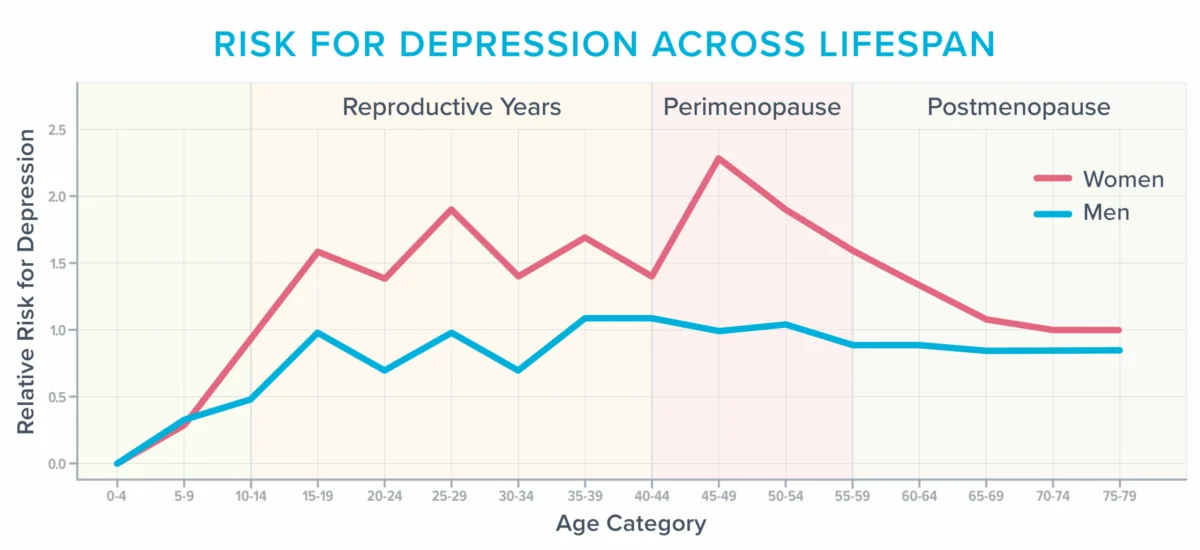
According to the American College of Obstetricians and Gynecologists, approximately 40 percent of women report increased irritability, mood swings, anxiety, and significant fatigue during this period. Furthermore, the risk of developing clinical depression peaks during the perimenopausal years, particularly in women with a history of the condition.
The physiological drivers of these symptoms are complex. While age-related brain changes and the external pressures of mid-life (career peaks, "sandwich generation" caregiving, and financial stress) play a role, research has identified a more specific culprit: vasomotor symptoms (VMS). These include hot flashes and night sweats, which involve the rapid dilation and constriction of blood vessels. During a hot flash, levels of norepinephrine and cortisol spike, heart rate increases, and blood pressure fluctuates. Emerging data suggests that these events are not merely uncomfortable; they are markers of systemic change.
The Neurological and Vascular Implications
Recent neuroimaging studies have provided compelling evidence that frequent hot flashes may be linked to neurological changes. In a study of 226 women, researchers observed that those with the highest frequency of hot flashes showed an increased presence of "whole-brain white matter intensities."

These lesions, once dismissed as benign markers of aging, are now recognized by neuroscientists as predictive of future cognitive decline. Individuals with a high density of these white matter hyperintensities are statistically twice as likely to be diagnosed with dementia and three times as likely to suffer a future stroke. Furthermore, studies indicate that frequent hot flashes correlate with vascular dysfunction, specifically an impairment in the ability of blood vessels to dilate effectively, which can limit optimal blood flow to the brain.
The sleep connection is equally vital. Many women suffering from night sweats do not wake up feeling "hot"; rather, they are jolted awake by a surge of stress hormones before the heat sensation fully registers. These repeated micro-awakenings disrupt the sleep cycles necessary for memory consolidation and toxin clearance in the brain. Over months and years, this chronic sleep deprivation leads to reduced connectivity in the hippocampus—the brain’s learning center—and heightened reactivity in the amygdala, the seat of emotional regulation. This explains why many women experience increased anxiety and "rage" during this life stage.
Official Responses and the "Defensive Medicine" Problem
Despite the clear biological links between hormonal shifts and cognitive symptoms, the medical community has struggled to provide adequate support. A major barrier is the lack of specialized training; surveys indicate that 80 percent of medical residents feel uncomfortable discussing menopause, and few residency programs provide comprehensive education on the subject.
This knowledge gap often leads to "defensive medicine." Many clinicians, wary of dated studies from decades ago that suggested a link between hormone replacement therapy (HRT) and increased risks of cancer or stroke, shy away from prescribing hormones. Instead, they often default to antidepressants, which may address some mood symptoms but fail to treat the underlying vasomotor and hormonal drivers.
However, the consensus among modern menopause experts—including clinicians like Dr. Jerrold H. Weinberg—is shifting. Current research suggests that for women under the age of 60 who are within 10 years of menopause onset, the benefits of hormone therapy significantly outweigh the risks. In many cases, HRT not only resolves vasomotor symptoms but also provides protective effects against osteoporosis and potentially Alzheimer’s disease.
How to Advocate for Your Health
If you are struggling to find a provider who understands the nuance of the menopausal transition, consider the following strategies:
- Seek Specialized Care: Search for practitioners certified by the Menopause Society (formerly NAMS). These professionals have dedicated training in managing the menopausal transition.
- Document Everything: Maintain a detailed log of your symptoms, including frequency of hot flashes, sleep interruptions (using wearable data if possible), and cognitive lapses.
- Insist on Shared Decision-Making: Move away from passive receipt of care. Ask your doctor, "What are the specific risks and benefits of hormone therapy for my individual health profile?" and "How can we monitor my response to this treatment over the next three months?"
- Address Lifestyle Fundamentals: While hormones are often necessary, they work best when supported by a solid foundation.
- Creatine: A daily dose of 5 to 7 grams of creatine monohydrate has shown promise in supporting cognitive function and reducing mental fatigue in aging populations.
- Light Exposure: Prioritizing morning sunlight helps regulate the circadian rhythm, which is often severely disrupted by menopausal sleep disturbances.
- Strategic Movement: Avoid overly intense exercise that spikes cortisol. Incorporate moderate, consistent movement and prioritize recovery to prevent burnout.
- Dietary Adjustments: Focus on MIND or Mediterranean diet patterns, which are rich in nutrients that support vascular health and neuroprotection. Nitrate-rich foods like beets and leafy greens can assist in maintaining healthy blood flow.
The Hidden Opportunity
While the experience of brain fog and emotional volatility is undeniably taxing, this transition also serves as a forced "reset." It invites women to audit their lives and identify where their limited mental energy is being drained.
Many women find that the process of managing menopause—through medication, lifestyle adjustments, and, importantly, setting boundaries—leads to a more intentional second half of life. By choosing to say "no" to non-essential stressors and "yes" to evidence-based medical care, women can navigate this transition not as a decline, but as a pivot point. The goal is not just to regain the cognitive clarity of one’s 30s, but to secure a healthier, more resilient version of oneself for the decades that follow.