
The global labor market is currently navigating a period of unprecedented volatility, defined by the aggressive integration of Artificial Intelligence (AI) and a systemic shift in corporate human capital strategy. A landmark 2026 Global Talent Trends report by consulting firm Mercer has unveiled a sobering consensus among the world’s business leaders: the era of mass AI-driven displacement is no longer a speculative future, but an operational reality.
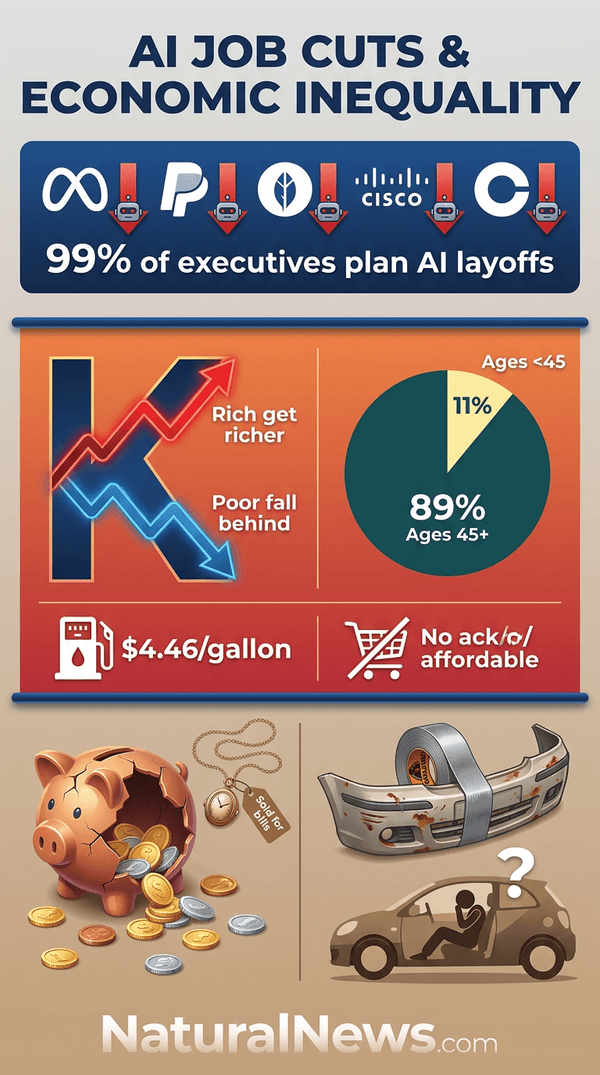
According to the survey, which polled 825 C-suite executives and 1,650 HR leaders, a staggering 99% of corporate decision-makers anticipate that AI implementation will necessitate headcount reductions within the next 24 months. As corporations pivot toward an “AI-native” operational model, the workforce is experiencing a transformation that threatens to exacerbate existing economic inequality, pushing middle-class stability to the brink.
The Main Facts: The New Corporate Paradigm
The Mercer report highlights a disconnect between technological ambition and workforce integration. While 98% of executives are actively redesigning their organizational structures to accommodate AI, only 32% believe their current workforce possesses the capability to optimize the synergy between human and machine workers. This gap suggests that rather than "upskilling" the existing labor force, many corporations are opting for a "replacement" strategy.
This trend is not isolated to niche sectors; it has permeated the bedrock of the global economy, from technology giants to traditional financial institutions. The rationale consistently provided by leadership is the pursuit of efficiency, a transition that effectively swaps what some executives have termed “lower-value human capital” for high-speed, scalable machine capital.
Chronology of the Displacement Trend
The acceleration of these workforce reductions follows a clear, rapid trajectory over the past several months:
- Early 2026: Tech firms begin a synchronized pivot, citing AI infrastructure investment as the primary driver for "right-sizing."
- May 2026: Meta Platforms announces a massive global restructuring, eliminating approximately 8,000 positions, with initial waves of layoffs commencing on May 20.
- Mid-2026: Notices are filed in Washington state by Meta to cut an additional 1,400 employees, signaling that initial cuts were merely the beginning of a broader, long-term restructuring.
- Q2 2026: Intuit confirms a 17% reduction in staff—amounting to 3,000 employees—to refocus resources on AI development.
- Ongoing: Companies such as PayPal, Cisco Systems, and Coinbase continue to cite "AI-native" goals as justification for double-digit percentage cuts to their workforce. Standard Chartered has set an aggressive roadmap, projecting the elimination of 7,800 back-office roles by 2030.
Supporting Data and Economic Indicators
The displacement of labor is occurring against the backdrop of a K-shaped economy, where the benefits of technological growth are concentrated at the top, while lower- and middle-income households face increasing precarity.
The Wealth and Purchasing Power Gap
Data from the Federal Reserve paints a stark picture of intergenerational inequality: Americans aged 45 and under currently control only 11% of the nation’s wealth, while those over 45 hold 89%. This concentration of wealth is compounded by the erosion of purchasing power. Even as official inflation rates appear to moderate, the cumulative effect of high prices for housing, utilities, and food has left households with diminished discretionary income.

According to a recent Federal Reserve Bank of New York report, there is a direct correlation between these economic conditions and a surge in food insecurity. In urban centers like New York City, 50% of households currently lack the income necessary to meet basic needs—the highest figure recorded since the survey’s inception in 2003.
Employment Volatility
The outplacement firm Challenger, Gray & Christmas reported that U.S. employers announced 83,387 layoffs in April 2026 alone. The primary driver cited for these cuts is the adoption of automation and AI, suggesting that we are witnessing a fundamental decoupling of corporate profitability from domestic employment levels.
Official Responses and Corporate Rhetoric
The corporate sector’s messaging surrounding these layoffs has sparked significant public and academic debate. When Standard Chartered CEO Bill Winters characterized his firm’s 15% workforce reduction as "replacing lower-value human capital with financial and investment capital," the ensuing public backlash was immediate and fierce. While the company later issued a formal apology, the sentiment reflects a growing trend in boardrooms where employees are increasingly viewed as balance-sheet liabilities rather than drivers of value.
Conversely, some CEOs have leaned into the narrative of progress. Brian Armstrong, CEO of Coinbase, defended his company’s 14% workforce reduction by arguing that AI agents will ultimately make the firm "lean, fast, and AI-native."
Academic experts offer a more cautious interpretation. Jeff Shulman, a professor at the University of Washington’s Foster School of Business, notes that the normalization of layoffs has created a "new normal" for the American worker. "Regrettably and sadly," Shulman observed, "it seems that the layoffs are going to be the new normal."
The Human Cost: Case Studies in Economic Strain
The macro-economic statistics are mirrored by the experiences of individual workers. The human impact of this transition is characterized by a loss of financial security and a frantic struggle to maintain basic standards of living.
Kris Massey, a 57-year-old nurse practitioner, provides a poignant example of the current reality. After years of dual-income work, a health crisis forced her out of the workforce. During her period of unemployment, the rising cost of living forced her to liquidate heirloom jewelry simply to cover basic expenses. Her story is representative of a middle class that is being systematically dismantled, as even those with high-level professional qualifications find their safety nets insufficient to withstand the shocks of the current economic environment.
Similarly, Bill Brantner, 51, reports a total absence of discretionary spending, describing a life of extreme austerity. His testimony highlights the psychological toll of the "squeezed" economy, where individuals are living in constant fear of the next rent hike or insurance premium increase, knowing they have no further resources to cut.
Implications: The Future of Work and Wealth
The implications of the Mercer survey findings are profound. We are witnessing a global shift where the incentive to replace human labor with automation is outpacing the economy’s ability to create new, comparable roles.
A Global Phenomenon
This is not merely a U.S.-centric issue. International observers are issuing similar warnings. A senior researcher from the Chinese AI firm DeepSeek recently cautioned that we are currently in a "honeymoon phase" of AI adoption. The researcher predicted that the current period of efficiency gains will inevitably give way to a second, more disruptive phase characterized by mass unemployment as AI capabilities mature.
The "Dismantling" of the Middle Class
The combination of sustained layoffs, stagnant wage growth for the middle class, and the rapid accumulation of wealth by those in control of AI infrastructure points toward a future of deepening inequality. If the current trend continues—as indicated by the 99% of executives planning cuts—the social contract that has historically tied corporate success to a stable, growing workforce may be permanently broken.
As corporations continue to pour hundreds of billions of dollars into AI, the drive toward "lean, fast, and AI-native" operations will likely remain the dominant corporate strategy. Without significant policy intervention or a radical shift in how the gains of automation are distributed, the divide between the owners of technology and the displaced workforce is expected to widen, leaving the middle class to face a future defined by increasing instability and diminishing opportunity.
Conclusion
The data from the 2026 Mercer report serves as a definitive marker in the history of the modern workforce. The corporate sector has made its choice: in the race for efficiency, AI is the preferred partner, and human capital is the primary expense to be trimmed. As the "new normal" of layoffs settles in, the challenge for policymakers and society at large will be to determine how to manage an economy that is increasingly efficient at producing wealth, but arguably failing in its ability to support the people who constitute it.