









By: Editorial Staff
With contributions from Robbie Majzner, MD, CRI Lloyd J. Old STAR
While the last several decades have marked a golden age in pediatric oncology, the narrative of survival is nuanced. Today, the vast majority of children diagnosed with cancer will beat their disease. Yet, for a significant subset of patients—those facing aggressive, rare, or treatment-resistant malignancies—the standard of care remains insufficient. Furthermore, for those who do survive, the “victory” often comes at a steep price: the intensive, toxic therapies required to achieve remission can leave young survivors with debilitating, lifelong health complications.
As we observe Childhood Cancer Awareness Month, the medical community is grappling with a difficult reality: the oncology breakthroughs that have transformed adult cancer treatment cannot simply be “trickled down” to children. The fundamental biological architecture of childhood cancer is distinct, requiring a paradigm shift in how we approach research and therapeutic design.
The Biological Disconnect: Why Childhood Cancer is Not Just "Small-Scale" Adult Cancer
To understand why pediatric oncology requires a specialized approach, one must first dismantle the misconception that childhood cancer is merely a truncated version of adult malignancy.
Fundamental Biological Differences
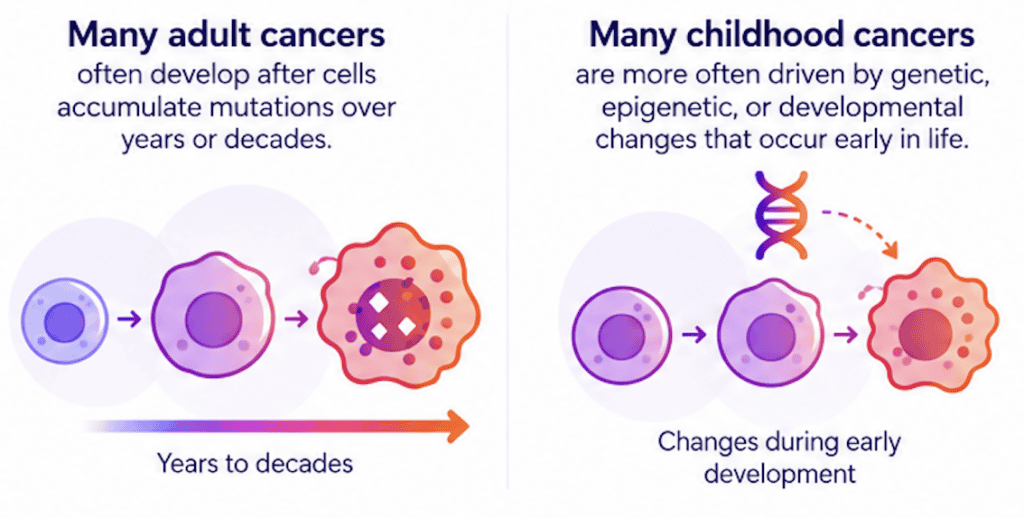
Adult cancers are frequently the product of decades of accumulated genetic damage—the result of environmental exposures, lifestyle factors, and the natural senescence of cells. In contrast, childhood cancers are often developmental in origin. Dr. Robbie Majzner, a pediatric oncologist, physician-scientist, and a CRI Lloyd J. Old STAR, characterizes many pediatric tumors as "a product of aberrant development."
In these cases, the disease arises when cells go awry during their normal developmental pathways. Because these tumors lack the heavy mutational burden often found in adult cancers, they present a unique challenge to the immune system. They are "stealthy" by nature, often lacking the abnormal features that immune cells rely on to identify and target threats.
The Challenge of Heterogeneity
Pediatric cancer is not a singular entity. It is an umbrella term covering a vast landscape of diseases, including various forms of leukemia, brain tumors, neuroblastoma, kidney tumors, and sarcomas. The heterogeneity within these categories is staggering. A tumor occurring in the midbrain of a toddler may share zero biological drivers with a leukemia affecting a teenager. This extreme diversity, coupled with small patient populations for any specific cancer subtype, creates a "market failure" in drug development, where traditional, broad-spectrum therapeutic models often fall short.
Chronology of the Immunotherapy Revolution
The evolution of cancer treatment has moved through distinct eras, each building the foundation for the current focus on immunotherapy.
- 1950s–1970s: The Era of Cytotoxic Chemotherapy. The development of systemic chemotherapy transformed once-fatal pediatric cancers, such as acute lymphoblastic leukemia (ALL), into highly treatable conditions.
- 1980s–1990s: Precision Diagnostics. Advances in cytogenetics and molecular biology allowed clinicians to classify tumors more accurately, leading to risk-stratified treatment protocols that reduced over-treatment.
- 2000s–2010s: The Rise of Checkpoint Inhibitors. The success of immune checkpoint inhibitors in adults—drugs that remove the "brakes" from the immune system—offered hope. However, these successes were largely limited to cancers with high mutational burdens, which are rare in children.
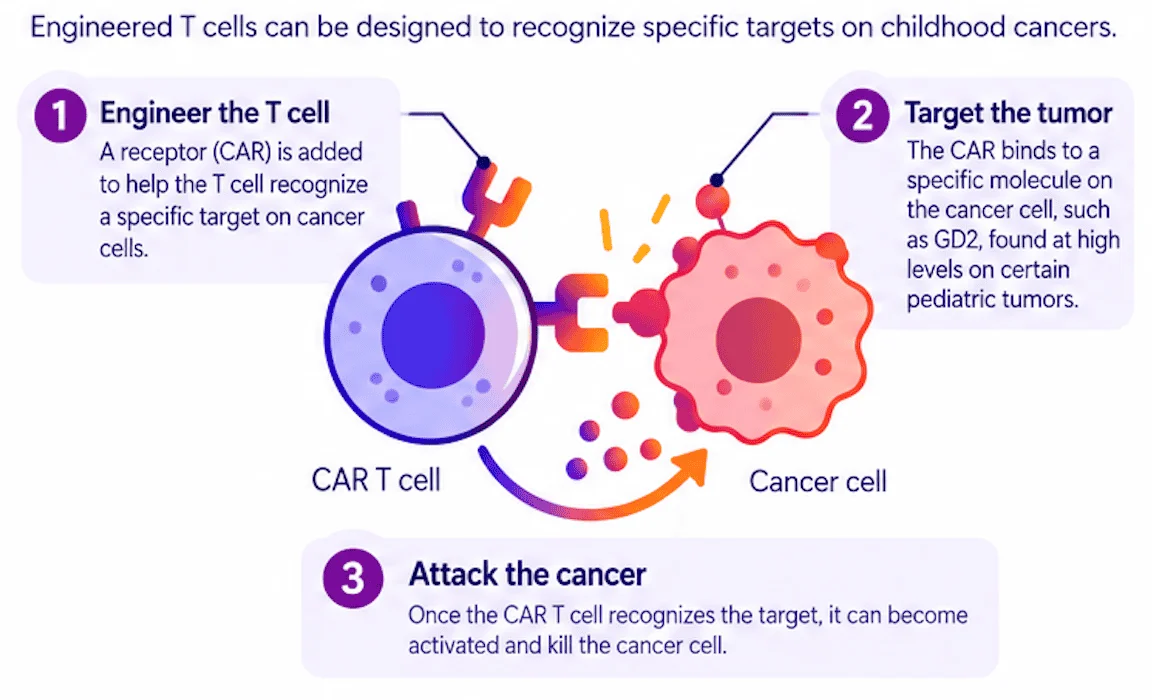
- 2015–Present: The Cell Therapy Era. The advent of CAR T-cell therapy signaled a shift. By engineering immune cells to recognize specific targets, researchers began to circumvent the "mutational burden" problem, moving from "releasing the brakes" to "actively directing the weapon."
Supporting Data: The Case for Targeted Engineering
The limitations of adult-centric immunotherapies have been quantified in clinical trials. Checkpoint inhibitors, which have revolutionized care for melanoma and lung cancer in adults, have shown disappointing response rates in many pediatric solid tumors. The data suggests that if T cells are not inherently "seeing" the tumor, removing the brakes is a futile exercise.
Dr. Majzner’s work provides a compelling counter-strategy. His research focuses on the intersection of engineered immune cell design and the identification of tumor-specific targets.
The GD2 Success Story
A landmark in this field involves GD2, a molecule highly expressed on certain pediatric tumors, including diffuse midline glioma (DMG)—a notoriously aggressive and historically fatal brain tumor.
Working at Stanford University, Dr. Majzner and his colleagues identified that the unique biology of DMG essentially forces the tumor to express GD2. By designing CAR T cells specifically programmed to lock onto GD2, the team successfully created a "synthetic immune response." Early clinical trials have yielded what were previously considered impossible results: significant tumor regression and, in some cases, sustained neurological improvement in patients who had exhausted all other options.
Official Perspectives: The Role of High-Risk Research
The progress seen in CAR T-cell therapy is not the result of incrementalism; it is the result of high-risk, high-reward scientific inquiry. As a CRI Lloyd J. Old STAR, Dr. Majzner benefits from flexible, long-term funding—a critical component for researchers working in pediatric oncology.
"If you just shut down all high-risk ideas, we will never get new technologies," says Dr. Majzner. He emphasizes that the groundbreaking CAR T receptors being tested today are built upon decades-old, "basic" research into T-cell signaling. Scientists at the time had no way of knowing their findings would eventually lead to a cure for pediatric brain cancer, yet their curiosity laid the groundwork for today’s precision medicine.
The Cancer Research Institute (CRI) has consistently advocated for this model of "blue-sky" research. By funding the fundamental science—the "why" and "how" of immune behavior—CRI enables scientists to pivot when standard models fail, creating a bridge between laboratory bench and bedside.
Implications: The Future Landscape of Pediatric Care
The shift toward specialized, pediatric-focused immunotherapy carries profound implications for the next decade of oncology.
1. Beyond the "Trickle-Down"
The consensus among leading pediatric researchers is that the future of the field lies in independent innovation. We are moving toward a world where pediatric clinical trials are designed around the biology of the child, not the adult. This involves identifying unique pediatric targets, such as surface proteins that are present in developmental tumors but absent in healthy adult tissue.
2. Technological Innovations: In Vivo CAR T
Perhaps the most ambitious frontier is in vivo CAR T-cell therapy. Currently, CAR T-cell therapy requires a complex, multi-week process of extracting a patient’s T cells, modifying them in a laboratory, and re-infusing them. This is expensive and physically taxing. Researchers are now exploring ways to engineer these cells directly inside the patient’s body, which could democratize access to these life-saving therapies and significantly reduce the burden on young patients.
3. Quality of Life as a Primary Metric
For too long, the goal of pediatric oncology was strictly defined by survival rates. The new mandate, as articulated by researchers like Dr. Majzner, includes "healthy years after treatment." By developing targeted immunotherapies that spare healthy tissue, clinicians hope to reduce the long-term toxicity associated with traditional chemotherapy and radiation. The goal is no longer just to ensure the child survives, but to ensure they thrive.
Conclusion: A New Chapter
The story of childhood cancer is being rewritten. While the challenges of diversity, unique biology, and small patient populations remain, the tools at our disposal have never been more sophisticated.
As we look toward the future, the integration of synthetic biology, refined T-cell engineering, and a commitment to high-risk, curiosity-driven research promises to transform the standard of care. For the children currently fighting these diseases, the next chapter of research is not just a promise of better statistics—it is a promise of a future defined by health, longevity, and the potential to grow beyond their diagnosis. The work is far from finished, but for the first time, we have the technology and the vision to see a path toward a truly curative future.