For millions of Americans, the rise of GLP-1 receptor agonists—marketed under familiar names like Ozempic, Wegovy, Mounjaro, and Zepbound—has signaled a paradigm shift in the treatment of type 2 diabetes and obesity. Originally engineered to regulate blood glucose and metabolic function, these medications have become a cultural phenomenon for their unprecedented efficacy in weight management. However, a groundbreaking study published in The BMJ suggests that the most profound impact of these drugs may lie not in the waistline, but in the brain.
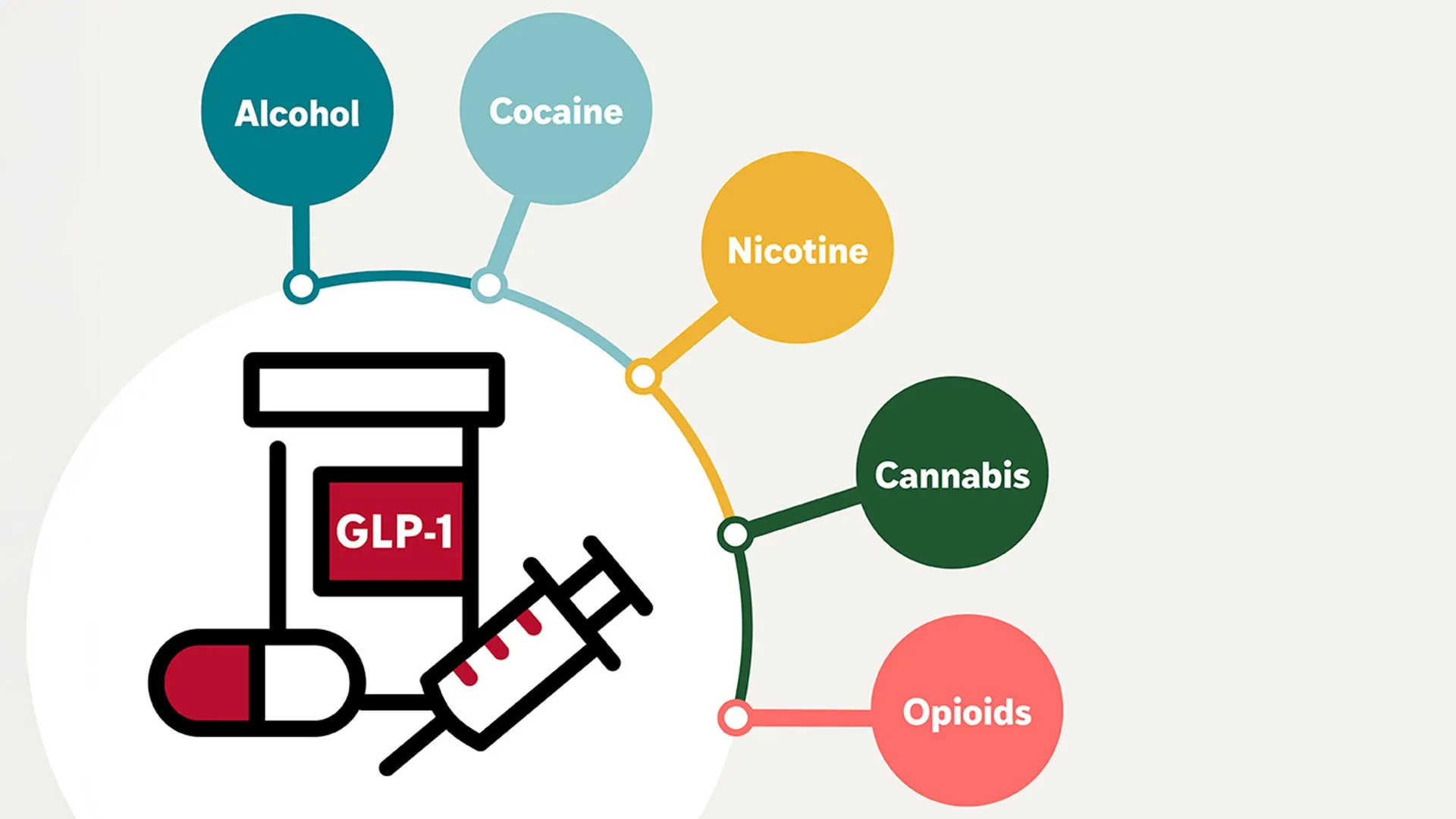
New research from the Washington University School of Medicine in St. Louis indicates that GLP-1 medications may function as a cross-substance shield against addiction. By targeting the fundamental biology of craving, these drugs are showing promise in preventing the development of substance use disorders (SUDs) and reducing the catastrophic consequences of existing addictions, including overdoses, hospitalizations, and mortality.
The Genesis of a Medical Mystery
The journey toward this discovery was not linear. It began with the anecdotal observations of clinicians and the persistent reports of patients who, upon starting semaglutide or liraglutide, noted a peculiar side effect: the "noise" of their cravings—whether for a cigarette, a glass of wine, or a midnight snack—had suddenly gone quiet.
While earlier, smaller observational studies had hinted at a correlation between GLP-1 use and lower risks of alcohol and cannabis abuse, the medical community remained cautious. Most prior research was siloed, focusing on individual substances rather than the broader neurobiology of addiction. The team at Washington University sought to bridge this gap, asking a critical question: Could a single class of medication address the universal biological mechanism that drives human craving across a spectrum of addictive substances?
To answer this, researchers conducted an exhaustive analysis of electronic health records involving 606,434 U.S. veterans diagnosed with type 2 diabetes. By examining three years of longitudinal data, the team aimed to determine if GLP-1 agonists offered a protective buffer against the onset and progression of addiction.
Chronology of the Research
The study was structured into two distinct cohorts to evaluate the medication’s impact on both prevention and crisis management:
Phase 1: The Prevention Cohort
The primary cohort consisted of 524,817 participants who entered the study without a documented substance use disorder. Researchers compared those prescribed GLP-1 receptor agonists against those taking SGLT2 inhibitors, a different class of diabetes medication. The results were striking. Over the study period, those on GLP-1 therapy demonstrated a 14% lower risk of developing any form of substance use disorder compared to their counterparts on other diabetes medications.
Phase 2: The Treatment Cohort
The secondary cohort focused on 81,617 participants who had already been diagnosed with an SUD. This group represented a high-risk population, vulnerable to the most severe outcomes of addiction. The study tracked these individuals to see if GLP-1 therapy could mitigate the health toll of their existing conditions. The findings were statistically significant: after three years, those taking GLP-1 drugs experienced a 30% reduction in emergency department visits, a 25% reduction in hospitalizations, a 40% reduction in overdose rates, and a 50% reduction in drug-related deaths.
Supporting Data: The Scope of the Benefit
The sheer breadth of the findings underscores the potential for GLP-1s to act as a "pan-addiction" treatment. Unlike traditional addiction therapies, which are often substance-specific—such as nicotine patches for smoking or methadone for opioid withdrawal—GLP-1 medications showed a uniform protective effect across every major category examined.
Risk Reductions for New Diagnoses:
- Alcohol Use Disorder: 18% reduction
- Cannabis Use Disorder: 14% reduction
- Cocaine Use Disorder: 20% reduction
- Nicotine Use Disorder: 20% reduction
- Opioid Use Disorder: 25% reduction
For every 1,000 users, the study estimated a reduction of seven new substance use disorder diagnoses. Among those already struggling with addiction, the clinical impact was even more pronounced, with an estimated 12 fewer serious, addiction-related health events per 1,000 patients.
Official Responses and Clinical Perspectives
Dr. Ziyad Al-Aly, a clinical epidemiologist at Washington University and the senior author of the study, views these results as a watershed moment in addiction medicine.
"In addiction medicine, a lot of treatments target just one thing," Dr. Al-Aly explained. "There is no medication that works across addictive substances, let alone all of them. The revelation about GLP-1 medication is that it really works against all major substances, and it works uniformly. It is not because it acts against alcohol or opioids specifically, but because it is likely acting against the craving itself."
Dr. Al-Aly emphasizes that the drug appears to "blunt" the neurological drive that pulls individuals toward their substance of choice. By targeting the biology of craving rather than the chemical structure of the substance, these drugs represent a shift from symptomatic treatment to foundational intervention.
The research team noted that their findings were supported by evidence that GLP-1 receptors are highly expressed in the brain’s reward centers. This provides a plausible biological mechanism for why the drugs are so effective at dampening the dopamine-driven feedback loops that sustain addictive behavior.
Implications: A New Era for Addiction Science
The implications of these findings are staggering, particularly for substances like methamphetamine, for which there are currently no FDA-approved pharmaceutical treatments. If further randomized clinical trials confirm these observational data, the medical community may be on the cusp of adopting a "dual-benefit" model of care.
The "Drug Noise" Hypothesis
The concept of "food noise"—the persistent, intrusive thoughts about eating that many patients report quieting while on GLP-1s—has now been expanded by Dr. Al-Aly to the concept of "drug noise." The study suggests that just as these drugs quiet the physiological and psychological preoccupation with food, they may quiet the relentless, intrusive thoughts that drive substance abuse.
Addressing Public Health Crises
With millions of Americans currently prescribed GLP-1s, the potential for secondary public health benefits is immense. If a patient is treated for obesity and, as a result, finds themselves no longer struggling with nicotine or alcohol dependence, the cost-benefit analysis of these expensive drugs changes significantly.
Future Directions
Despite the promising data, researchers remain measured in their optimism. The study, while large and robust, relied on electronic health records of veterans—a population that may not perfectly represent the general public. Furthermore, these results underscore the urgent need for prospective, randomized clinical trials specifically designed to measure addiction outcomes. Such trials would need to investigate the ideal dosing for addiction, the duration of treatment required to maintain recovery, and the potential side effects when used in populations that do not have diabetes or obesity.
Conclusion
The story of GLP-1 receptor agonists is still being written. What began as a tool for metabolic regulation has evolved into a potential weapon against some of the most stubborn health challenges of the 21st century. By targeting the common biological signal of craving, GLP-1s offer a glimpse into a future where addiction is treated not as a series of isolated, substance-specific moral or behavioral failures, but as a manageable condition rooted in shared, identifiable neural pathways.
As Dr. Al-Aly aptly summarized, "Moving beyond food noise to drug noise, GLP-1s are quieting the roar of addiction." Whether these medications will ultimately become the gold standard for treating substance use disorders remains to be seen, but the "roar" has certainly captured the attention of the global medical community.
Disclaimer: This article is for informational purposes and does not constitute medical advice. Please consult a healthcare professional regarding the use of any medication. This research was funded by the U.S. Department of Veterans Affairs, which had no role in the study’s design or data interpretation.