



The Hidden Risk in the Air
For decades, the medical community has focused on the immediate environment of the operating room—sterility, ventilation, and surgical precision—to ensure patient safety. However, a groundbreaking study published in Acta Anaesthesiologica Scandinavica suggests that the most critical factor for a successful recovery might be waiting for the patient long before they ever step foot in a hospital.
Researchers from University of Utah Health have unveiled compelling evidence that exposure to fine particulate matter (PM2.5) in the seven days leading up to a non-emergency surgery is significantly associated with an elevated risk of severe post-operative complications, including pneumonia, sepsis, and surgical site infections. This study shifts the paradigm of "prehabilitation," suggesting that air quality management should become a standard part of surgical planning and patient counseling.
RT’s Three Key Takeaways
- The Week-Before Window: Even a single day of elevated PM2.5 exposure in the week preceding a procedure is linked to a measurable increase in major infectious complications.
- Systemic Impact: PM2.5 particles are small enough to cross from the lungs into the bloodstream, triggering a systemic inflammatory response that complicates the body’s ability to heal after surgery.
- Clinical Potential: By monitoring regional air quality, surgeons and healthcare systems may eventually be able to optimize scheduling for elective procedures, deferring surgeries during periods of poor air quality to improve patient outcomes.
Chronology: The Path to Discovery
The investigation into the link between environmental factors and surgical outcomes was a multi-year endeavor. The research team focused their analysis on the Wasatch Front in Utah—a region prone to atmospheric inversions that can trap pollutants against the mountain ranges, leading to spikes in air pollution.
- Data Collection Phase: Researchers synthesized data from 49,615 non-emergency surgeries. By cross-referencing patient home addresses with data from Environmental Protection Agency (EPA) ground-level sensors and satellite atmospheric imagery, the team constructed a granular map of individual exposure levels.
- The Exposure Analysis: The study targeted the seven-day period immediately preceding the patient’s surgery. This window was chosen to test the hypothesis that acute, short-term inflammation caused by environmental toxins could "prime" the immune system for failure when faced with the additional trauma of a surgical procedure.
- The Findings: Upon comparing surgical outcomes against pollution levels, the researchers found a clear statistical trend. When PM2.5 levels exceeded the EPA’s recommended daily exposure limits, the rate of complications climbed from a baseline of 4.8% to 6.2%.
Supporting Data: The Anatomy of Pollution
To understand why microscopic particles have such a profound impact on surgical recovery, it is necessary to examine the physical nature of PM2.5. These particles are less than 2.5 micrometers in diameter—roughly 30 times smaller than the width of a human hair.
The Mechanism of Harm
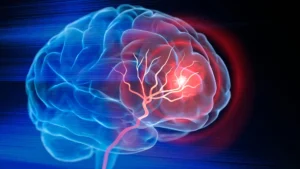
"Particles of that size or smaller can get down to the smallest part of the lung," explained Nathan Pace, MD, professor of anesthesiology at University of Utah Health and a co-author of the study. Once these particles penetrate the alveolar sacs of the lungs, they do not simply remain there. They are small enough to cross the alveolar-capillary barrier, entering the bloodstream.
Once in the systemic circulation, these particles can reach the brain, heart, liver, and kidneys. The presence of these foreign particulates triggers an immediate, body-wide inflammatory response. In a surgical context, this is disastrous. Surgery itself is a major stressor that induces inflammation; when the body is already battling the systemic stress of particulate matter, its ability to combat pathogens—or to facilitate rapid tissue repair—is severely compromised.
The Statistical Weight
The study quantified this risk with alarming precision: for every 10ug/m3 increase in PM2.5 concentration, there was an approximately 8% increase in the relative risk of post-surgical complications. This dose-response relationship suggests that even moderate exposure carries consequences, not just extreme pollution events.
Official Responses and Expert Perspective
The lead author of the study, John Pearson, MD, who serves as an associate professor of anesthesiology at Stanford Medicine, emphasized that the data points to a major public health consideration. "When there was an elevation in PM2.5 air pollution in the week before surgery, even for one day, we saw increased risk of major medical complications and infectious complications," Pearson noted.
However, the authors are careful to remain scientifically conservative. Because the study is observational, it does not definitively prove causation. As Dr. Pace noted, "A caveat in any observational study is that there might be a relevant factor that affects both the exposure and the outcome." For example, individuals living in areas with higher pollution might also have lower socioeconomic status, which could independently influence access to nutrition, health literacy, or post-operative care.
Despite this, the robustness of the data—covering nearly 50,000 cases—makes the correlation difficult to ignore. The medical community is now looking at how to integrate these findings into practical clinical workflows.
Clinical Implications: The Future of Surgical Planning
The implications for healthcare providers are significant, though the transition to standard clinical practice will require further validation.
Precision Scheduling
If future multi-center studies confirm these findings, we may see the emergence of "Air Quality Informed Scheduling." In this model, hospital systems could track local air quality indices (AQI) in real-time. For non-urgent, elective surgeries—such as joint replacements or cosmetic procedures—surgeons might advise patients to reschedule if an atmospheric inversion or wildfire smoke event is predicted for the days leading up to the surgery.
Patient Education and Pre-operative Care
For patients who cannot postpone their procedures, the findings offer a new, actionable pre-operative instruction: Environmental Protection. Just as patients are told to fast or stop certain medications before surgery, they may soon be advised to:
- Utilize HEPA air purifiers in their homes for the week prior to surgery.
- Avoid outdoor exercise or labor during high-pollution alerts.
- Limit exposure to second-hand smoke and other indoor pollutants.
The Broader Public Health View
Ultimately, the study serves as a call to action for urban planning and public policy. If air quality is a determinant of surgical success, then air pollution is not just an environmental issue—it is a clinical one.
"It’s always a good idea to protect your health during bad air pollution events," says Dr. Pearson. As our understanding of the body-environment connection grows, the line between "public health" and "clinical medicine" continues to blur. Doctors are no longer just treating the patient in the room; they are increasingly recognizing that the patient’s health is inextricably linked to the air they breathe in their own homes.
Conclusion: A New Standard of Care
The study from the University of Utah Health and Stanford Medicine provides a compelling rationale for hospitals to take environmental factors seriously. While further research is needed to determine which specific surgeries are most vulnerable, the core finding remains clear: air pollution is an invisible, yet potent, factor in surgical safety.
By acknowledging this risk, the medical community can move toward a more comprehensive model of care—one that recognizes that the journey to a successful recovery begins well before the first incision, in the very air the patient breathes. As we continue to refine the science of anesthesia and surgical technique, perhaps the next great leap forward in reducing post-operative infection won’t be a new drug or a new tool, but simply a cleaner breath of air.