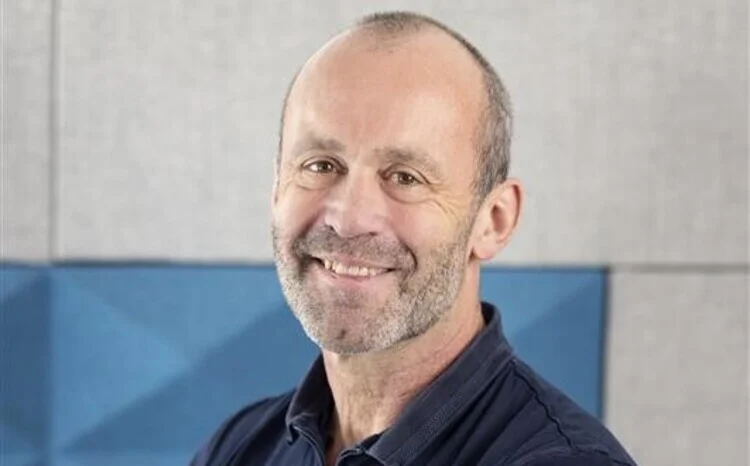
In a significant move to modernise the backbone of the United Kingdom’s healthcare infrastructure, the government has appointed veteran business leader John Browett as the inaugural Chair of the newly established Online NHS Trust. This entity, which serves as the governance body for "NHS Online," marks the most ambitious shift in clinical delivery since the inception of the National Health Service. By moving specialist care from traditional physical consulting rooms to the digital realm, the government aims to alleviate chronic waiting lists and provide a seamless, consumer-grade experience for millions of patients across England.
The Appointment: A Retail Vision for Healthcare
John Browett brings to the NHS a CV defined by high-stakes digital transformation and retail logistics. As the former chief executive of Tesco.com and a senior leader at Apple, Dixons, and Dunelm, Browett is uniquely positioned to steer the NHS through a transition that mirrors the "digital-first" shifts seen in the private sector over the last two decades. Currently serving as the chair of the Institute of Directors, his background in scaling high-traffic, customer-centric platforms is exactly the expertise the Department of Health and Social Care (DHSC) sought for this project.
Browett’s appointment is more than a formality; it is a signal that the NHS is prioritising user experience (UX) and accessibility as core pillars of medical service. "In my previous roles across technology and retail, I’ve seen how much people value services that are intuitive, responsive, and built around their needs," Browett stated upon his appointment. "I look forward to helping shape this new way of delivering NHS care."
Chronology: From Vision to Implementation
The path to the Online NHS Trust has been rapid, reflecting the government’s urgency in tackling the post-pandemic backlog.
- September 2025: Prime Minister Keir Starmer officially announces the "NHS Online" initiative, outlining a vision for a virtual hospital that bypasses geographical constraints.
- March 2026: A pivotal study reveals that two-thirds of NHS consultants are eager to work for the new digital platform, providing the government with the necessary clinical confidence to proceed with recruitment.
- Late 2026: The formal legal framework for the Online NHS Trust is finalised, establishing it as an independent entity capable of managing nationwide virtual appointments.
- 2027 (Projected): The official launch of services, beginning with specific pathways such as menopause support, prostate health, recurring urinary tract infections, and iron deficiency anaemia.
- 2027–2030 (Projected): The initial three-year roll-out phase, targeting a capacity of 8.5 million virtual appointments.
Strategic Framework: How NHS Online Operates
NHS Online is designed as a hybrid ecosystem. While it leverages the ubiquity of the NHS App for video consultations and symptom tracking, it remains tethered to the physical world for diagnostic certainty. The service is not intended to replace local GPs, but rather to act as a specialist layer within the referral process.
The Patient Journey
When a GP identifies a need for specialist intervention, patients will be offered the choice to opt for an "Online NHS" consultation. If selected, the patient is connected to a national network of experts. This removes the "postcode lottery" of wait times; a patient in a rural village will have the same access to a leading consultant as a patient in a major metropolitan hub.
The Clinical Workflow
Crucially, the service relies on remote triage and asynchronous care. Clinicians can review patient records and test results outside of standard "nine-to-five" office hours. If physical tests or scans are required, these will be performed at local centres, ensuring that the patient’s diagnostic data is funnelled back into the digital hub for a remote expert to review. This model allows for a more efficient allocation of medical resources, effectively decoupling specialist capacity from the physical constraints of hospital buildings.
Supporting Data and Capacity Projections
The sheer scale of the Online NHS Trust is designed to address the 8.5 million virtual appointments projected within its first three years. This target is not merely an aspirational figure; it is based on the granular analysis of common, manageable conditions that currently contribute to long wait times.
The selection of the initial four service pathways—menopause, prostate problems, recurring UTIs, and anaemia—was deliberate. These conditions are high-volume, frequently require repetitive assessments, and, according to clinical consensus, can be managed with high efficacy through remote monitoring and video consultation.
Moreover, the workforce capacity concerns have been largely mitigated by the internal survey findings. With over 60% of consultants expressing interest in supplemental work via the platform, the NHS has a ready-made pool of talent. This flexibility allows the NHS to scale its capacity based on demand, effectively creating a "surge-capable" medical workforce that can be deployed wherever the need is greatest, without destabilising existing hospital staffing levels.
The Board: A Multidisciplinary Taskforce
Browett will be supported by an elite group of non-executive directors whose diverse backgrounds underscore the complexity of this undertaking. The board includes:
- Professor Ian Abbs: Expert in clinical governance.
- Mark Balabanovic & Mary Basterfield: Specialists in digital infrastructure and service delivery.
- Nikita Kanani: A key voice in primary care and integration.
- Omar Din & Dame Ruth May: Representing nursing leadership and public health strategy.
- Simon Morris: Serving as associate non-executive director, providing additional oversight.
This composition suggests that the Trust is focused not just on software development, but on the delicate integration of digital tools into the deeply entrenched clinical culture of the NHS.
Official Responses and Political Implications
Health Secretary James Murray has been vocal in his support for the model, framing the appointment of Browett as a "digital-age" necessity. "We’re bringing the NHS into the digital age and in line with the technology people use every day," Murray remarked. "John’s know-how from the private sector will be crucial."
The political stakes for the current government are high. By betting on a technology-first solution to the waiting list crisis, the government is attempting to prove that the NHS can evolve without necessitating the wholesale privatisation of services. The strategy is to prove that the "publicly owned, digitally delivered" model can be more efficient than traditional bureaucratic structures.
Implications for the Future of Healthcare
The implications of the Online NHS Trust extend far beyond the next three years. If successful, this model could redefine the concept of a "hospital." In the future, a hospital may no longer be defined by its physical footprint or its wards, but by its digital presence.
1. The Death of Distance
For patients with chronic conditions or those living in remote areas, the digitisation of specialist care removes the physical barriers that have long defined the quality of care. The "Online NHS" ensures that expertise is distributed based on need, rather than geography.
2. Efficiency through Asynchronous Care
By enabling clinicians to manage caseloads outside of traditional hours, the NHS can move away from the rigid scheduling that leads to clinic cancellations and "Did Not Attend" (DNA) rates. This shift towards flexible, remote working for consultants could also help in retaining staff who are otherwise burnt out by the relentless pace of in-person, high-volume clinic rotas.
3. A Template for Global Health
If the UK succeeds in building a robust, high-volume virtual hospital system, it will set a benchmark for other national health systems struggling with ageing populations and workforce shortages. The ability to integrate the NHS App with a virtual specialist layer is a blueprint that could be adapted for mental health, dermatology, and chronic disease management on a global scale.
Conclusion: The Challenges Ahead
Despite the optimism surrounding the launch, the Trust faces significant hurdles. Public trust in digital health services, the security of patient data, and the potential for a "digital divide"—where those without access to technology are left behind—remain critical concerns.
However, with John Browett at the helm, the focus appears to be on creating a user-centric, responsive service that treats the patient as a consumer of a vital public good. As the NHS prepares for the 2027 launch, all eyes will be on whether the "Online NHS Trust" can truly deliver on its promise to bring the nation’s most cherished institution into the twenty-first century. By marrying the speed and convenience of the private sector with the universal, free-at-the-point-of-use ethos of the NHS, the government is embarking on the most important medical experiment of our time.