In the rapidly evolving arena of oncology, the line between the "wet lab"—the traditional domain of test tubes and biological samples—and the "dry lab"—the world of algorithms and high-performance computing—is blurring. As cancer research pivots toward a data-driven paradigm, the ability to synthesize complex biological information has become as critical as the ability to cultivate cells.
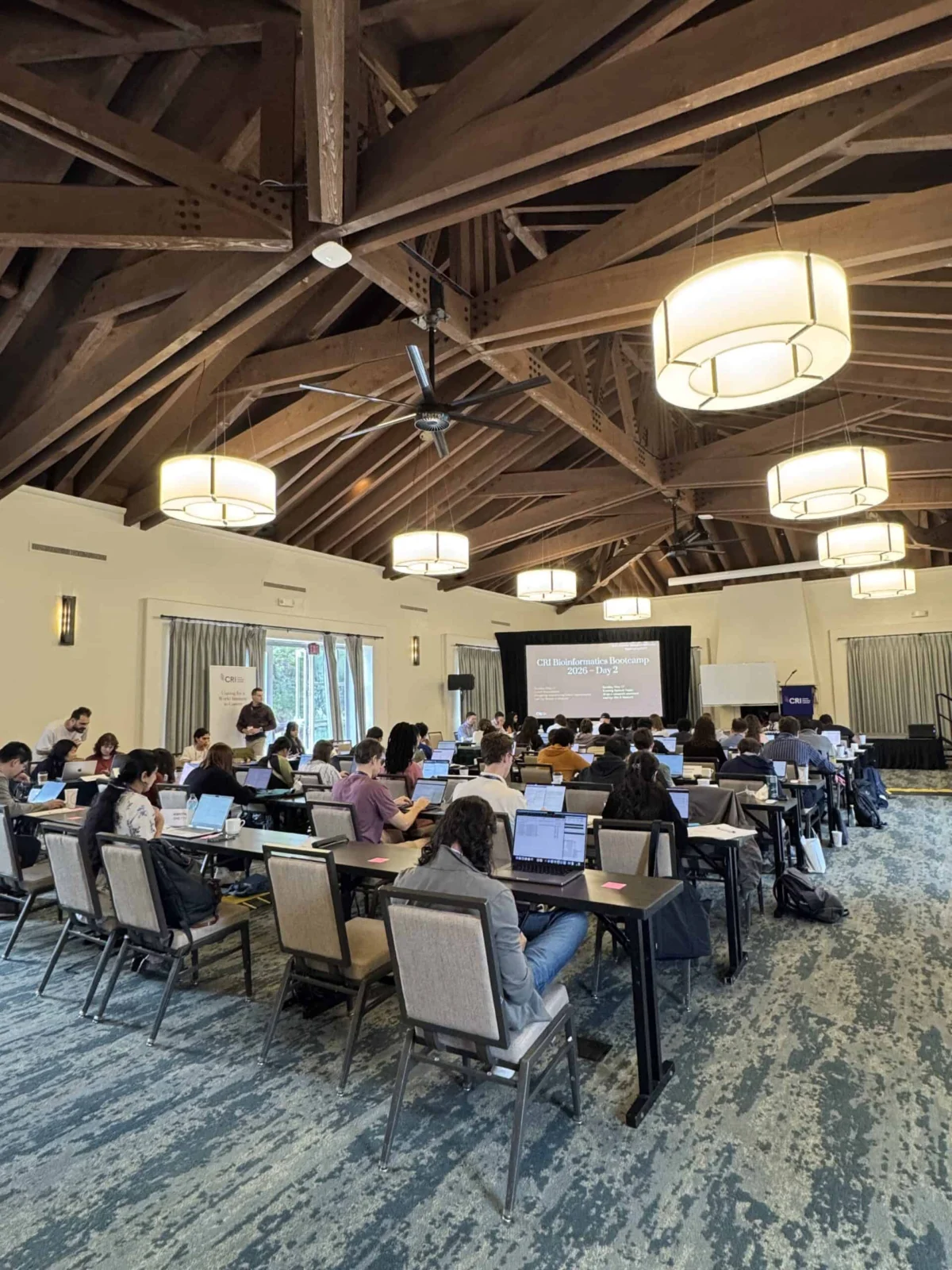
From May 16 to 22, 2026, the Cancer Research Institute (CRI) hosted its third annual Bioinformatics Bootcamp at the scenic La Cantera Resort in San Antonio, Texas. The intensive, week-long residency brought together more than 50 fellows and students, fostering an environment where the next generation of immunotherapy experts could master the computational tools essential for modern scientific discovery.
The Convergence of Biology and Big Data
The fundamental challenge in contemporary cancer research is the sheer volume of data generated by high-throughput technologies. Modern researchers are no longer just looking at single proteins or individual pathways; they are analyzing the transcriptomes of thousands of single cells, mapping entire immune repertoires, and integrating multi-omic datasets.
The CRI Bioinformatics Bootcamp was established to bridge the gap between experimental biology and data science. By equipping early-career scientists with the computational literacy required to navigate this landscape, the program ensures that investigators can not only generate "big data" but extract meaningful, life-saving biological insights from it. The curriculum provides practical, hands-on training in the cornerstones of modern bioinformatics: next-generation sequencing (NGS) analysis, single-cell technologies, sophisticated data visualization, and the construction of robust computational workflows.
A Week in Review: The 2026 Residency
The bootcamp’s structure is designed for total immersion, moving beyond theoretical lectures into active, one-on-one mentorship.
The Chronology of the 2026 Bootcamp
- Opening Days: The week began with foundational modules aimed at leveling the computational playing field. Recognizing that participants come from diverse backgrounds—some with extensive bench experience but limited coding exposure—the faculty emphasized core programming principles and the logic of data analysis.
- Mid-Week Intensives: As the week progressed, the curriculum shifted toward advanced applications. Attendees engaged in hands-on workshops focused on single-cell RNA sequencing (scRNA-seq) and spatial transcriptomics, allowing them to work directly on their own experimental datasets under the guidance of expert faculty.
- The Roundtable Evolution: A new addition for 2026 was the introduction of lunch-hour roundtables. Capped at 18 participants, these sessions fostered intimate discussions on the "human" side of science: navigating computational career paths, the intricacies of grant writing for bioinformatic projects, and the vital importance of coding reproducibility.
- Evening Deep-Dives: The learning extended into the evening, with special sessions dedicated to the bleeding edge of the field. Discussions on the role of Artificial Intelligence in predictive modeling and advanced Python scripting provided attendees with a glimpse into the future of research methodologies.
Expert Perspectives: Shaping the Curriculum
The success of the bootcamp lies in its continuity and adaptability. The 2026 faculty consisted of five bioinformatics experts, four of whom have been with the program since its inception. This stability allows for a curated, evolving curriculum that mirrors the breakneck pace of technological development.
Dr. Katie Campbell, a faculty member who has helped guide the program from its infancy, reflected on the evolution of the bootcamp. "When we started the bioinformatics bootcamp just three years ago, we really focused on the basics and the fundamentals of programming," Dr. Campbell noted. "With the rapid pace of technology, there’s a rapid pace of the tools available to analyze. We have to think about how we accelerate not just the discovery but the analysis, without taking away the necessary thought processes that have to be intrinsic to the fellows as they take on this research."
The teaching assistants (TAs) played a pivotal role in this year’s success, providing essential peer-to-peer support. Christie Chang, a TA at the event, underscored the critical nature of this integration. "The Bootcamp is important because it’s really bridging the gap across two fields of the wet lab and the dry lab," Chang said. "As technologies are evolving, we’re generating large data sets, and we need computational tools to be able to understand more complex pictures and make more complex discoveries."
Supporting Data and Technical Fluency
The transition to "big data" science is not merely a trend; it is a necessity for the future of immunotherapy. As Dr. Maryam Pourmaleki, a TA at the bootcamp, observed, "In today’s time, a lot of science is moving towards big data. Scientists who have phenomenal training in wet lab now need to analyze bigger multimodal data they’re generating, and the Bootcamp is giving those scientists the necessary tools to work with big data."
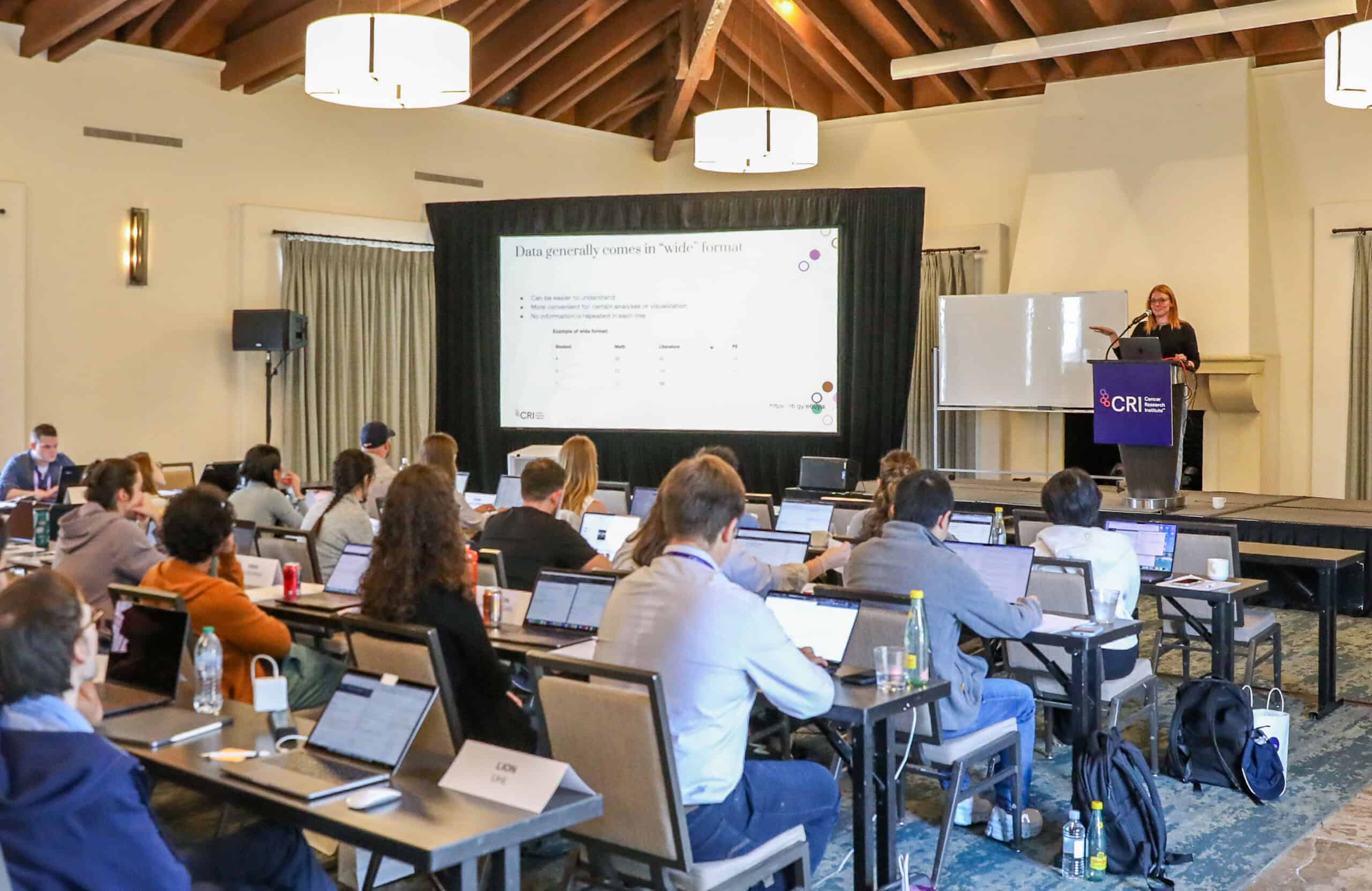
The program’s effectiveness is validated by the participants’ growth. Many attendees arrive feeling intimidated by command-line interfaces and complex software environments. By the end of the week, they have not only run successful analyses but have also gained the confidence to troubleshoot their own pipelines. This is a significant departure from relying on automated "black box" tools or simple AI prompts. As attendee Dr. Jia Yu (Jennifer) Ye noted, the program offers a way to learn skills "systematically, rather than just chatting with an AI engine."
Implications for the Future of Cancer Immunotherapy
The implications of this training extend far beyond the walls of the La Cantera Resort. By fostering a cohort of researchers who are bilingual in both biology and data science, the CRI is effectively accelerating the pace of immunotherapy development.
1. Accelerating Discovery
When a researcher can independently analyze their data, the feedback loop between observation and hypothesis is drastically shortened. This leads to faster iterative testing, which is the cornerstone of developing novel immunotherapies that can overcome tumor resistance.
2. Building a Collaborative Network
Science is inherently collaborative. The bootcamp functions as a networking hub, connecting fellows who share similar challenges. As Dr. Tara Muijlwijk, a CRI Dr. Keith Landesman Memorial Fellow, pointed out, the value lies in "zooming out" from one’s own research. "The Bootcamp is really a great way to zoom out and to think about, okay, what am I doing, why am I doing this, and also to connect with other people, which is super important in research," Dr. Muijlwijk said.
3. Democratizing Analytical Power
By emphasizing accessibility, the CRI is ensuring that high-level computational literacy is not restricted to a select few elite laboratories. This democratization allows for more diverse research questions to be asked, potentially uncovering unique therapeutic targets that might otherwise be buried in large, unanalyzed datasets.
A Strategic Investment in Human Capital
The CRI Bioinformatics Bootcamp represents more than just a training program; it is a strategic investment in the intellectual capital of the cancer research community. By equipping emerging scientists with the tools to harness the power of data, the CRI is positioning itself at the forefront of a technological revolution in medicine.
The program’s philosophy is rooted in the belief that the future of cancer treatment will be built by those who can successfully integrate diverse domains of knowledge. Whether it is applying machine learning to predict patient response to checkpoint inhibitors or using single-cell analysis to map the tumor microenvironment, the fellows trained in San Antonio are now better prepared to lead the charge.
As these 50+ participants return to their home institutions, they bring with them more than just a set of new software skills. They return with a new, broader perspective on the possibilities of their work. They are the architects of the next generation of breakthroughs, armed with the technical acumen to decipher the complex biological language of cancer and the collaborative spirit to transform that knowledge into patient-centric solutions.
The 2026 CRI Bioinformatics Bootcamp has set a high bar for scientific education. In a world where data is the new currency of innovation, the Cancer Research Institute has ensured that its fellows are not just spending that currency—they are minting it, one discovery at a time.