








20 May, 2026
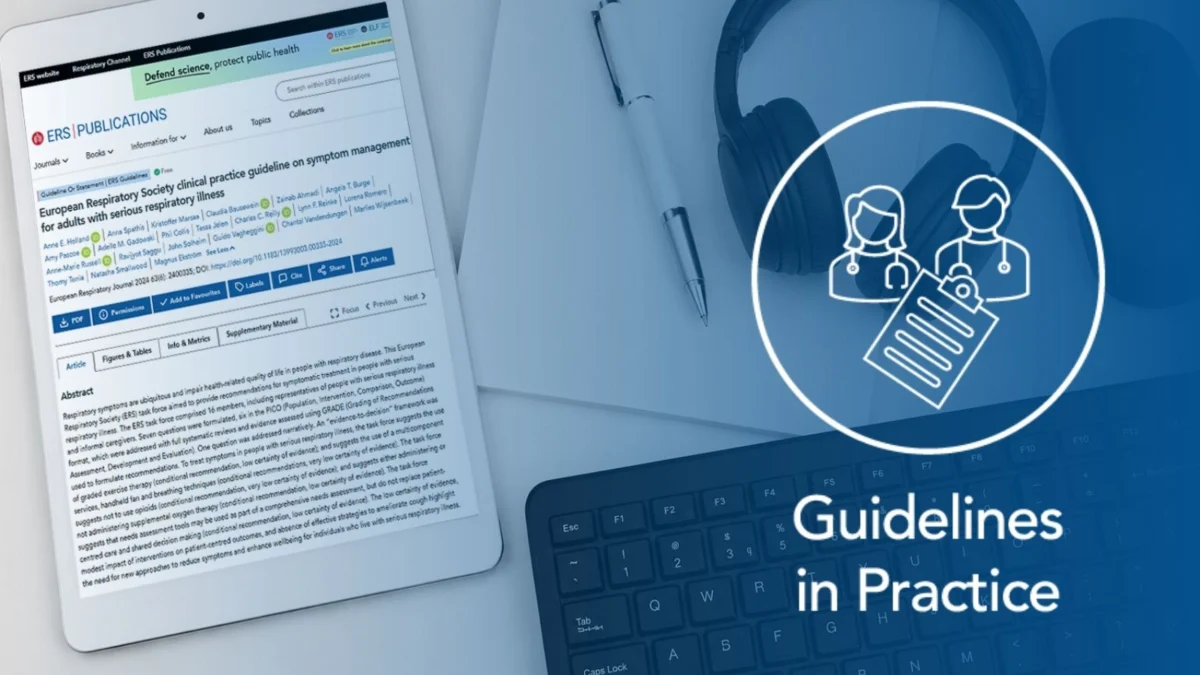
The European Respiratory Society (ERS) has officially unveiled its latest initiative in medical communication: a dedicated podcast series titled Guidelines in Practice. By moving beyond the static nature of traditional clinical documents, this series aims to explore the dynamic, real-world application of respiratory medicine guidelines. Designed for clinicians, researchers, and allied health professionals, the podcast seeks to bridge the critical gap between evidence-based recommendations and the often-complex reality of patient care at the bedside.
Main Facts: A New Era for Evidence-Based Medicine
The ERS has long been a global leader in establishing rigorous, evidence-based standards for respiratory health. However, the society recognizes that the publication of a guideline is merely the beginning of its life cycle. Guidelines in Practice serves as an auditory bridge, connecting the architects of these guidelines with the practitioners who implement them.
In each episode, a member of the original task force responsible for developing a guideline engages in a deep-dive conversation with an external expert. These discussions take place at least one year following the document’s publication—a timeframe strategically chosen to allow for the observation of measurable changes in clinical habits, diagnostic trends, and therapeutic outcomes.
Unlike traditional academic podcasts that may focus on a technical, line-by-line reading of protocols, Guidelines in Practice emphasizes storytelling. Through the lens of real-world clinical cases and patient anecdotes, the series illustrates the human impact of these recommendations. The goal is to demystify the implementation process, highlighting not only the successes of the guidelines but also the persistent hurdles that prevent seamless integration in diverse healthcare settings.
Chronology: From Concept to Clinical Reality
The launch of the podcast is the latest step in a multi-year effort by the ERS to modernize how it disseminates scientific knowledge. The chronology of the project reflects a shift in pedagogical strategy:
- Pre-2024: ERS recognizes a stagnation in the uptake of certain complex guidelines, noting that while professionals read the literature, there remains a disconnect in how those findings are operationalized across different international healthcare systems.
- 2024-2025: Development phase. The ERS leadership identifies the need for an accessible, conversational medium that reaches clinicians during their commutes or downtime.
- Early 2026: Finalization of the podcast framework, focusing on the "one-year post-publication" check-in model to ensure the discussions are grounded in longitudinal experience.
- May 20, 2026: The official launch of Guidelines in Practice on the ERS Respiratory Channel, debuting with an episode on symptom management in serious respiratory illness.
Supporting Data: The Need for Implementation Science
The necessity for this podcast is underscored by the burgeoning field of "implementation science." Research within respiratory medicine has consistently shown that the "evidence-practice gap"—the time it takes for a new discovery or guideline to become standard practice—can often span years or even decades.
According to preliminary internal feedback from the ERS, clinicians often struggle with the "how" rather than the "what." While the technical specifications of a guideline are vital, practitioners frequently report that institutional barriers, resource limitations, and patient-specific comorbidities complicate the adoption of standardized protocols. By focusing on these friction points, the Guidelines in Practice series acts as a diagnostic tool for the healthcare community. It provides a platform to share workarounds, interdisciplinary strategies, and institutional policies that have successfully facilitated guideline adherence, thereby providing a data-rich narrative that traditional papers cannot capture.
The Inaugural Episode: Symptom Management in Serious Illness
The series launches with a high-impact topic: the ERS clinical practice guideline on symptom management for adults with serious respiratory illness. This topic is notoriously difficult to navigate, as it intersects technical respiratory care with the complexities of palliative medicine, ethics, and patient quality-of-life considerations.
The debut episode features a high-level dialogue between:
- Prof. Natasha Smallwood: Director of Respiratory Medicine at the Alfred Hospital, Melbourne, Australia, and co-chair of the guideline task force.
- Prof. Irene Higginson: A world-renowned palliative care physician and Professor of Palliative Care and Policy in London, United Kingdom.
By pairing a respiratory specialist with a palliative care expert, the episode immediately demonstrates the interdisciplinary nature of modern respiratory care. The conversation moves beyond the physiological management of breathlessness or cough, delving into how these guidelines help clinicians navigate the emotional and systemic challenges of end-of-life care.
Official Responses: Insights from ERS Leadership
Prof. Winfried Randerath, the ERS Guidelines Director, has been a vocal proponent of this new medium. Reflecting on the launch, Prof. Randerath emphasized the importance of the human element in clinical governance.
"ERS guidelines are produced by task forces on specific topics in respiratory medicine in order to guide respiratory professionals in their clinical practice," Randerath stated. "However, we know that the true value of these documents is realized only when they are translated into the daily work of our members. ERS guidelines have significant impact on clinical practice, and it will be fascinating to hear first-hand about this impact from the professionals who are implementing the guidance they provide."
Randerath’s perspective highlights a cultural shift within the society: the move toward a more collaborative, feedback-oriented relationship between the governing body and the practitioners. He added, "I look forward to listening to, and taking part in, engaging discussions as part of this new series. We are not just broadcasting information; we are starting a conversation that will undoubtedly inform how we develop the next generation of guidelines."
Implications: Changing the Future of Respiratory Care
The implications of the Guidelines in Practice series are far-reaching. By providing a forum for candid discussion about the difficulties of implementation, the ERS is effectively creating a "lessons learned" repository that will influence future research priorities.
1. Identifying Barriers to Care
The podcast will inevitably highlight systemic challenges—such as underfunding, lack of specialized equipment, or regulatory hurdles—that prevent patients from receiving care recommended by ERS guidelines. When these issues are discussed by international experts, they provide a powerful narrative for advocacy and policy reform.
2. Tailoring Global Guidance to Local Contexts
A major criticism of international medical guidelines is that they are often written with high-resource settings in mind. The podcast format allows guests to discuss how these recommendations can be adapted or scaled for different clinical environments, making the information more inclusive and applicable to a global audience.
3. Enhancing Educational Engagement
With the rise of on-demand digital content, medical education is evolving. The ERS Respiratory Channel, by hosting this series, is positioning itself as a comprehensive hub for professional development. The focus on storytelling—using case studies to explain complex protocols—is a proven pedagogical technique that improves retention and encourages critical thinking over rote memorization.
4. Future-Proofing Guidelines
Perhaps the most significant implication is the feedback loop created by these conversations. If the podcast series reveals that a specific recommendation is consistently ignored or misinterpreted by the clinical community, the ERS can use this data to refine future revisions of the guideline. This turns the guideline development process into an iterative, evolutionary cycle rather than a static, linear one.
Conclusion: A New Standard for Medical Communication
The launch of Guidelines in Practice is a landmark moment for the European Respiratory Society. In an era of information overload, the value of curated, context-driven content cannot be overstated. By focusing on the lived experience of clinicians and the real-world application of evidence, the ERS is not just providing guidance; it is fostering a community of practice that is better equipped to handle the complexities of modern respiratory medicine.
As the series continues, it promises to be an essential resource for any healthcare professional looking to improve their clinical practice. By listening to the successes, the frustrations, and the nuanced solutions of their peers, listeners will gain a deeper understanding of how to translate the printed word into improved patient outcomes.
The first episode is available now on the ERS Respiratory Channel. The society encourages all members and respiratory professionals to visit the channel to explore the full library of on-demand content, stay informed on upcoming live events, and join the evolving conversation on the future of respiratory health.