


As we navigate our mid-fifties and beyond, the narrative surrounding physical fitness often shifts from "performance" to "preservation." However, this shift should not be interpreted as a mandate to stop challenging our bodies. In fact, maintaining arm and upper-body strength is more critical after age 55 than at any other time in our lives. Functional independence—the ability to push yourself out of a chair, carry groceries, lift a suitcase into an overhead bin, or reach into a high cabinet—depends entirely on the strength of your shoulders, biceps, triceps, and upper back.
For many adults, the barrier to training is not a lack of desire, but a fear of joint discomfort. If your shoulders "bark" at you or your wrists ache after a workout, you are likely using the wrong tools or improper mechanics. A CSCS-certified (Certified Strength and Conditioning Specialist) approach focuses on longevity, ensuring that your training routine serves your daily life rather than hindering your recovery.
The Vital Role of Functional Strength in Longevity
Arm strength is not merely about aesthetics or gym-floor bragging rights; it is a primary indicator of functional health. Research consistently demonstrates that grip strength and upper-body power are linked to overall mortality rates and physical independence in older adults. When we neglect these muscle groups, we see a decline in the ability to perform basic Activities of Daily Living (ADLs).
The goal of a post-55 fitness program is to rebuild capacity without overwhelming the joints. This is achieved by selecting movements that allow for gradual loading, consistent repetition, and minimal stress on connective tissues. By leveraging tools like resistance bands, wall-supported movements, and controlled unilateral (single-side) exercises, we can stimulate muscle growth and bone density improvements without the wear and tear associated with traditional heavy powerlifting.
Chronology of Progress: How to Start
If you are returning to exercise or starting a formal routine for the first time in years, the "less is more" philosophy is your best strategy. We suggest a structured, three-phase approach to building strength:
- Phase 1: Stabilization (Weeks 1-4): Focus on form, range of motion, and joint comfort. Use wall push-ups and light resistance bands. Do not focus on weight; focus on the "mind-muscle connection."
- Phase 2: Adaptation (Weeks 5-8): Gradually increase the tension on your bands or move from a wall to a kitchen counter for your push-ups. Begin incorporating the half-kneeling press with light dumbbells.
- Phase 3: Integration (Week 9 and beyond): Incorporate overhead carries to solidify stability. At this stage, your muscles should feel fatigue, but your joints should remain pain-free.
Supporting Data: Why Joint-Friendly Training Works
The physiology of aging involves a gradual loss of muscle mass (sarcopenia) and a reduction in synovial fluid, which cushions our joints. Traditional training often ignores these factors, leading to inflammation.
Data suggests that resistance training using variable resistance—such as rubberized bands—can be superior for aging populations. Unlike gravity-dependent free weights, bands provide "accommodating resistance." The resistance is lowest at the start of the movement (when your joints are most vulnerable) and increases as you reach the peak of the contraction. This naturally protects your elbows and shoulders while maximizing the muscle-building stimulus.
The Five-Exercise Protocol for Lifelong Strength
To rebuild your arms without pain, incorporate these five movements into a routine performed two to four days per week.
1. The Adaptive Push-Up
The push-up is the gold standard for upper-body pressing, but the floor version is often too aggressive for aging shoulders. By utilizing a wall or a sturdy kitchen counter, you change the leverage.

- The Benefit: It builds chest, shoulder, and tricep strength while teaching you to maintain a "plank" position, which engages your core—an essential for preventing lower back pain.
- Execution: Place hands on a surface slightly wider than shoulder-width. Keep your body in a straight line from heels to head. Lower your chest toward the surface, keeping elbows at a 45-degree angle to your body, then push back to the start.
2. The Standing Band Row
Most people obsess over the front of the arms, but your back muscles act as the "brakes" and stabilizers for your shoulders.
- The Benefit: It counteracts the "slumped" posture many of us develop from desk work or looking at devices. It strengthens the rear deltoids and biceps simultaneously.
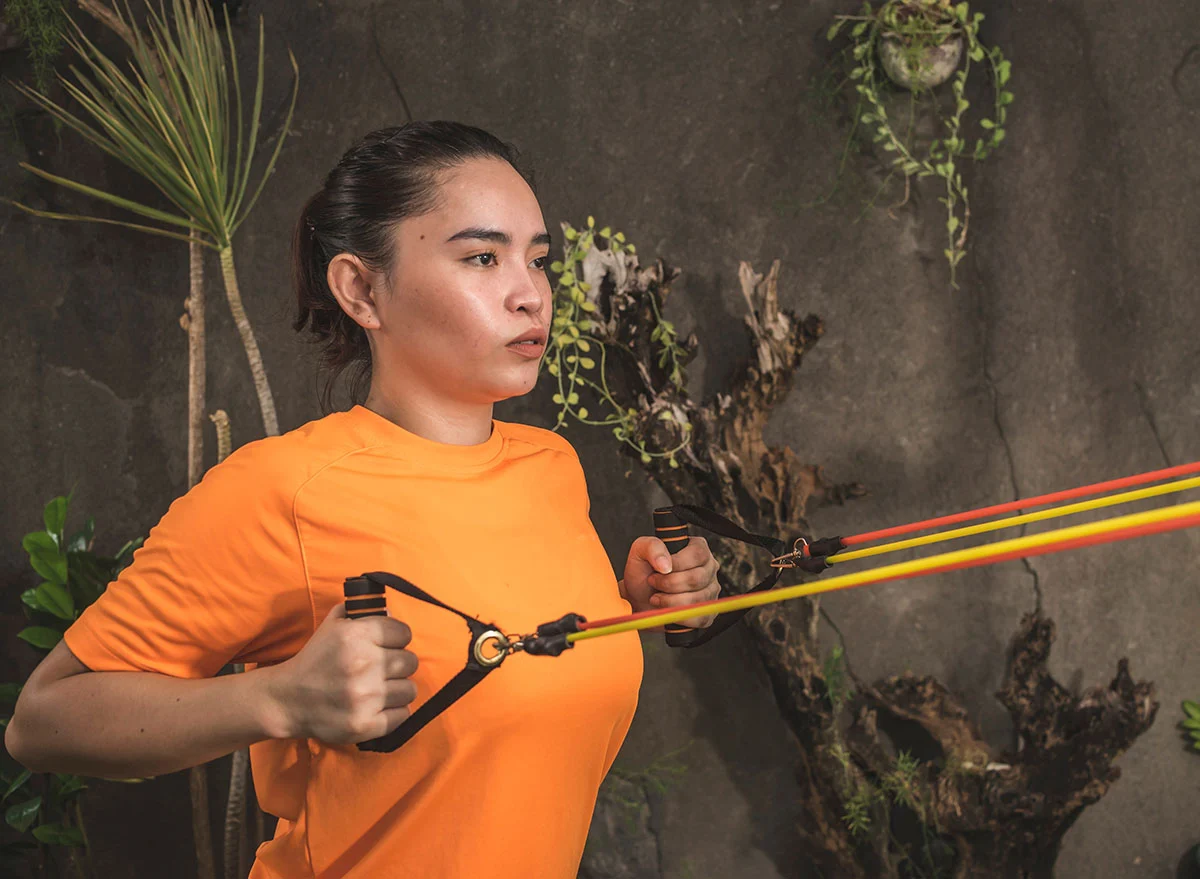
- Execution: Anchor a band to a sturdy door handle or post. Stand with feet hip-width apart. Pull your elbows back, squeezing your shoulder blades together. Ensure your posture remains upright throughout.
3. Half-Kneeling Dumbbell Shoulder Press
Overhead pressing is often where people experience "impingement" in the shoulder. The half-kneeling variation provides a massive stability boost.
- The Benefit: By kneeling on one side, you force your core to stabilize the movement. This prevents the common tendency to arch the lower back, which is where many shoulder injuries originate.
- Execution: Kneel on a soft pad with the knee opposite to your working arm. Press the dumbbell upward in a controlled, steady motion. Keep the weight stacked directly over the shoulder joint.
4. Overhead Dumbbell Carry
This is an "isometric" exercise, meaning the muscle is under tension without changing length.
- The Benefit: It builds "real-world" strength. It teaches your shoulder girdle to remain stable under load, which is exactly what happens when you reach for a heavy item on a high shelf.
- Execution: Press a light dumbbell overhead and lock your elbow. Walk slowly for 15 to 30 seconds. Your goal is to keep your torso perfectly vertical.
5. The Band Curl
The humble bicep curl is essential for elbow health and grip strength.
- The Benefit: Using a band is safer for the elbow joint than a heavy barbell, as it avoids the "jerking" motion often used to cheat the weight up.
- Execution: Stand on the center of a resistance band. Hold the handles with palms facing forward. Curl toward your shoulders, keeping elbows pinned to your ribs.
Official Recommendations and Expert Insights
Certified trainers emphasize that "consistency beats intensity." If you are feeling sore in the joints, do not push through it. Soreness in the muscles (a dull, heavy ache) is a sign of progress; sharp, stabbing, or pinching pain in the joints is a signal to stop, adjust your range of motion, or reduce the weight.
Key Safety Guidelines:
- Warm-up: Never start cold. Perform 5 minutes of light movement, such as arm circles or walking, before picking up any resistance.
- Listen to the "Morning Check": If your shoulders feel stiff or painful the morning after a workout, your volume was likely too high. Reduce the number of sets in your next session by one.
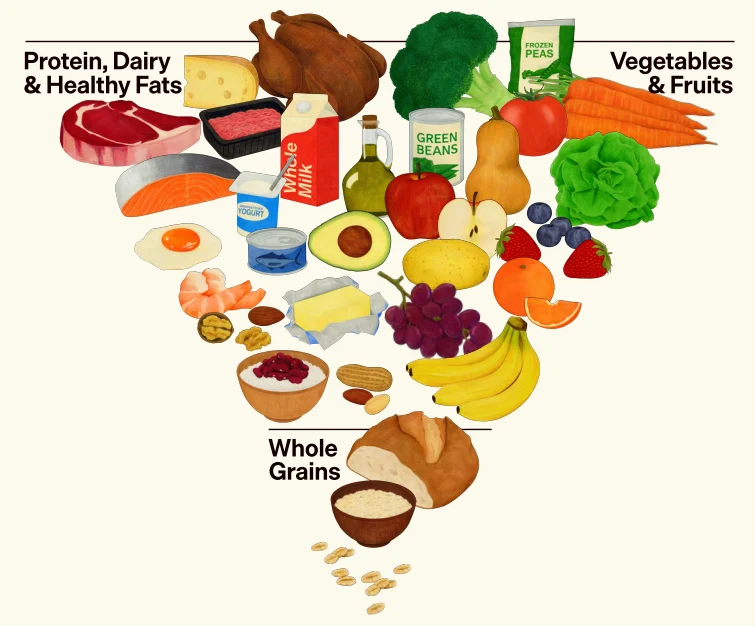
- Hydration and Nutrition: Ensure you are consuming adequate protein, as muscle protein synthesis slows down after 50. Protein provides the building blocks necessary for the recovery you are stimulating.
Implications: Moving Forward with Confidence
The decision to train your arms after 55 is a commitment to your future self. By choosing these joint-friendly, highly scalable movements, you are not just building bigger arms—you are reinforcing the structural integrity of your upper body.
When you adopt this mindset, the gym (or your living room) stops being a place of potential injury and starts being a sanctuary for maintenance and growth. You will find that tasks like carrying luggage, gardening, or picking up grandchildren become easier, more fluid, and—most importantly—pain-free. Strength is a renewable resource; regardless of your starting point, with the right technique and a focus on longevity, your best years of physical capability are still ahead of you.