




Colorectal cancer (CRC) has shifted from being viewed primarily as a disease of aging to a pressing crisis for younger generations. Now the second leading cause of cancer-related mortality in the United States, it has ascended to the number one cause of cancer death among adults under 50. While the medical community has celebrated decades of progress in oncology, a glaring "immunotherapy gap" remains. For the vast majority of CRC patients, the revolutionary checkpoint inhibitors that have transformed outcomes for melanoma and lung cancer remain frustratingly ineffective.
Dr. Karin Pelka, an investigator at The J. David Gladstone Institutes and a recipient of the prestigious Cancer Research Institute (CRI) Technology Impact Award, is spearheading a paradigm shift. Her research does not merely look at the tumor as a mass of malignant cells; she is listening to the molecular "conversations" occurring within the tumor microenvironment to determine why the immune system fails to recognize and eliminate these threats.
The Challenge: Why Most Colorectal Cancers Evade the Immune System
To understand why immunotherapy often fails in CRC, one must first understand how it succeeds elsewhere. Immunotherapy—specifically checkpoint blockade—relies on the immune system’s ability to flag cancer cells as "foreign." In cancers like melanoma, high rates of DNA mutation often lead to the production of abnormal proteins that the immune system easily detects.
However, most colorectal cancers are "immunologically cold." They do not harbor enough distinct mutations to alert the body’s T-cell defense force. As Dr. Pelka notes, "The vast majority of colon cancer falls into this relatively large area of tumors where we haven’t quite figured out yet how to use the immune system to fight them."
The 5% Exception
There is a notable subset of CRC—roughly 5% to 10% of patients—whose tumors exhibit a "mismatch repair defect" (dMMR). These tumors are genetically unstable, creating an abundance of foreign-looking markers. The clinical outcomes for this group have been nothing short of miraculous. A landmark 2022 clinical trial revealed that patients with locally advanced rectal cancer carrying this specific defect could achieve total clinical remission using immunotherapy alone, bypassing the traditional, grueling regimen of chemotherapy, radiation, and surgery. Every patient in that trial saw their cancer disappear without a trace. Dr. Pelka’s mission is to translate this "extraordinary" success from the 5% to the remaining 90% of patients.
A Chronology of Discovery: From Observation to AI Integration
The trajectory of Dr. Pelka’s research highlights the evolution of modern oncology from broad-spectrum chemotherapy to precision, AI-driven biological mapping.
- Pre-2020: The Era of Standard Care: CRC treatment was largely defined by surgery and systemic chemotherapy. Immunotherapy was reserved almost exclusively for the dMMR subpopulation.
- 2022: The Clinical Milestone: The publication of trial data showing complete remission in dMMR rectal cancer patients ignited the field, providing a "proof of concept" that immunotherapy could replace surgery.
- 2024–2025: The Mapping Phase: The Pelka Lab began identifying "immune hubs"—structured clusters of T cells and cancer cells engaged in active signaling. These hubs were found to be predictive of immunotherapy success, not just in CRC, but across various solid tumors.
- 2026: The AI Integration: With the support of the CRI Technology Impact Award, the lab began utilizing "Geneformer," an advanced AI model designed to analyze gene activity at a cellular scale, marking the beginning of an era where machine learning deciphers the "molecular language" of cancer.
Supporting Data: The Power of Screening and Molecular Mapping
While researchers work on next-generation therapies, the most effective tool in the current arsenal remains early detection. Colorectal cancer is unique in its preventability. Because the transition from a benign polyp to an invasive malignancy typically spans 10 to 15 years, a colonoscopy is essentially a life-saving intervention. Regular screening starting at age 45 remains the gold standard for prevention.
However, for those already diagnosed, the data on "immune hubs" provides a roadmap for future drug development. By analyzing the spatial transcriptomics—a technique that maps where and when specific genes are expressed within the physical tissue—Dr. Pelka’s team has identified that the success of the immune system depends on the "communication cascade" within these hubs. If the signaling is "active," the tumor is suppressed; if the signaling is disrupted, the tumor thrives. The current scientific endeavor is to identify the "master molecular switches" that allow these hubs to be manipulated.
The Role of Technology: Teaching AI to Read the Cell
The complexity of the human genome has historically hindered the identification of these master switches. Enter Geneformer. Developed by Dr. Christina Theodoris, this foundational AI model is trained on tens of millions of human cell profiles. It treats gene activity much like a language model treats text, identifying the "grammar" of cellular health and disease.
By applying Geneformer to tumor samples, Dr. Pelka’s lab is moving beyond observing that a cell is fighting a cancer to understanding why it chooses to stop. This approach is intended to reveal new immunotherapy targets that are not limited by a patient’s specific genetic profile, potentially expanding the pool of candidates for immunotherapy from the current 5% to a much broader demographic.
Official Perspectives: The Value of High-Risk Research
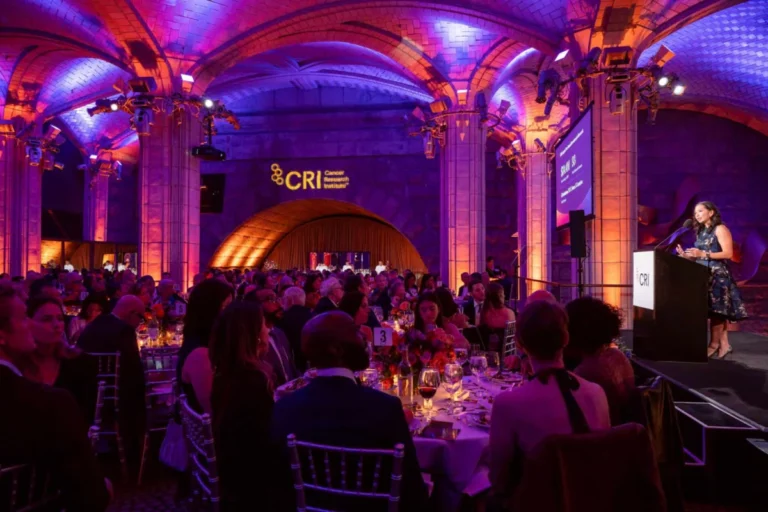
The CRI Technology Impact Award is designed to foster exactly this kind of high-risk, high-reward research. In the current academic climate, funding is often funneled toward incremental improvements rather than radical shifts. Dr. Pelka emphasizes the importance of this support:
"The CRI Technology Impact Award is a perfect example of bringing together new technologies with the problem of getting cancer immunotherapy to work. Having a foundation willing to take a bet early on—when the science is not yet ready to be employed widely, but where early discoveries can really move the needle—is often research that is hard to fund, because it is very risky."
This official support enables the Pelka Lab to ignore the pressure for immediate, short-term publication and instead focus on foundational breakthroughs that could solve the fundamental mechanisms of tumor evasion.
Implications: The Future of "Living Therapeutics"
The implications of this research are profound, particularly for the demographic most impacted by the current rise in CRC cases: young adults. For a 35-year-old patient, traditional chemotherapy may offer a limited window of time, but it often comes at the cost of long-term quality of life.
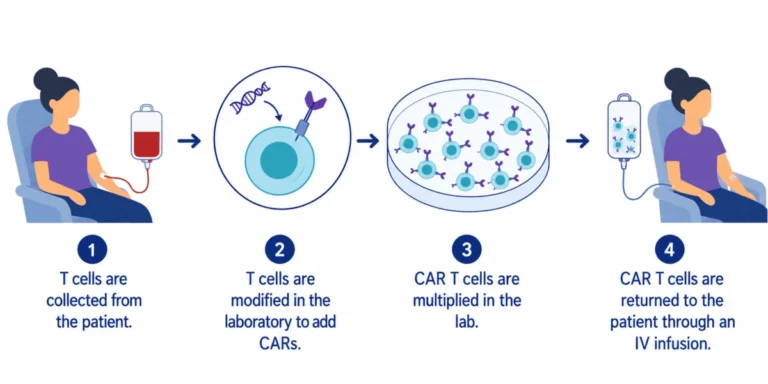
The ultimate goal of Dr. Pelka’s work is the creation of a "living therapeutic." Unlike traditional drugs that the body eventually metabolizes or that the cancer eventually evolves to bypass, a robust immune response is adaptive. If scientists can "teach" the immune system to recognize the specific molecular signatures of a patient’s tumor, the body itself becomes the medicine, evolving alongside the cancer to keep it in check indefinitely.
A Call for Continued Innovation
As the incidence of colorectal cancer continues to climb among younger adults, the urgency to move beyond the current immunotherapy gap has never been higher. The integration of spatial transcriptomics and foundational AI models represents the most promising path forward. By treating the tumor not as a static target, but as a dynamic ecosystem of "molecular conversations," Dr. Pelka and her colleagues are moving closer to a future where colorectal cancer is no longer a terminal diagnosis, but a manageable condition—or better yet, a curable one.
The path ahead is undoubtedly complex, requiring the convergence of immunology, data science, and clinical expertise. Yet, the evidence suggests that the tools to solve this puzzle are finally within reach. The work being done today at the Gladstone Institutes is not just about extending survival; it is about reclaiming the future for the thousands of patients whose lives are currently on the line.