







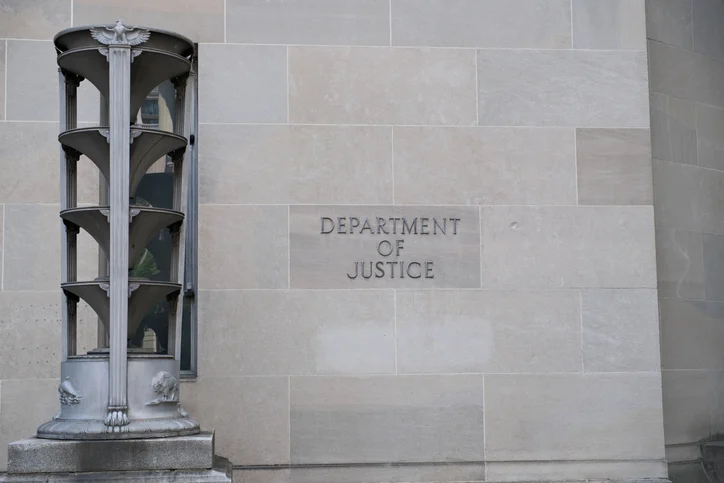
The United States Department of Justice (DOJ) has intensified its nationwide crackdown on healthcare fraud, waste, and abuse with the formal launch of a new, geographically focused enforcement unit: the West Coast Healthcare Fraud Strike Force. This initiative marks a strategic pivot in federal oversight, targeting complex, data-driven criminal enterprises operating across Arizona, Nevada, and Northern California.
As the healthcare industry integrates increasingly sophisticated artificial intelligence (AI) and automated billing systems, federal regulators are racing to modernize their enforcement capabilities. The new strike force is designed to dismantle large-scale criminal schemes—ranging from telehealth pill mills to fraudulent hospice operations—by surging resources, including specialized prosecutors, federal investigators, and advanced data analysts, directly into identified “hot spots.”
The Evolution of the Strike Force Model
The strike force model is not a new invention; it is a proven enforcement strategy that dates back to the late 2000s. According to Meredith Williams, a counsel at Barnes & Thornburg and former senior counsel for the HHS Office of Inspector General (OIG), the model was designed specifically to facilitate the rapid deployment of federal personnel into regions where fraud is disproportionately high.
“These strike forces were created to rapidly deploy federal prosecutors and investigators into regions flagged as fraud hot spots,” Williams explained. This collaborative framework allows the DOJ, FBI, DEA, and HHS-OIG to act in concert, creating a unified front against the multi-billion-dollar criminal economy that leeches off taxpayer-funded programs like Medicare and Medicaid.
The deployment of the West Coast unit follows the successful rollout of a similar strike force in Massachusetts just seven months ago. By choosing Massachusetts—a global hub for healthcare and life sciences—as its initial base for this new wave of enforcement, the Trump administration signaled that it was targeting high-density environments where the intersection of innovation and fraud is most acute. The selection of Arizona, Nevada, and Northern California as the next theaters of operation follows a similar, deliberate logic.
Chronology of Enforcement: Why These Regions?
The selection of the West Coast is a response to specific, alarming trends in federal oversight data. The DOJ has recently pursued a series of massive cases in these states, providing a clear roadmap for their current focus:
- Arizona: The state has become a primary target due to a cluster of high-profile cases involving fraudulent Medicaid billing, “sober living” home scams that exploit vulnerable populations, and predatory wound-care schemes. Collectively, these operations have allegedly cost taxpayers billions of dollars.
- Nevada: Federal investigators have identified a sharp, concerning rise in Medicare and hospice fraud. This surge is linked to the state’s rapidly expanding senior population, which has created a target-rich environment for bad actors.
- Northern California: As the epicenter of the nation’s AI development, Northern California presents a unique challenge. The DOJ is prioritizing this region to detect and disrupt tech-enabled fraud at its source, specifically targeting those who use AI to automate complex, multi-state fraudulent billing schemes.
The Medicare Payment Advisory Commission (MedPAC) 2025 report to Congress confirms these concerns. The report highlighted that hospice provider growth in these specific states has exploded at a rate far exceeding the national average—a major “red flag” for regulators. Common indicators of systemic fraud noted by MedPAC include sudden spikes in provider registration without corresponding clinical need, unusually long patient stays, and multiple entities operating out of the same physical address. In response to these patterns, California regulators were forced to temporarily halt the issuance of new hospice licenses to implement more stringent oversight.
Supporting Data: The Rise of AI and "AI Washing"
One of the most significant themes in this new enforcement era is the role of technology. While AI offers the potential for improved patient outcomes, it also provides a force multiplier for criminal enterprises.
Mary Inman, a partner at Whistleblower Partners, warns of a phenomenon she describes as “AI washing.” Many startups are entering the healthcare vendor space with little to no clinical or regulatory experience, selling AI-driven coding and billing tools that promise efficiency. In reality, these tools are often poorly vetted or programmed with flawed algorithms that lead to widespread billing errors—or intentional, systematic fraud.
“A lot of vendors are trying to get a competitive advantage by saying, ‘We’re applying AI,’ when sometimes they don’t even have that ability,” Inman noted. This creates a dangerous compliance vacuum. For instance, in a 2024 case, a major payer was forced to settle for nearly $100 million after a “rudimentary” natural language processing tool mistakenly categorized patients as having depression based on keywords, leading to fraudulent reimbursement claims.
The DOJ is responding to these risks by leveraging its own technological arsenal. The launch of the Healthcare Fraud Data Fusion Center last summer allows federal agencies to share analytics across departments, enabling the identification of anomalous billing patterns in real-time.
Official Perspectives and Industry Implications
While the DOJ’s scrutiny is intensifying, legal experts emphasize that the initiative is not meant to target legitimate, compliant providers. However, the definition of “compliance” is shifting.
“It’s a reminder to providers and digital health companies that this is a highly regulated landscape,” Williams said. “They need to have a robust compliance program, internal auditing, and the right policies in place to make sure they stay in the right lane.”
Ty Howard, a former federal prosecutor and current partner at Bradley Arant Boult Cummings, noted that while data analytics are a boon for the government, they also create a new burden for honest businesses. “With data analytics, the problem is that some very legitimate uses and billing patterns are going to still get attention,” Howard cautioned. He warned that providers should prepare for increased scrutiny even if their practices are legitimate, as “clinical variation” can sometimes look like fraud when viewed through the high-level, aggregate lens of federal data analysis.
For the industry, the primary near-term impact will be one of deterrence. The increased likelihood of being flagged for review—and the significant business costs associated with such scrutiny—is forcing companies to re-evaluate their internal controls.
Future Projections: Is Florida Next?
As the DOJ continues to refine its strike force model, industry analysts are looking to see which state will be targeted next. Florida, which has long grappled with a reputation for high-volume healthcare fraud, remains a top contender for a dedicated strike force. The Trump administration has already launched a targeted probe into Florida’s Medicaid program as of March, signaling that the federal government’s patience with regional fraud hubs is thinning.
The message to the healthcare industry is clear: the era of "move fast and break things" in digital health is over. As investors pour capital into AI-driven administrative tools, regulators are signaling that they will match that investment with a surge in enforcement capacity.
For companies operating in the telehealth, hospice, and medical technology sectors, the new strike force serves as a "warning shot." The future of healthcare compliance will no longer be determined solely by manual oversight but by the ability of firms to defend their automated systems and data practices under the intense, data-driven gaze of federal prosecutors. As the DOJ, FBI, and HHS-OIG tighten their coordination, the barrier to entry for the healthcare industry is rising—and for those who fail to prioritize compliance, the cost of entry may eventually become the cost of their business.