











By International Affairs Desk
The tenuous stability of the Persian Gulf, held together by the threadbare April 8 ceasefire, has effectively snapped. In a series of rapid, high-stakes military engagements occurring just after midnight on Thursday, American and Iranian forces engaged in direct combat for the second time in a single week. The conflict, centered around the strategic Strait of Hormuz—the world’s most vital oil transit artery—has transitioned from a war of rhetoric into a kinetic confrontation that threatens to destabilize global energy markets and drag the Middle East into a broader regional conflagration.
As explosions illuminated the skyline of the Iranian port city of Bandar Abbas, the veneer of diplomatic progress was stripped away. The exchange, involving drone swarms, missile salvos, and targeted airstrikes, has left global observers wondering if the path to a memorandum of understanding has been permanently blocked by the fog of war.
The Chronology of Conflict: A Week of Fire
The latest cycle of violence began in the pre-dawn hours of Thursday. According to reports from U.S. Central Command (CENTCOM), American surveillance assets detected an immediate, actionable threat originating from the vicinity of Bandar Abbas.
The Thursday Engagement
At approximately 12:15 a.m., U.S. forces initiated a defensive operation, successfully intercepting and destroying four Iranian "one-way attack" drones. The engagement did not end there. Recognizing that the launch site remained active, U.S. forces executed a follow-up strike on a ground control station in Bandar Abbas, neutralizing a fifth drone moments before its launch.
The Pentagon characterized these strikes as "measured and purely defensive," emphasizing that the primary objective was to neutralize imminent threats to both U.S. personnel and international shipping. However, the Islamic Revolutionary Guard Corps (IRGC) viewed the strikes as a direct violation of sovereign territory.
The Retaliatory Strike
By 4:50 a.m. local time, the IRGC had mobilized a response. Through the Tasnim news agency, the Guard announced it had launched a retaliatory strike against an American airbase. While the IRGC did not specify the target, the regional fallout was immediate. Late Wednesday, Kuwaiti military officials reported that their integrated air defense systems were engaged in "confronting hostile missile and drone attacks." Open-source intelligence analysts and regional security experts have triangulated the trajectory of these projectiles, suggesting they were likely directed at the Ali Al Salem Air Base, a critical hub for U.S. air operations near the Kuwaiti-Iraqi border.
The Monday Precedent
This week’s violence is not an isolated incident. On Monday, a similar engagement occurred when U.S. forces conducted "self-defense" strikes against Iranian naval vessels and a surface-to-air missile site in Bandar Abbas. That site, according to intelligence reports, had been actively tracking American warplanes, signaling a shift in Tehran’s posture from harassment to active targeting.
The Strategic Importance of the Strait of Hormuz
The Strait of Hormuz is more than a geographic chokepoint; it is the jugular vein of the global economy. Approximately 20% of the world’s total petroleum consumption passes through this narrow passage daily. Any disruption here—whether through kinetic warfare, the laying of naval mines, or the intimidation of commercial tankers—has immediate, cascading effects on the price of oil and the stability of global supply chains.
Since the onset of the current conflict, the Strait has become a theatre of economic warfare. Iranian authorities have repeatedly attempted to exert control over the waterway, forcing commercial vessels to navigate a gauntlet of threats. The presence of mines, coupled with the frequent interception of tankers, has led to skyrocketing insurance premiums and a general climate of fear among international shipping firms. The "ceasefire" has failed to secure these lanes, and as military posturing escalates, the risk of a miscalculation leading to a catastrophic environmental or economic event grows exponentially.
Official Responses and Diplomatic Impasse
The diplomatic landscape remains as volatile as the skies above the Strait. Despite the ongoing gunfire, negotiators from both Washington and Tehran have been engaged in back-channel discussions aimed at finalizing a memorandum of understanding. The proposed deal seeks to reopen the waterway to unhindered international shipping while addressing the highly contentious issue of Iran’s enriched uranium stockpiles.
The Washington Perspective
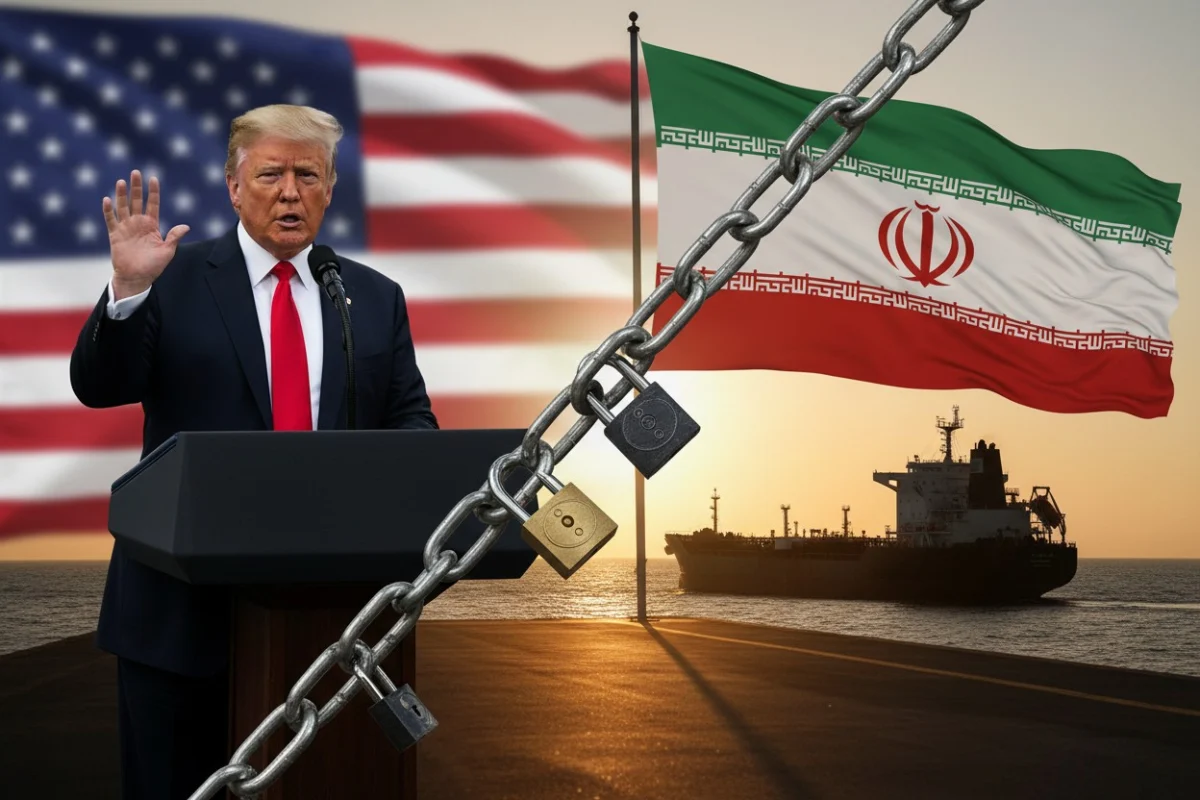
President Trump, addressing his cabinet on Wednesday, adopted an uncompromising stance. He signaled a growing impatience with the diplomatic process, stating, "We’ll have to just finish the job." The President’s rhetoric suggests a transition from a containment-based policy to one of decisive military pressure. He argued that the Iranian regime is "negotiating on fumes," citing the extensive degradation of their naval and aerial capabilities over the last few months. The U.S. strategy, which involves a robust naval presence and the deployment of 10,000 troops, appears designed to force a capitulation—a strategy that critics argue is the very catalyst for the current cycle of escalation.
The Tehran Perspective
The Iranian regime, meanwhile, continues to frame its actions as a defense of national sovereignty. The IRGC’s messaging has been consistent: any American "aggression" will be met with a "more decisive response." By positioning themselves as the aggrieved party in the face of what they describe as "illegal U.S. interference," the leadership in Tehran is attempting to maintain domestic cohesion while signaling to regional proxies that the battle for the Gulf is far from over.
Implications: A Region on the Brink
The implications of the current breakdown are profound. We are witnessing a transition where traditional diplomacy is being subsumed by high-intensity, short-duration military clashes.
- Global Energy Vulnerability: Should the conflict intensify, the risk of a total closure of the Strait is no longer theoretical. A prolonged blockade would trigger an energy crisis that could dwarf the shocks of the 1970s.
- The Failure of De-escalation: The April 8 agreement, which was once heralded as a breakthrough, now serves as a case study in the limitations of treaties without robust enforcement mechanisms. The lack of a clear verification regime has allowed both sides to interpret the terms to their own advantage, leading to the current breakdown.
- The Risk of Miscalculation: With U.S. and Iranian forces operating in such close proximity, the margin for error is razor-thin. A stray missile, an accidental strike on a civilian vessel, or a misidentified drone could trigger an uncontrollable escalation that goes beyond the current limited exchanges.
- Regional Security Architecture: The involvement of neighboring nations—such as Kuwait’s defensive response—highlights how quickly the conflict can spread beyond the immediate combatants. The security of the entire Gulf Cooperation Council (GCC) is now tethered to the fluctuating state of U.S.-Iran relations.
As the smoke clears over Bandar Abbas and the regional air defenses stand on high alert, the world remains in a state of anxious suspense. The current strategy of "maximum pressure" matched against "defensive retaliation" has not brought peace; it has created a dangerous equilibrium where the next explosion could be the one that forces the world into a full-scale regional war. Whether the negotiators can pull a breakthrough from the wreckage of the ceasefire remains the most pressing question of the month. As it stands, the diplomatic table is empty, and the guns are far from silent.