By Nicole Lou, Senior Staff Writer, MedPage Today
September 21, 2026
In a significant advancement for interventional cardiology, the U.S. Food and Drug Administration (FDA) has officially approved the Selution Sustained Limus Release (SLR) drug-eluting balloon (DEB) for the treatment of coronary in-stent restenosis (ISR). The announcement, made by Cordis on Monday, marks a pivotal shift in the landscape of percutaneous coronary intervention (PCI), introducing the first and only sirolimus-based drug-eluting balloon to the U.S. market.
This approval provides clinicians with a novel tool to manage the recurring challenge of vessel narrowing within previously stented arteries, offering a "leave-nothing-behind" strategy that avoids the complications associated with layering multiple metallic stents.
Main Facts: A Paradigm Shift in ISR Management
Coronary in-stent restenosis remains one of the most persistent challenges in interventional cardiology. When a previously placed stent becomes obstructed—often due to neointimal hyperplasia or scar tissue growth—patients typically face repeat procedures. Historically, these cases were managed with balloon angioplasty alone or the placement of an additional drug-eluting stent (DES).
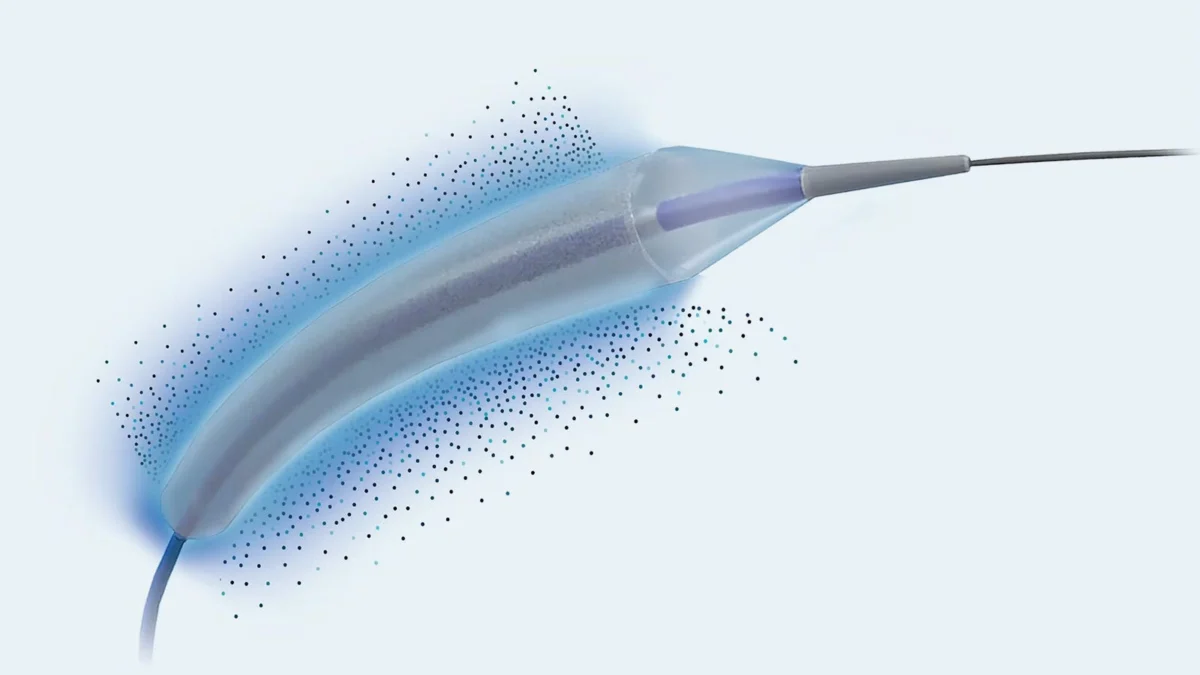
The Selution SLR, however, introduces a distinct mechanical and pharmacological approach. Unlike traditional stents, which remain permanently in the artery, the Selution SLR is a temporary, drug-coated delivery system. It is designed for the sustained release of sirolimus—a potent anti-proliferative agent—for up to 90 days. Once the procedure is complete, the balloon is removed, leaving no additional metal layer, which can theoretically reduce the risk of future stent thrombosis and improve long-term vascular health.
According to Cordis, the device is specifically indicated for patients suffering from obstruction or narrowing of a stented coronary vessel, providing a highly deliverable, effective alternative that bypasses the need for further permanent metallic implants.
Chronology: The Path to Approval
The journey of the Selution SLR to the U.S. market has been characterized by rigorous clinical validation and a competitive regulatory environment.
- Pre-Clinical and Early Trials: Following the global push for "leave-nothing-behind" technology, Cordis developed the Selution SLR using Micro-Reservoir Technology (Cellular Pharmaceutics) to ensure a controlled release of the drug.
- The SELUTION4ISR Trial: The FDA’s decision was largely anchored by the results of the SELUTION4ISR trial. This randomized controlled trial evaluated the efficacy of the sirolimus-coated balloon against the current standard of care (DES and plain balloon angioplasty).
- Regulatory Milestone: With the completion of the trial and the subsequent submission of clinical data, the FDA reviewed the performance of the device, ultimately concluding that the evidence supported its safety and efficacy for the specified patient population.
- Market Context: This approval follows the 2024 debut of the Agent DCB by Boston Scientific, which was the first drug-coated balloon to receive FDA approval for ISR. The entry of the Selution SLR signals an expanding market for this technology, moving from a single-product space to a more competitive and innovative sector.
Supporting Data: Examining the SELUTION4ISR Results
The clinical data that propelled the Selution SLR toward approval provides a compelling argument for its use. In the SELUTION4ISR trial, which involved 418 participants, investigators sought to prove that the sirolimus-coated balloon was noninferior to existing DES technology.
The primary endpoint of the study was target lesion failure (TLF) at one year. The results demonstrated a TLF rate of 15.2% for the Selution group compared to 13.5% in the control group. Given the statistical parameters of the trial, this performance successfully met the criteria for noninferiority.
Crucially, the study design was rigorous. Investigators focused on PCI candidates presenting with target lesions within prior bare-metal stents or DES. Strict inclusion and exclusion criteria were applied; patients with ST-segment elevation myocardial infarction (STEMI) or those requiring more than two layers of prior stenting were excluded, as were those with specific complex morphologies like type C lesions.
Furthermore, the Selution SLR has shown promise beyond ISR. In the separate "SELUTION De Novo" trial, the device demonstrated noninferior efficacy for the treatment of de novo lesions in coronary arteries measuring between 2 and 5 mm in diameter. This broader application suggests that the device could eventually be utilized in a wider range of coronary interventions, potentially reducing the initial reliance on permanent stents in primary cases.
Official Responses and Industry Perspectives
The cardiology community has reacted with cautious optimism, viewing the arrival of the Selution SLR as a necessary evolution in patient care.
"We recognize the toll coronary artery disease and repeat procedures can take on patients and their families," said George Adams, MD, Chief Medical Officer of Cordis. "The availability of Selution SLR DEB in the United States is meaningful for interventional cardiologists because it provides an effective and highly deliverable sirolimus-based treatment option while helping minimize the need for another stent. We are proud to help expand treatment choices in ways that can make a real difference in patient care."
Competitors, while acknowledging the significance of the event, have pointed to the pioneering nature of the existing market. Janar Sathananthan, MD, president of interventional cardiology at Boston Scientific, commented, "We welcome innovation in the U.S. coronary drug-coated balloon market for the treatment of in-stent restenosis, a space pioneered by the Agent DCB, which remains the only FDA-approved paclitaxel-coated coronary balloon."
Sathananthan noted that Boston Scientific continues to push the boundaries of this technology, with the Agent DCB currently being evaluated for de novo small vessel or bifurcation coronary artery disease through the ongoing STANCE trial.
Implications: The Future of Interventional Cardiology
The approval of the Selution SLR carries profound implications for the future of cardiovascular intervention.
1. Reducing the "Metal Burden"
The primary benefit of the Selution SLR is the avoidance of additional layers of metal. Every time a new stent is placed in a previously stented vessel, the risk of late-stage complications, such as chronic inflammation or structural failure of the arterial wall, increases. By providing an anti-proliferative drug without the cage of a permanent stent, the Selution SLR allows the vessel to retain its natural mobility and health.
2. A Competitive Market for DCBs
With both the Agent DCB (paclitaxel-based) and the Selution SLR (sirolimus-based) now in the U.S. clinical armamentarium, cardiologists can begin to compare outcomes between different drug-delivery platforms. While the Agent DCB’s pivotal trial relied on a plain balloon control group, the Selution SLR’s direct comparison to DES in the SELUTION4ISR trial provides a different, and perhaps more modern, evidence base. The comparative safety and efficacy between these two technologies remain to be fully elucidated in large-scale, head-to-head trials.
3. Long-Term Management Challenges
Despite the excitement, questions remain. How will drug-coated balloons fare over the next decade in the management of complex, recurrent ISR? The long-term durability of the vessel wall after repeated exposure to anti-proliferative drugs and the potential for late-term restenosis are areas that will require ongoing surveillance.
4. Expanding the Scope of PCI
The success of the Selution SLR in de novo lesions suggests that the future of PCI may lean away from the "stent-first" mentality. If clinical data continues to support the noninferiority of DEBs in primary lesions, interventionalists may move toward a strategy where metallic stents are reserved only for cases where mechanical scaffolding is absolutely necessary, such as in severe dissections or high-risk anatomy.
In conclusion, the FDA approval of the Selution SLR is a landmark event. By offering a sophisticated, sirolimus-based solution for in-stent restenosis, Cordis has provided clinicians with a powerful tool to improve patient outcomes while minimizing the long-term biological footprint of coronary interventions. As the medical community integrates this technology into practice, the focus will now shift to identifying the specific patient phenotypes who stand to benefit most from this innovative, leave-nothing-behind approach.