In a landmark development for cancer immunotherapy, the U.S. Food and Drug Administration (FDA) has granted accelerated approval to Tudriqev (vusolimogene oderparepvec-wtpg), formerly known as RP1. This milestone, reached on August 6, 2026, represents the first time in over a decade that the FDA has greenlit an oncolytic virus therapy. The approval marks a significant expansion of the therapeutic arsenal available to patients battling unresectable advanced cutaneous melanoma—specifically those whose disease has progressed following treatment with standard PD-1-blocking checkpoint inhibitors.
This approval is more than just a regulatory box-ticking exercise; it signifies a resurgence of interest in a biological approach that flips the script on how we view viruses. By transforming these microscopic pathogens from agents of disease into precision instruments of destruction, oncologists are opening new pathways to combat treatment-resistant tumors.
The Mechanism: How Viruses Become Allies
The concept of using viruses to fight cancer is intuitively counterintuitive. Historically, humanity has viewed viruses as existential threats—pathogens to be neutralized by vaccines and antivirals. However, oncolytic virus therapy relies on the targeted modification of these viruses so they selectively infect and destroy cancer cells while sparing healthy tissue.
The Dual-Action Strategy
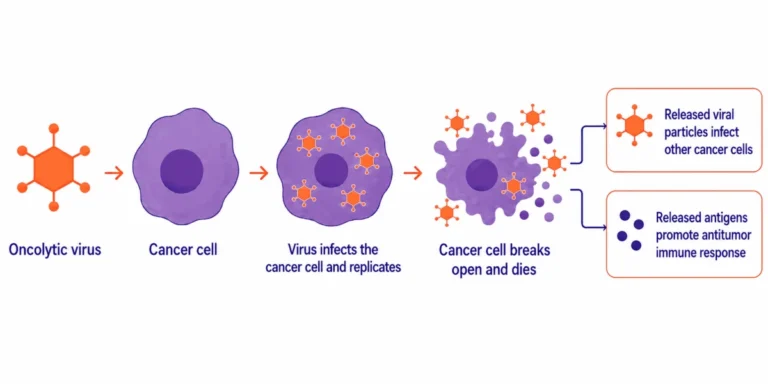
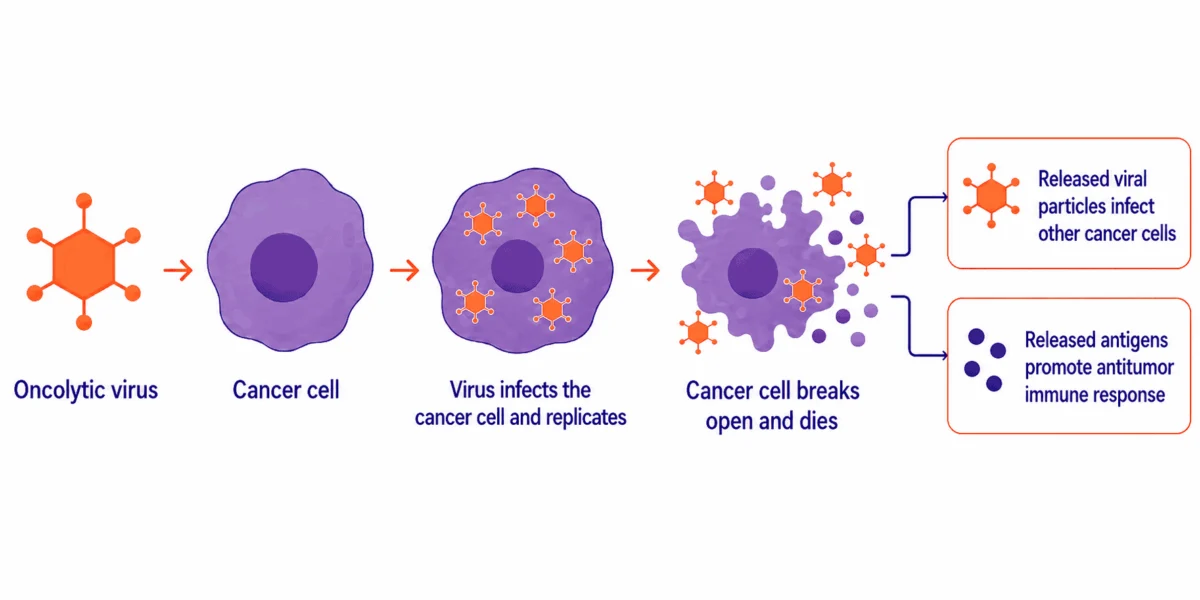
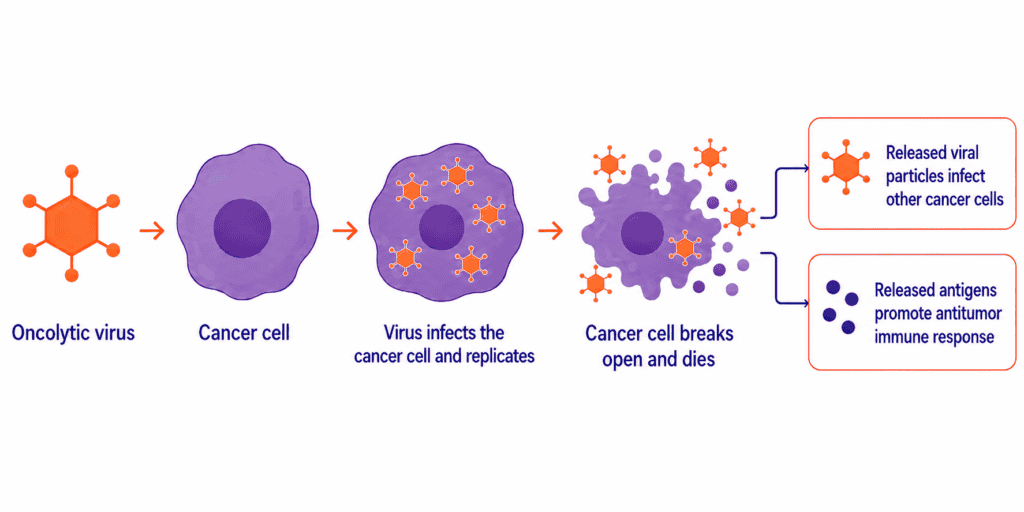
Oncolytic viruses function through a sophisticated, two-pronged attack mechanism:
- Direct Lysis (The "Burst" Effect): Once injected into a tumor, the virus enters the cancer cells. It exploits the cell’s internal machinery to replicate itself. As the viral population grows, the cancer cell eventually ruptures—a process known as lysis. This physical destruction kills the tumor cell directly and releases a flood of new viral particles into the immediate microenvironment, which then go on to infect neighboring malignant cells.
- Immune Priming (The "Flare" Effect): The second, and perhaps more vital, function is the activation of the immune system. When cancer cells break apart, they release tumor-associated antigens and inflammatory signals. These act as "danger signals" that alert the immune system to the presence of the cancer. By effectively "unmasking" the tumor, the therapy forces the body’s T-cells to recognize the cancer as a target that requires an aggressive response.
Some modern, engineered oncolytic viruses are further modified to produce specific proteins that amplify this immune response, creating a localized "hot" environment within a "cold" (immune-suppressed) tumor. This is where the synergy with other immunotherapies, such as nivolumab (Opdivo®), becomes crucial. By combining the virus with a checkpoint inhibitor, clinicians can effectively remove the "brakes" from the immune system, allowing the T-cells primed by the virus to launch a more sustained and powerful assault on the cancer.
Chronology: A Century of Viral Oncology
The journey to the approval of Tudriqev spans over a century of medical inquiry and scientific evolution.
- 1904: The First Observation: Physicians reported the unexpected regression of tumors in a patient following a viral infection, providing the first anecdotal evidence that the immune system could be mobilized via infection.
- 1950s–1960s: Experimental Trials: Researchers began testing naturally occurring viruses in clinical settings. These early trials were fraught with safety concerns; without the ability to "tame" the viruses, they often caused significant systemic illness in patients, and controlling their spread was nearly impossible.
- 1990s: The Genetic Engineering Revolution: The field underwent a paradigm shift with the advent of advanced molecular biology. Scientists gained the ability to "delete" or "add" genes to viruses, allowing them to create strains that could only replicate in cells with specific genetic mutations—namely, cancer cells.
- 2015: The First FDA Approval: The landscape changed permanently when the FDA approved T-VEC (talimogene laherparepvec), the first oncolytic virus therapy in the United States, for use in melanoma.
- 2026: The New Standard: Eleven years after the debut of T-VEC, the approval of Tudriqev signifies that the initial proof-of-concept has evolved into a maturing clinical field. Before Tudriqev, oncolytic viruses were represented in just one of 156 FDA cancer immunotherapy approvals tracked by the Cancer Research Institute (CRI).
Supporting Data: The IGNYTE Trial Results
The FDA’s approval of Tudriqev was rooted in the data gathered from the IGNYTE clinical trial. This study was specifically designed for patients with advanced melanoma who had seen their disease progress after exhausting PD-1-blocking therapy—a group with historically poor outcomes.
The trial enrolled 140 patients. Researchers focused on a primary efficacy analysis of 91 patients who possessed at least one tumor that was not directly injected with the therapy. This is a critical metric because it tests the "abscopal effect"—the ability of the treatment to trigger an immune response that reaches tumors throughout the body, not just those receiving the direct injection.
Key Findings:
- Objective Response Rate: 24.2% of the evaluated group experienced an objective response, defined as a significant shrinkage of tumors.
- Durability: Among those who responded, the median duration of the response was 14.1 months, suggesting that for a subset of patients, the therapy offers a meaningful period of disease control.
Understanding "Accelerated Approval"
It is essential to clarify what the FDA’s "accelerated approval" designation entails. This pathway is reserved for drugs that provide a therapeutic advantage over existing treatments for serious or life-threatening illnesses.
Because the approval is based on "surrogate endpoints"—in this case, evidence that the treatment is reasonably likely to predict a clinical benefit (like tumor shrinkage)—it comes with a caveat. Replimune, the developer of Tudriqev, is mandated to conduct further "confirmatory" research. These post-approval trials must prove that the drug provides a genuine clinical benefit, such as increased overall survival. If these trials fail to demonstrate such a benefit, the FDA maintains the authority to withdraw approval.
Safety and Side Effect Profiles
As with any therapeutic intervention, the use of Tudriqev in combination with nivolumab is not without risk. Because the therapy involves the use of a modified herpes simplex virus (HSV), patients and caregivers must be aware of potential complications.
Common side effects reported in the IGNYTE trial included:
- Systemic symptoms: Fatigue, fever, and chills.
- Gastrointestinal distress: Nausea.
- Local reactions: Inflammation or pain at the injection site.
- Flu-like symptoms: Often associated with the body’s innate immune reaction to the viral therapy.
The FDA has included specific warnings regarding the risk of herpes infection and the potential for accidental exposure to the virus, emphasizing that patients should work closely with their oncology team to manage risks and monitor for symptoms.
Implications: The Future of Oncolytic Virus Therapy
The arrival of Tudriqev serves as a beacon of hope, yet it also highlights the current limitations of the field. For most cancer types, oncolytic viruses remain firmly in the experimental stage.
Beyond Melanoma
While melanoma is the current focal point, the broader potential for oncolytic viruses is vast. Researchers are currently investigating:
- Combination Therapy: Determining which immunotherapy, chemotherapy, or radiation combinations work best with viral vectors.
- Delivery Mechanisms: Improving the ability to deliver these viruses to deep-seated or metastatic tumors that are not easily accessible for injection.
- Broadening the Spectrum: Exploring how viruses can be "tuned" to target solid tumors like lung, breast, or pancreatic cancer, which have proven more resistant to current immunotherapies.
The Cancer Research Institute (CRI) continues to track hundreds of approaches across various clinical trials. The consensus among the scientific community is that while oncolytic viruses may not be a "silver bullet" for every patient, they represent a highly specific, personalized tool that can be used to "warm up" cold tumors, making them susceptible to the next generation of immunotherapy.
For patients and their families, the message is clear: The landscape of cancer care is shifting. While we are still in the early chapters of viral-based oncology, the approval of Tudriqev confirms that the medical community has successfully harnessed the power of the virus, turning a biological enemy into a formidable weapon in the fight for life.
For those interested in the technical aspects of these therapies, the Cancer Research Institute’s "Infecting Cancer: How Viruses Are Turning the Tide Against Tumors" webinar, featuring Dr. John Bell of the Ottawa Hospital Research Institute, remains a foundational resource for understanding the future of this specialized field.