Published: August 23, 2026
For many, the concept of "acceptance" is often misunderstood as a synonym for surrender. It carries the heavy connotation of defeat—a signal that one has ceased striving, stopped dreaming, and abandoned the hope for a better future. However, as contemporary yoga practitioners are increasingly discovering, true acceptance is not an act of resignation. Instead, it is a profound, active engagement with the present moment.
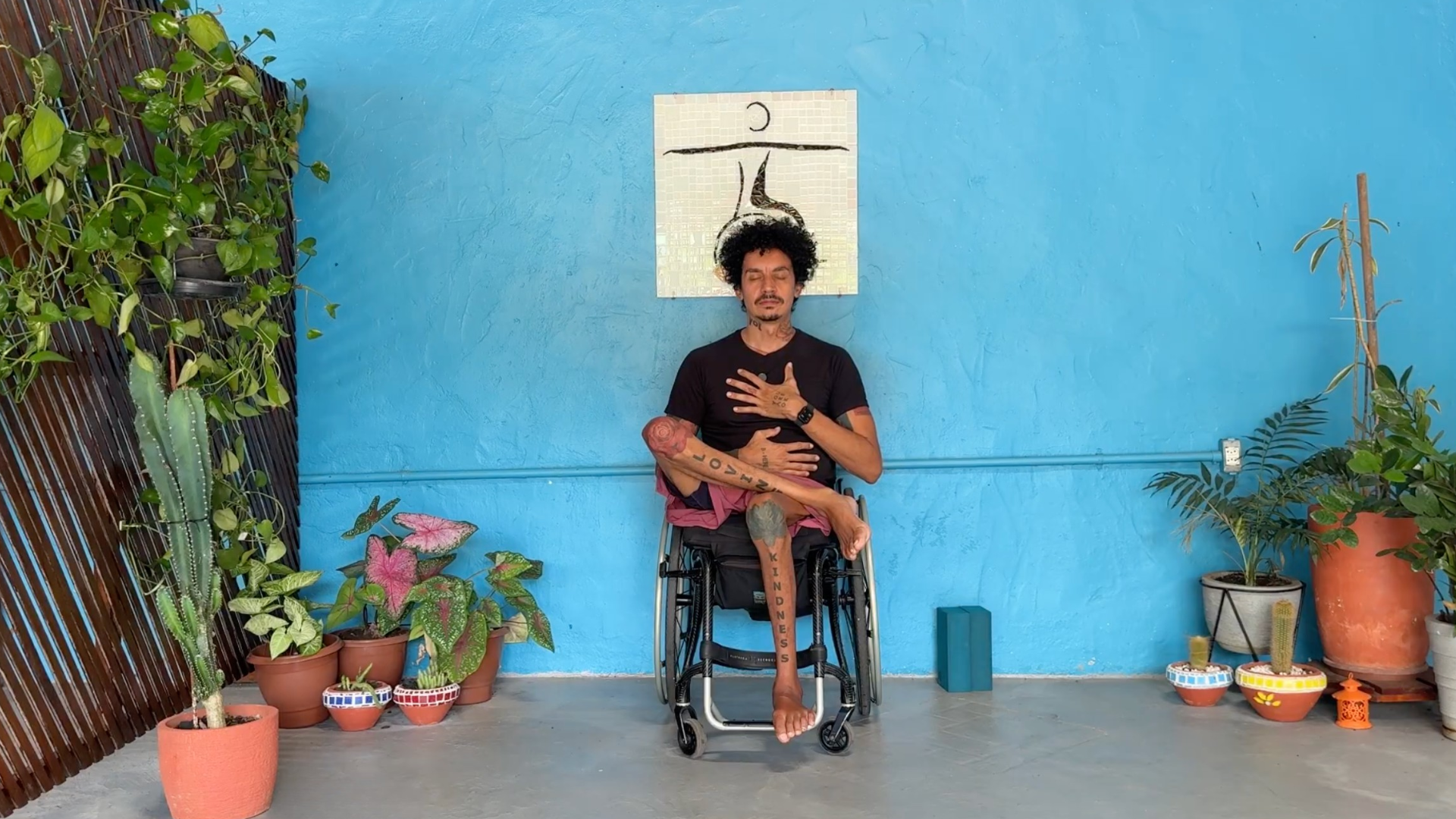
Yoga instructor Rodrigo Souza, a prominent voice in the accessible yoga movement, argues that the mat serves as a laboratory for this philosophy. By shifting the focus from "what the body should be doing" to "what is here right now," practitioners can dismantle the resistance that often hinders personal growth. This article explores the intersection of physical movement and emotional resilience, providing a comprehensive guide to a 20-minute practice designed to foster grounding and self-acceptance.
The Philosophy of Presence: Why Acceptance is Not Resignation
The modern human experience is defined by a constant state of comparison. We measure our current capabilities against past successes or future aspirations, creating a gap between reality and expectation. In the context of yoga, this often manifests as frustration when a pose does not look or feel the way a student believes it should.
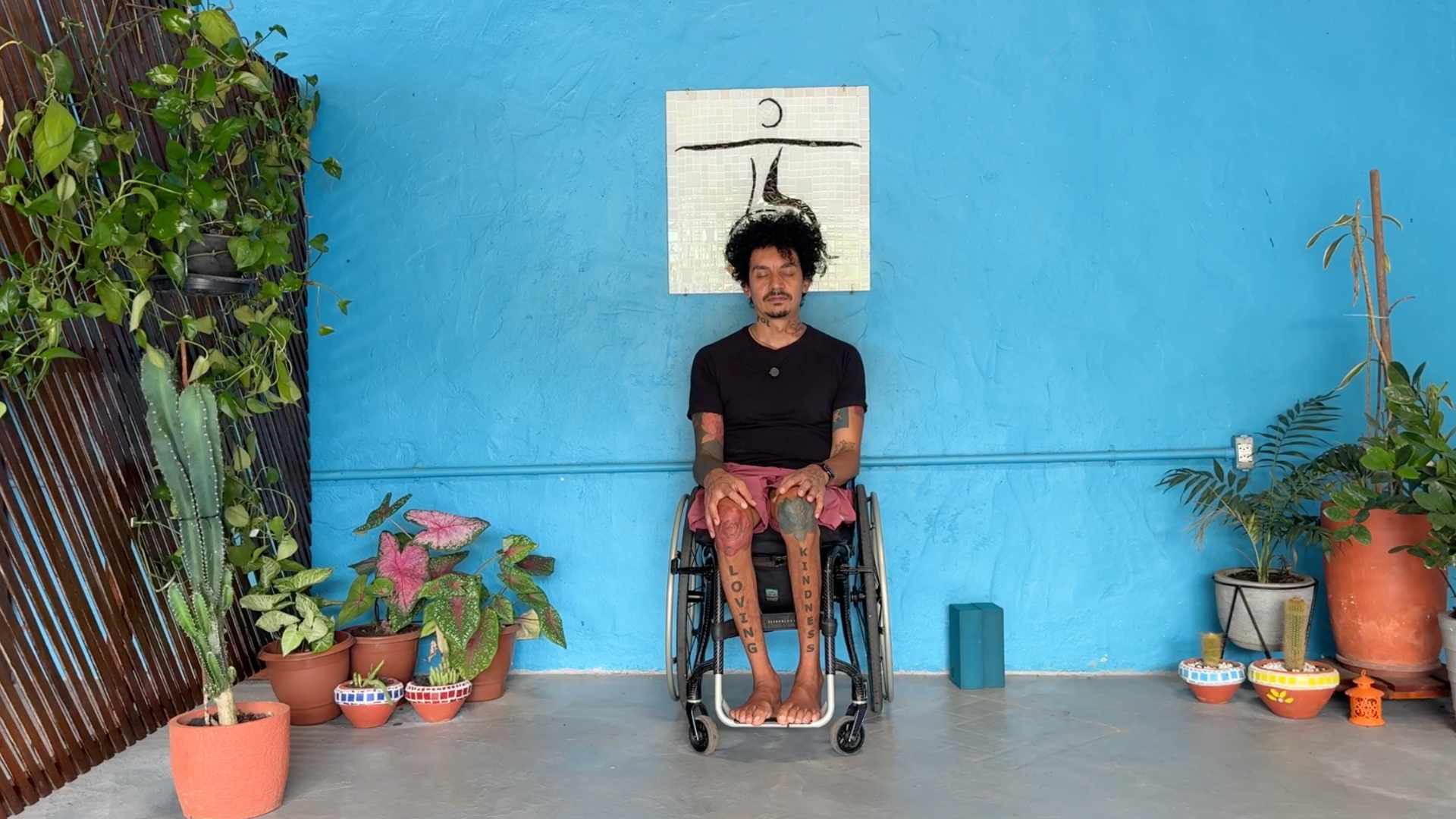
"Acceptance does not take hope away," Souza explains. "It gives hope somewhere to stand."
By rooting oneself in the reality of the present—the breath, the physical sensations of the body, and the current emotional state—the practitioner stops expending vital energy on fighting their circumstances. This is the "beautiful paradox" of the practice: when we cease the internal struggle against our current reality, we suddenly possess the surplus energy required to move forward, grow, and adapt. Acceptance, in this light, becomes the bedrock upon which genuine transformation is built.
Redefining Accessibility: A New Paradigm for Instruction
The core of the accessible yoga movement lies in a radical departure from traditional, rigid alignment cues. Accessibility is not about forcing diverse bodies into a singular, idealized expression of a pose. It is about curiosity.
In an accessible classroom, the instructor asks: "What is the intention of this movement, and how can we explore it together?" This shift transforms the relationship between teacher and student, moving away from authoritarian instruction and toward a collaborative investigation of movement. Whether a student is practicing in a chair, standing, or utilizing mobility aids, the focus remains on the internal experience rather than external aesthetics.
Chronology of the 20-Minute Grounding Practice
To integrate these concepts, one must move beyond theory. The following 20-minute sequence, developed by Rodrigo Souza, is designed to be performed in a chair, making it inclusive for practitioners of all mobility levels.
1. Establishing the Foundation: Mountain Pose (Tadasana)
The session begins with the grounding of the physical body. By sitting tall and imagining roots extending from the sitting bones and feet, the practitioner creates a sense of stability. The breath acts as the primary tool for settling the nervous system, utilizing longer, softer exhales to signal safety to the body.
2. Mindful Movement: Neck Rolls and the Infinity Sign
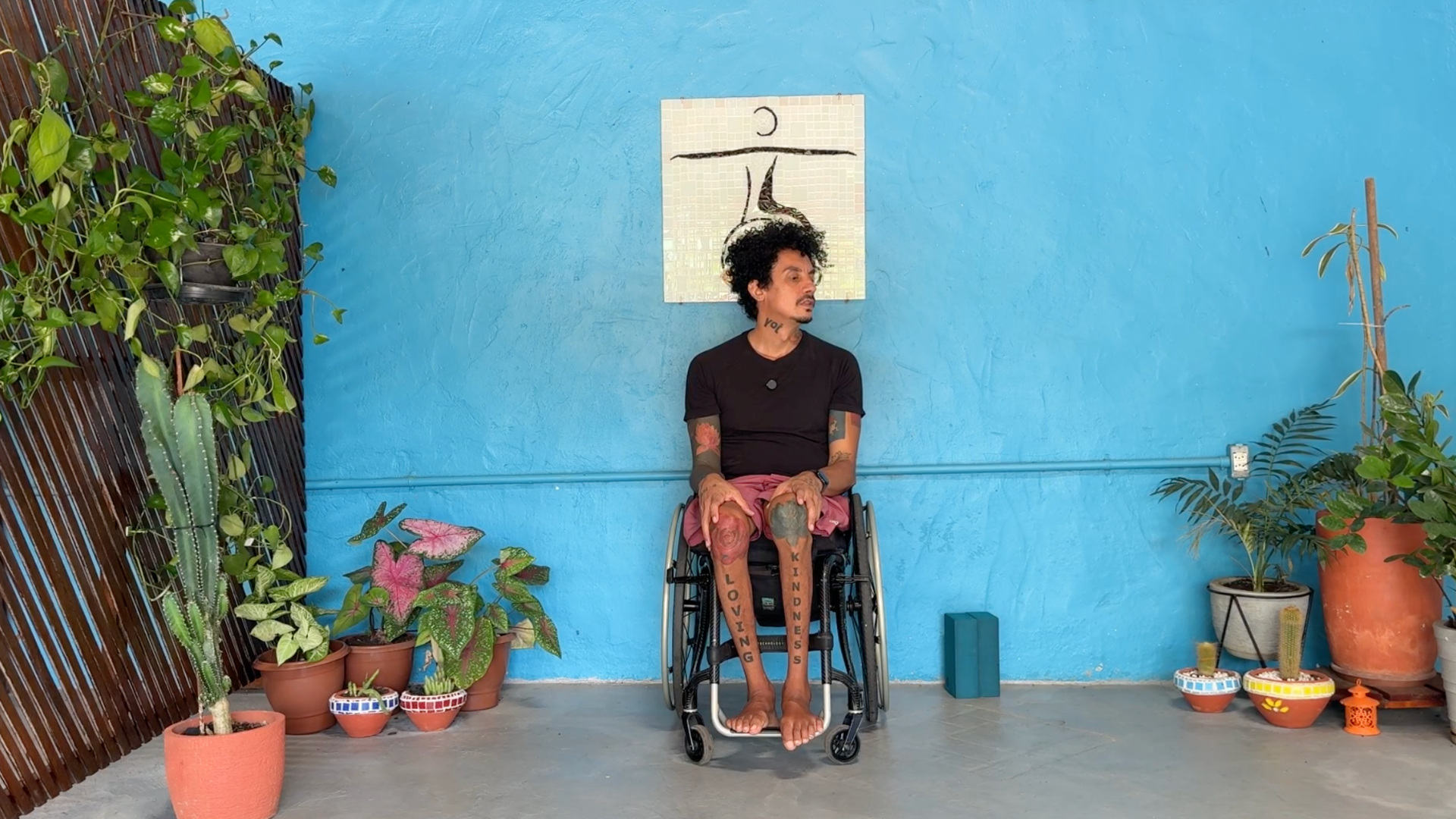
Transitioning into mobility, practitioners are invited to visualize a brush on the tip of their nose, tracing the number 8 or the infinity symbol on an imaginary canvas. This practice is not about the size of the movement, but the consciousness behind it. By exploring these shapes, students become aware of their own tension patterns, choosing to move with curiosity rather than force.
3. Strengthening the Core: Elbow Circles
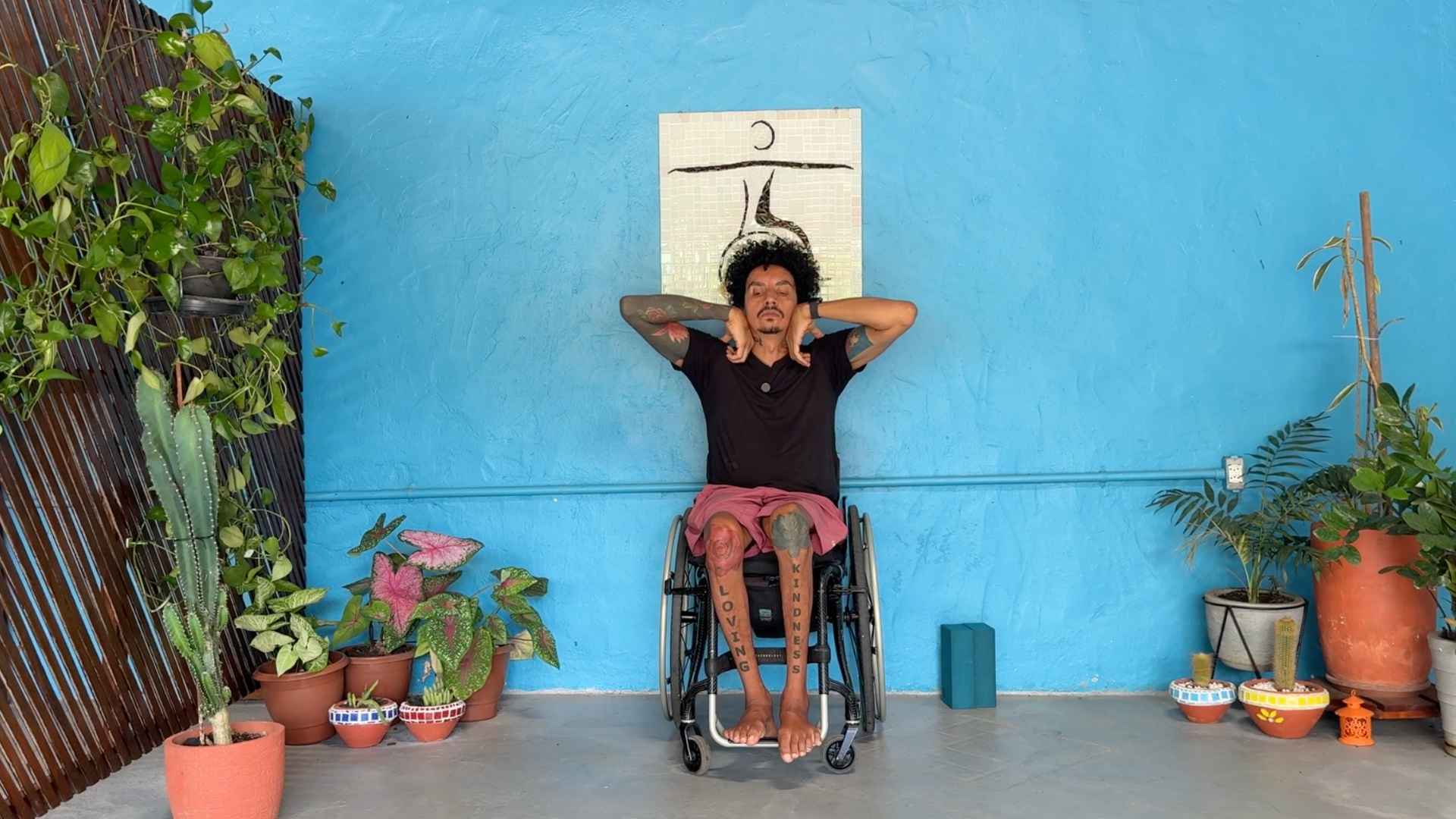
Building on the foundation of the upper body, elbow circles encourage a blend of strength and fluidity. By linking the movement to the breath—inhaling as the arms rise and exhaling as the hands touch the shoulders—the practitioner begins to cultivate a rhythmic connection between mind and muscle.
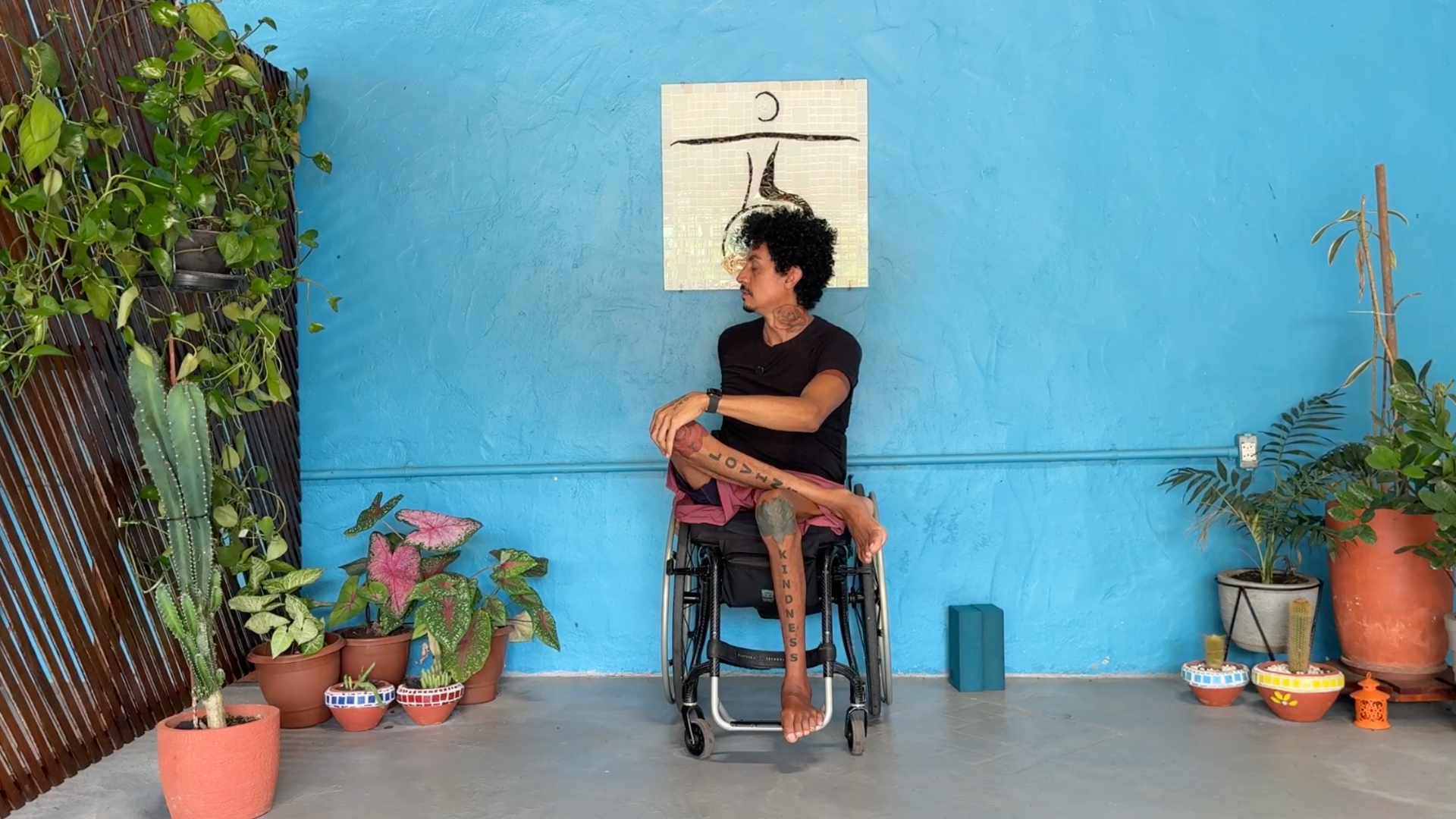
4. The Centerpiece: The Tree Pose (Vrksasana) Variation
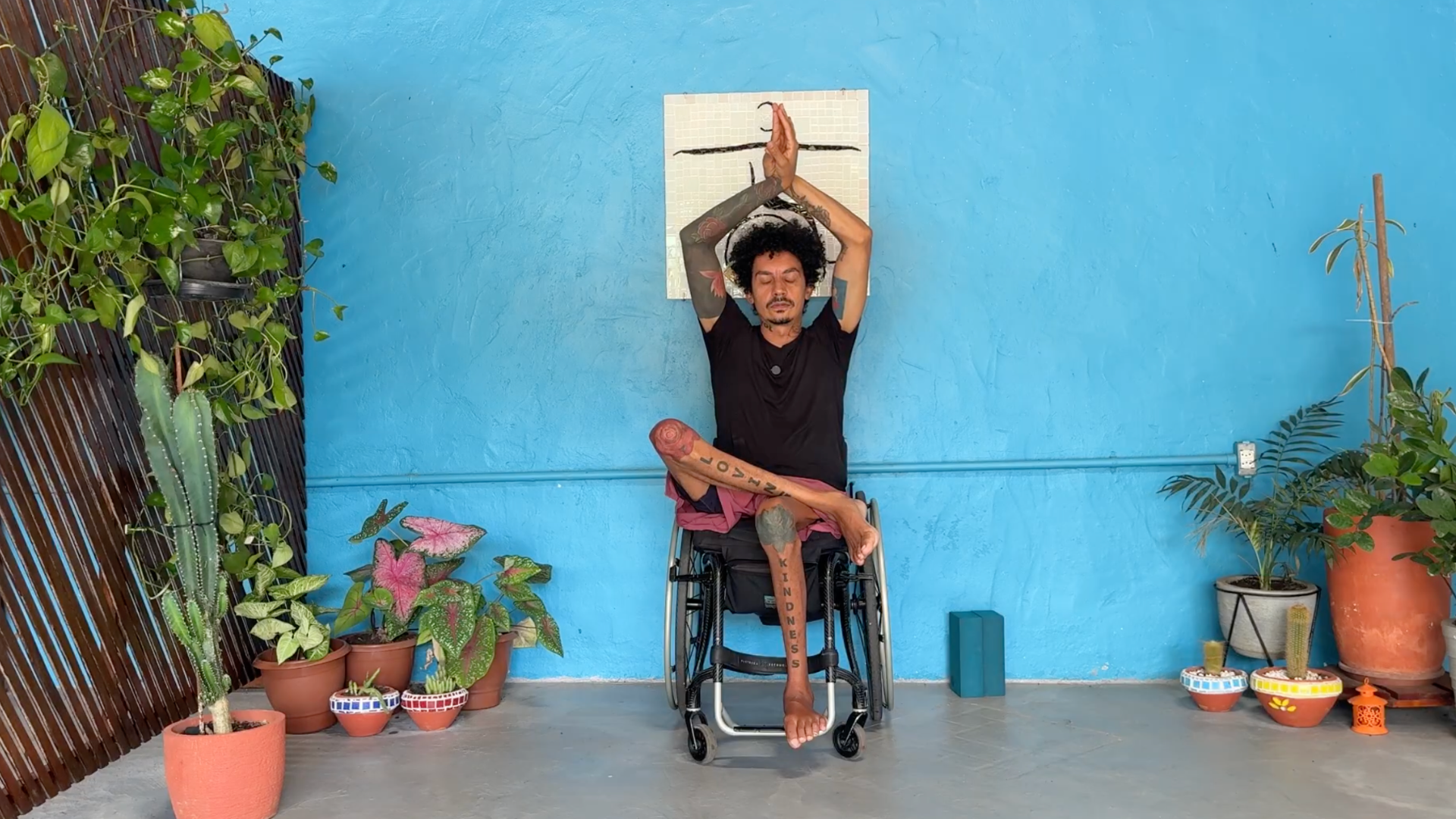
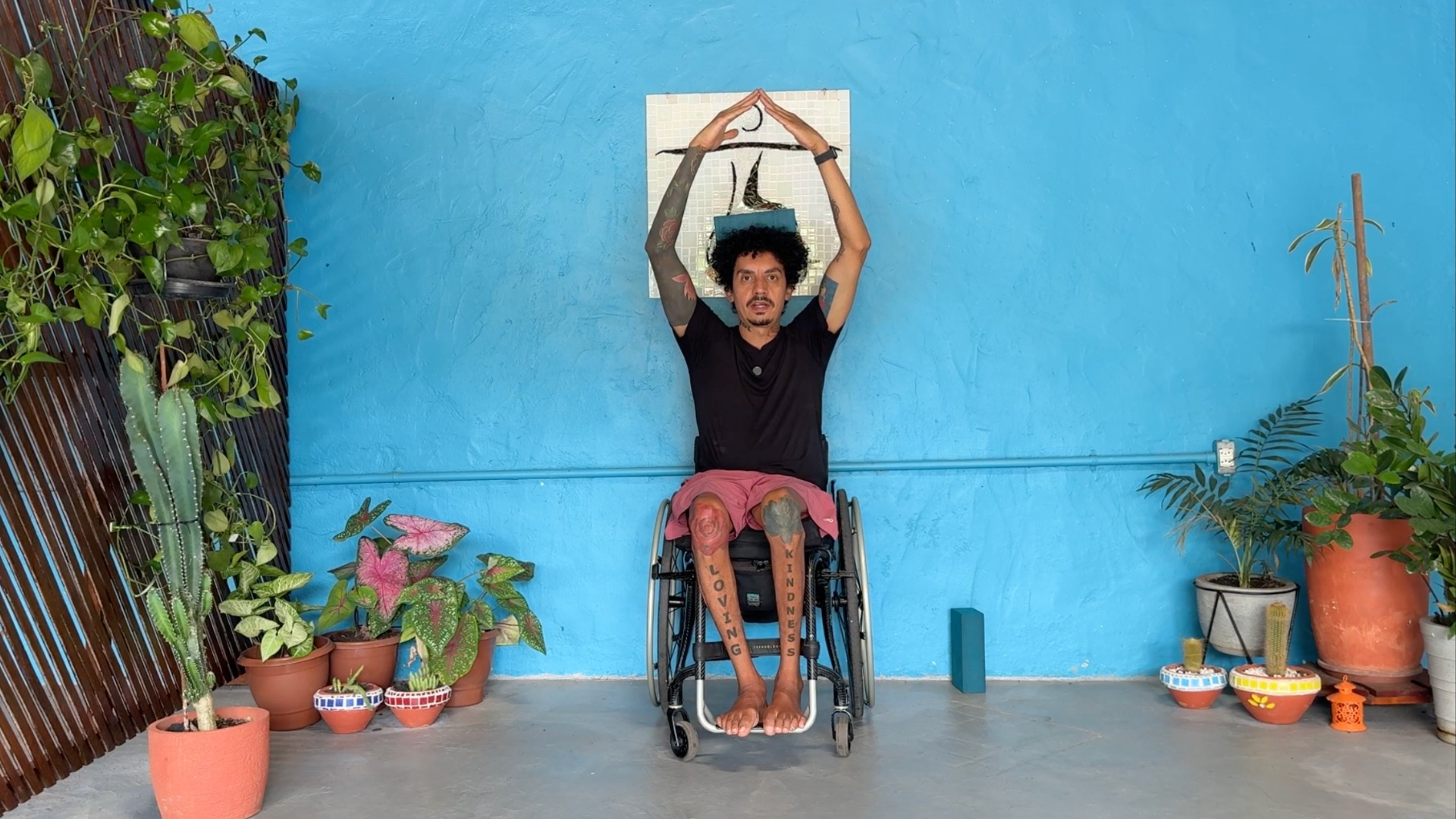
Tree Pose is the ultimate expression of the grounding philosophy. In this seated variation, the practice is broken down into three distinct elements:
- Grounding: Feeling the connection between the feet and the floor.
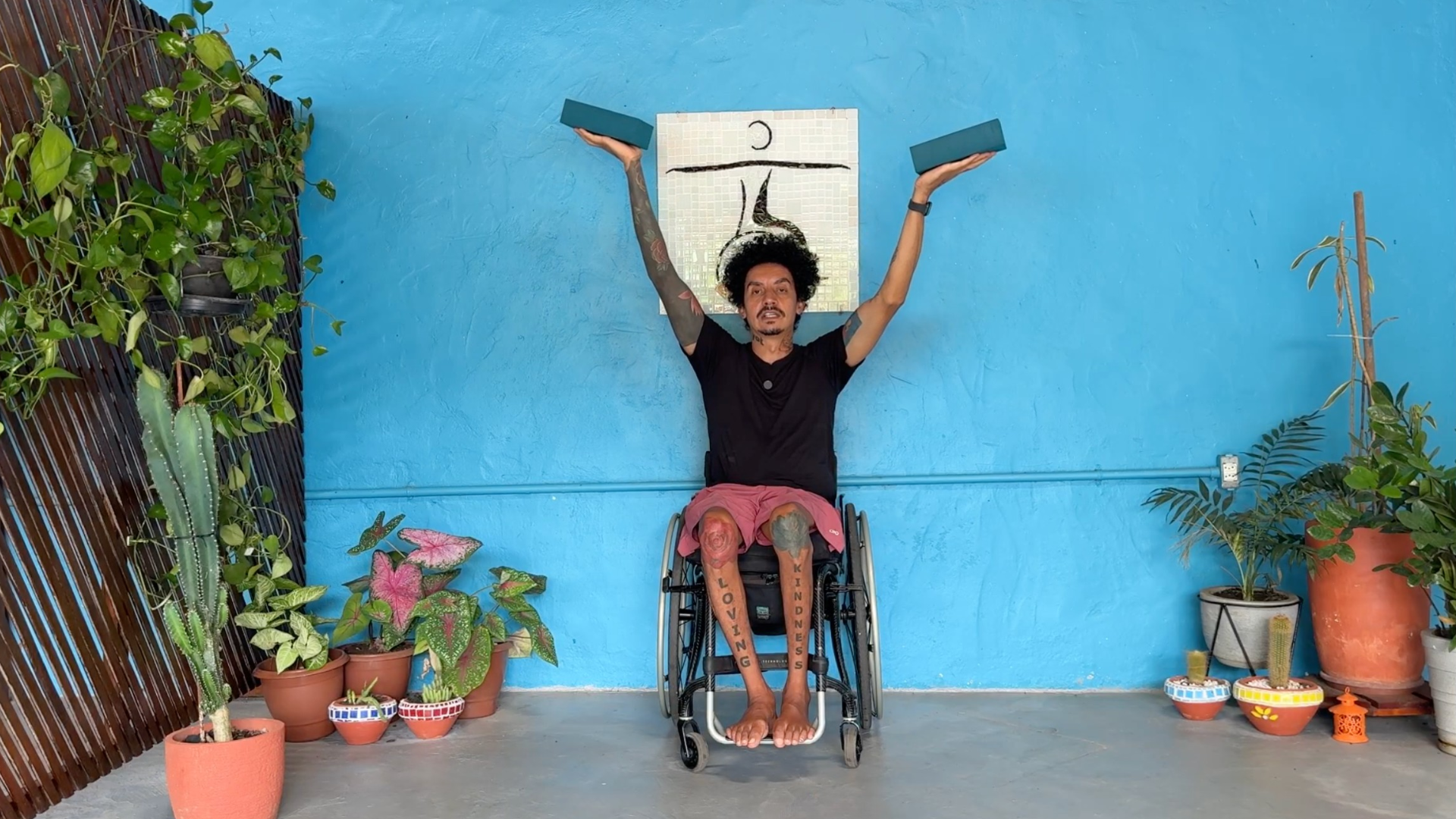
- Strength: Raising the arms (branches) to engage the upper body.
- Balance: Navigating the stability of the legs while maintaining an upright, regal posture.
5. Advanced Challenges: Incorporating Props
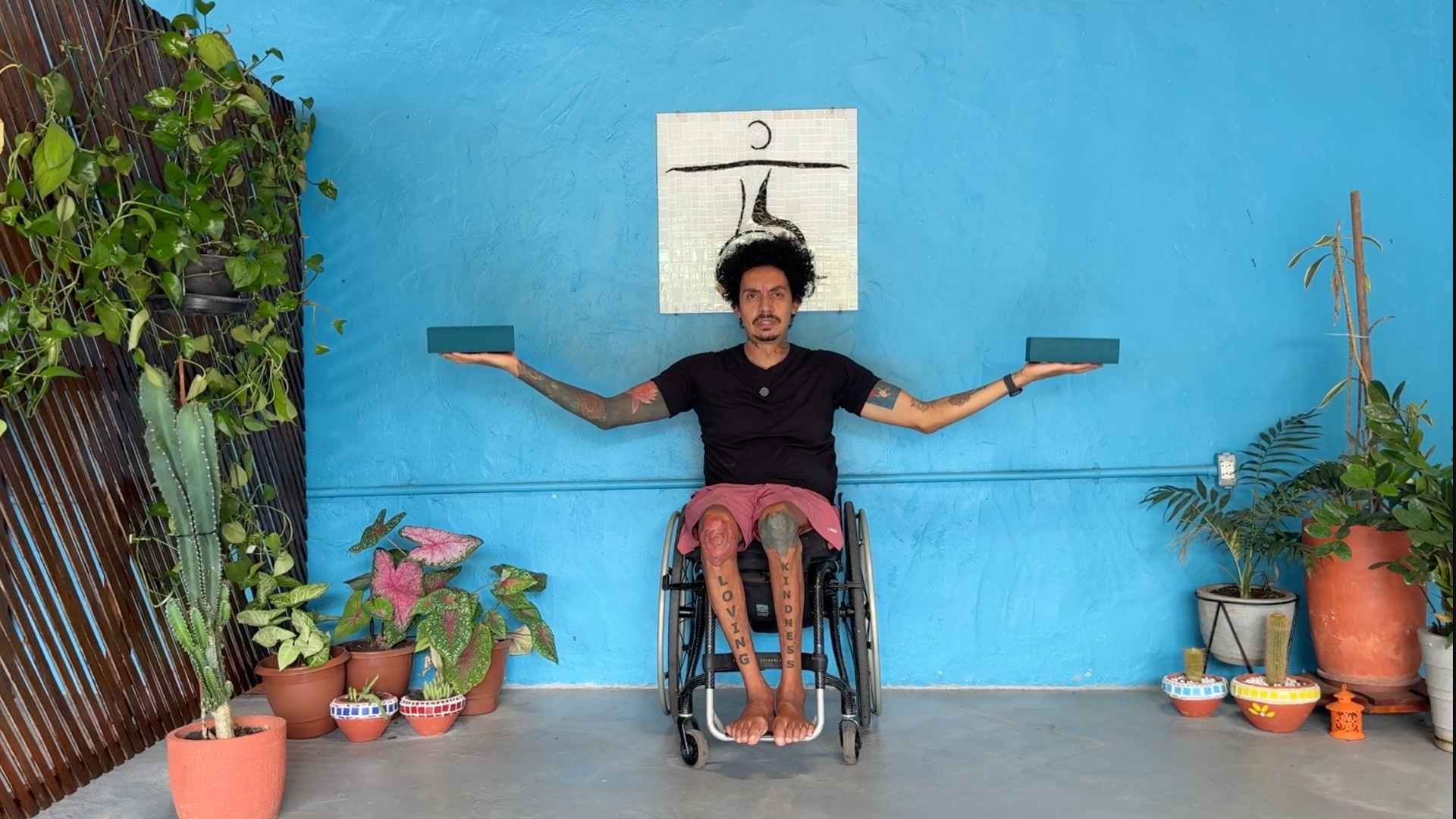
To deepen the exploration, the practice introduces props such as yoga blocks. By balancing a block on the head, the practitioner is forced to find a new center of gravity, emphasizing that balance is not a static state, but an ongoing process of adjustment. Introducing blocks in the hands further challenges the muscles, requiring the practitioner to remain "rooted" in their seat while exploring the outer limits of their range of motion.
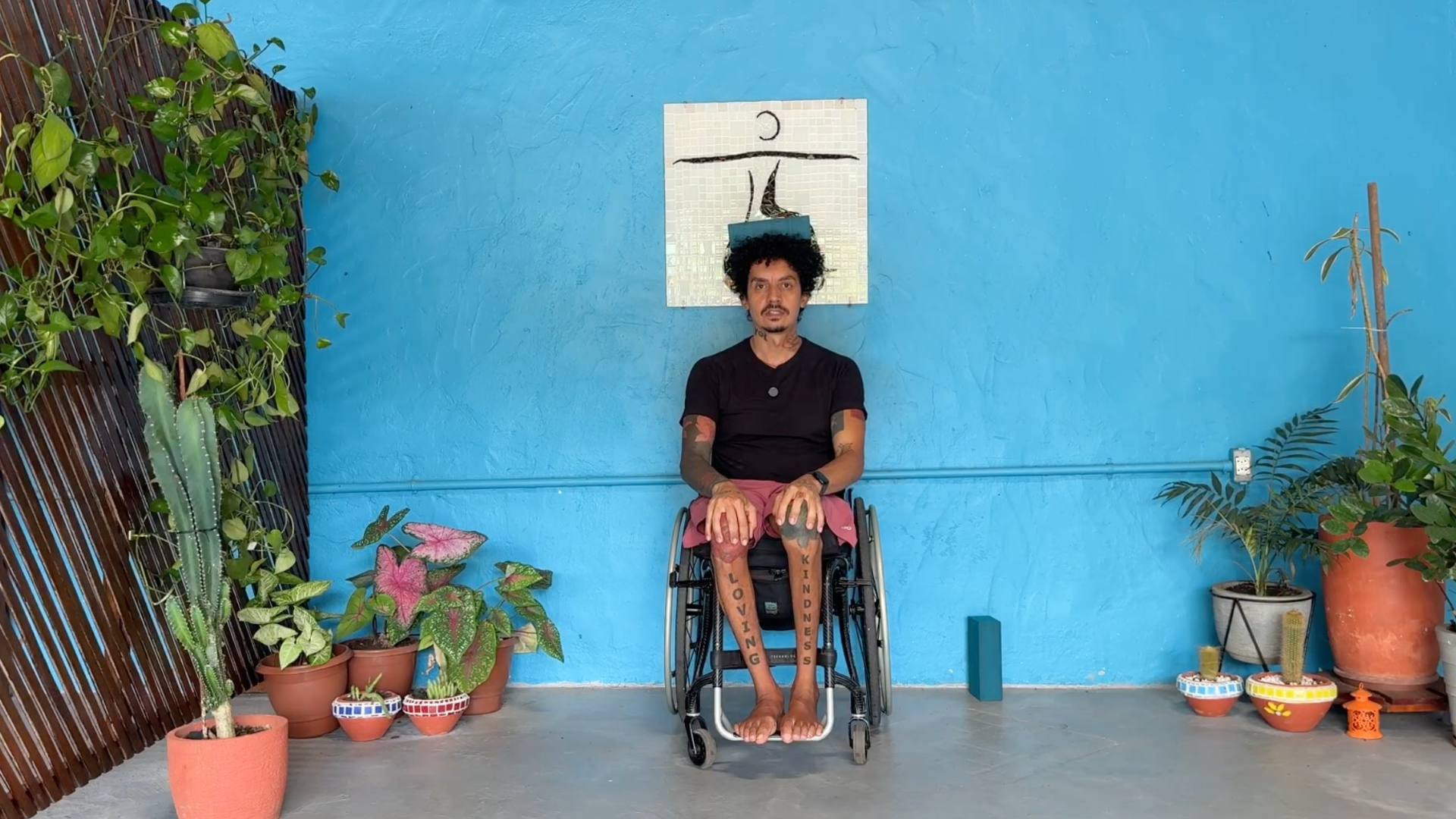
6. Integration: Cat, Cow, and Palm Tree
The session concludes with spinal health. Seated Cat and Cow movements open the spine in all six directions, followed by the Palm Tree variation, which elongates the torso and encourages deep, expansive breathing. This sequence ensures that the body feels refreshed and aligned before the final period of reflection.
Supporting Data: The Benefits of Chair-Based Yoga
While yoga has long been studied for its psychological benefits, research into chair-based or "accessible" yoga has accelerated significantly over the last five years. Studies indicate that:
- Parasympathetic Activation: Consistent, slow-paced yoga movements involving chair support significantly lower cortisol levels in participants over the age of 60.
- Proprioceptive Awareness: Using props like blocks to challenge balance in a seated position enhances proprioception—the body’s ability to sense movement and position—which is critical for injury prevention.
- Emotional Regulation: Qualitative reports from students in accessible yoga programs consistently cite a reduction in "emotional friction" and an increased capacity to handle life stressors without immediate reactive behavior.
Official Perspectives and Expert Commentary
The movement toward accessible yoga is gaining traction within the broader wellness industry. Organizations such as the Yoga Alliance have begun to emphasize the importance of "inclusive language" and "adaptive sequencing" in their teacher certification programs.
"The industry is finally moving away from the ‘one-size-fits-all’ model," says one senior instructor specializing in adaptive movement. "When we invite people to see themselves as the primary expert on their own body, we aren’t just teaching a pose—we are teaching self-advocacy. That is where the real healing happens."
Implications: The Forest of Life
The ultimate takeaway from this practice is perhaps best summarized by the wisdom of Ram Dass, who famously compared human beings to trees. In a forest, one does not look at an oak tree and criticize it for not being a pine; each tree is evaluated on its own merit, its own strength, and its own unique contribution to the ecosystem.
When we apply this lens to our own lives and the lives of those around us, the need for judgment fades. We begin to see our colleagues, friends, and family members as unique beings in a vast, diverse forest.
The implications of this shift are profound:
- Reduced Social Anxiety: By abandoning the need to "fit in" to a physical or social mold, we reduce the stress of performative behavior.
- Enhanced Compassion: Recognizing that everyone is "rooted" in their own set of circumstances fosters deep, systemic empathy.
- Sustainable Growth: When we accept our current starting point, we remove the paralyzing fear of failure. We can grow, sway with the wind, and reach for the sun, all while remaining firmly grounded in the truth of who we are today.
As you conclude your own 20-minute practice, remember: you do not need to be anywhere other than where you are. You do not need to be anything other than what you are. Being here is enough to begin.