








Cruise ships are often marketed as luxurious, self-contained paradises—floating hotels that ferry travelers to the world’s most remote corners. However, to an epidemiologist, these vessels represent the perfect storm for infectious disease transmission. They are environments where thousands of strangers, hailing from dozens of nations, are confined within a pressurized, recirculated air system, sharing high-touch surfaces and dining in close quarters for days or weeks at a time.
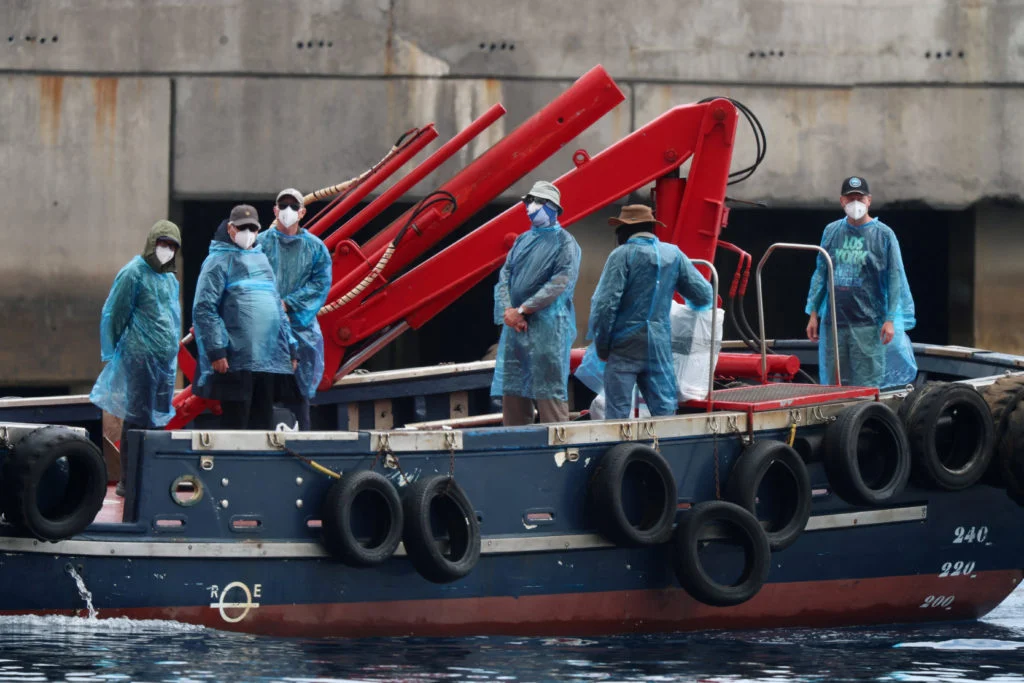
When the MV Hondius, a Dutch-flagged expedition vessel, reported an outbreak of Andes hantavirus in April 2026, it served as a stark reminder that maritime travel remains a precarious frontier for public health. Carrying 147 passengers and crew from 23 different countries, the Hondius quickly transformed from an expedition vessel into a clinical containment zone. As of May 14, 2026, the outbreak has resulted in 11 confirmed cases and three tragic deaths, highlighting how the very nature of modern cruise travel—and the shifting landscape of international cooperation—can amplify the risk of contagion.
A Chronology of the Crisis
The emergence of the Andes hantavirus aboard the Hondius was not an isolated incident, but rather a cascading series of public health challenges.
- Early April 2026: Initial reports of illness surface among passengers and crew members aboard the Hondius during its expedition route. The initial symptoms are mistaken for common viral illnesses, a recurring hurdle in maritime medical responses.
- Mid-April 2026: Diagnostic testing confirms the presence of the Andes hantavirus. Panic ensues as passengers from 23 nations face the prospect of immediate quarantine.
- Late April 2026: The European Centre for Disease Prevention and Control (ECDC) assumes a lead role in coordinating the containment strategy, working alongside the vessel’s operators.
- Early May 2026: As the death toll hits three, the United States, having withdrawn from the World Health Organization (WHO) earlier in the year, finds itself operating outside the primary international health framework, relying on belated health alerts issued by the Centers for Disease Control and Prevention (CDC).
- May 14, 2026: Total cases reach 11, with global health experts debating the efficacy of current containment strategies for cruise-based outbreaks.
The Science of the Pathogen
The Andes virus, a specific strain within the hantavirus family, is unique in its biological profile. Unlike other hantaviruses, which are primarily zoonotic—transmitted from rodents to humans through contact with urine, droppings, or saliva—the Andes strain is the only member of its species known to transmit from person to person.
However, epidemiologists are quick to provide context: it does not spread with the ease of measles or SARS-CoV-2. It is not an airborne pathogen in the conventional sense, and its transmission rate is relatively low. Despite this, the "dense social mixing" inherent to cruise ships acts as a force multiplier. When passengers disembark at various ports, they potentially introduce the pathogen into local populations, creating a "leaky" containment environment that modern maritime protocols struggle to seal.
Historical Context: From Venice to the Modern Era
Maritime quarantine is one of the oldest pillars of public health. The term "quarantine" itself is a linguistic relic of the 14th century, derived from the Venetian practice of quaranta giorni (40 days).
In 1377, the Republic of Ragusa (modern-day Dubrovnik) instituted the first official offshore isolation mandate for ships arriving from plague-stricken regions. By 1423, Venice had codified this practice by establishing the Lazzaretto Vecchio, the world’s first permanent quarantine island. These medieval systems were brutal and often inhumane, yet they were effective because they relied on a singular, undisputed authority—the state—which held total jurisdiction over the harbor.
As trade globalized in the 19th and 20th centuries, this model shifted from local harbor control to international coordination. The creation of the World Health Organization in 1948 and the formalization of the International Health Regulations (IHR) in 1969 were designed to replace the chaotic "every-port-for-itself" approach with a unified, data-sharing, and cooperative system.
The Modern Vulnerability: Why Ships Still Fail
Despite these frameworks, the cruise industry has evolved in ways that outpace current regulations. Expedition cruises, which bring travelers into direct contact with untouched ecosystems and wildlife, inherently increase the risk of "spillover" events. Once a pathogen enters the ship, the vessel becomes a closed-loop laboratory for transmission.
The 2020 Diamond Princess incident in Japan remains the modern case study for this failure. The weeks of jurisdictional tug-of-war between Japanese authorities, the British cruise operator, and multiple foreign governments created a "quarantine vacuum" that likely increased transmission among the 3,700 passengers. The Hondius outbreak confirms that these issues are not historical artifacts but ongoing systemic weaknesses.
Implications of a Fractured International System
The most significant shift in the 2026 landscape is the political environment. In January 2026, the United States withdrew from the World Health Organization, citing a need to prioritize national sovereignty. This move has fundamentally altered how the U.S. engages with global health emergencies.
In the case of the Hondius, the international system—led by the WHO and ECDC—remained functional, but its effectiveness was hampered by the absence of the U.S. as a core, rather than peripheral, partner. When a major world power shifts from being an architect of the international health framework to an outside observer, the result is a reliance on ad hoc diplomacy. This fragmentation creates delays in information sharing, logistics, and supply chain management.
For the cruise industry, this is a dangerous development. These ships traverse borders that are now, in a bureaucratic sense, more difficult to bridge. If a more efficient, pandemic-capable virus were to break out on a ship today, the lack of a fully unified, globalized response mechanism could mean the difference between containment and a catastrophic international spread.
Looking Forward: Can We Protect the Future?
The Hondius outbreak is a warning. As the expedition cruise industry continues to expand into ecologically sensitive and remote regions, the frequency of contact with novel pathogens will likely increase.
The current international public health framework is a delicate web of cooperation. When governments view global health institutions as dispensable, they weaken the very infrastructure required to manage risks that are, by definition, international. Maritime disease control requires more than just modern sanitation or medical clinics on board; it requires a political commitment to collective security.
As we look toward the future of global travel, we must decide whether we value the convenience of the "floating hotel" enough to bolster the international regulations that keep them from becoming floating vectors of disease. The Hondius event was a reminder that while viruses respect no borders, our ability to stop them is entirely dependent on our willingness to maintain the bridges between them. If the global response to the Hondius was a "crack in the system," the next outbreak may well test whether that system can remain standing at all.