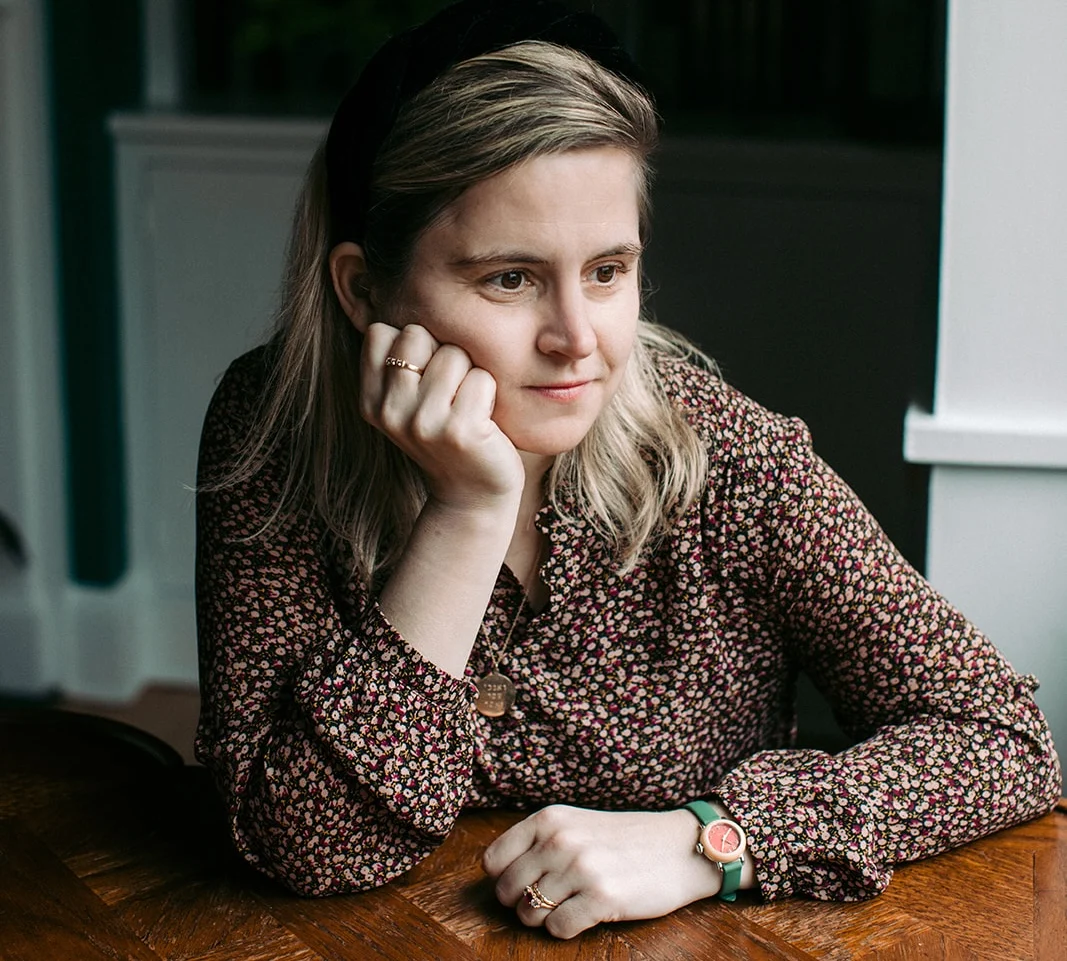
In a recent episode of the Mad in America podcast, host Brooke Siem—author of the antidepressant withdrawal memoir May Cause Side Effects—sat down with journalist and author Kelsey Osgood to explore the complex boundaries between mental health, identity, and religious conversion. Osgood, whose work has appeared in The New Yorker, The Atlantic, and The New York Times, recently released Godstruck: Seven Women’s Unexpected Journeys to Religious Conversion.
The conversation provided a rare, deep-dive into how the modern psychiatric apparatus often functions as a "replacement religion," offering rituals, jargon, and origin stories that mirror ancient faith traditions while frequently failing to address the existential hunger of the patient. Osgood’s journey from a self-described "successful anorexic" in the early 2000s to an observant Orthodox Jew offers a provocative critique of the medicalization of human suffering.
Main Facts: The Convergence of Identity and Pathology
Kelsey Osgood’s narrative challenges the traditional view of eating disorders as purely involuntary biological "glitches." Instead, she posits that for many adolescents in the late 1990s and early 2000s, anorexia functioned as a "vocation"—a way to make internal distress legible in a culture that lacked a shared spiritual or existential vocabulary.
The central thesis of Osgood’s critique is that psychiatry and psychotherapy have adopted the architecture of religion. Both systems involve regular, ritualized confession to an intermediary; both sort individuals into binary categories (sin/symptom, enlightened/mentally healthy); and both demand adherence to a narrative arc that moves from "despair" to "stasis" or "enlightenment."
Osgood’s experience highlights a significant disconnect in modern care: the tendency for clinical environments to reinforce the very pathologies they aim to treat. By placing struggling youths in "symptom pools"—environments where they learn the nuances of being a "good patient" from peers and media—the psychiatric system may inadvertently provide a roadmap for the continuation of the disorder rather than a way out.
Chronology: A Trajectory of Seeking
1. The Existential Child (Late 1980s – Mid 1990s)
Born in the preppy suburbs of Southern Connecticut, Osgood describes herself as an "existentially uncomfortable" child. While her family fit the demographic of their environment, Osgood found herself preoccupied with the nature of consciousness and morality. She questioned how one could know if their experience of the world matched another’s and whether "goodness" was an objective truth or a social construct. This "personality bent" made the transition into adolescence particularly jarring.
2. Anorexia as a "Vocation" (Age 12 – 18)
By age 12, Osgood felt a profound lack of identity. Looking younger than her years and feeling alienated from the burgeoning social rituals of her peers, she consciously turned toward anorexia. She describes this not as a sudden illness, but as a "job" she chose to fill the void.
This choice was influenced by the "sad girl lit" and media landscape of the time—memoirs like Maria Hornbacher’s Wasted and Oprah episodes that framed anorexia as a condition of "perfectionists" and "smart girls." Osgood admits she "backed her car into the driveway," adopting the behaviors (laxative use, restriction, fitful exercise) to fit the archetype of the disciplined, conscientious sufferer.
3. The Institutional Cycle (Late Teens – Early 20s)
Osgood’s "successful" anorexia led to multiple hospitalizations. During this period, she describes playing the "role of the patient." She entered the therapeutic relationship with high hopes that a therapist would act as a "preternaturally wise individual" who could explain how to live. Instead, she found "regular people" with no more insight into the human condition than herself. This led to a cycle of relapse, hospitalization, and a growing dependence on the psychiatric narrative.
4. The Medication Era (Age 18 – 31)
At 18, during a heavy relapse in her freshman year of college, Osgood was introduced to the pharmacological arm of psychiatry. Despite an initial psychiatrist’s hesitation to medicate a malnourished brain, a subsequent doctor prescribed Prozac and Xanax. For the next 13 years, Osgood remained on a high dose of Prozac, reaching 100mg—a dosage that a European pharmacist later told her was "not normal" by continental standards.
5. Withdrawal and Conversion (Age 31 – Present)
The turning point came when Osgood desired to start a family. Despite her doctor’s warnings that she should call immediately if she "felt bad," Osgood successfully tapered off her medication. Shortly thereafter, she underwent a religious conversion to Orthodox Judaism. This transition marked a shift from viewing herself as a "broken machine" (the medical model) to a "resilient human" (the religious model).
Supporting Data: The "Symptom Pool" and the Medicalized Narrative
Osgood’s experience is supported by the work of medical historian Edward Shorter, who coined the term "symptom pool." Shorter argues that the ways in which people express psychological distress are shaped by the cultural "options" available to them at the time. In the late 90s, the "symptom pool" for teenage girls was heavily weighted toward eating disorders and self-harm, largely due to "awareness" campaigns that inadvertently acted as instruction manuals.
Furthermore, Osgood references Gary Greenberg’s Manufacturing Depression, which posits that the "brain disease" narrative is often a choice of story. Greenberg suggests that while sadness is real, labeling it a "chemical imbalance" is a narrative construction that often ignores the complexity of human life and the systemic stressors of modern society.
The disparity in Osgood’s medication dosage—100mg of Prozac—highlights a documented trend in American psychiatry toward "polypharmacy" and aggressive dosing compared to European counterparts. This "throw spaghetti at the wall" approach, as Osgood describes it, often prioritizes symptom suppression over existential inquiry.
Perspectives on the "Replacement Religion"
The dialogue between Osgood and Siem sheds light on what they describe as the "transactional relationship" of modern therapy. Osgood recounts feeling the need to "bring something to the table" during her bi-weekly psychiatric appointments, often resulting in an escalation of her dose whenever she reported a dip in mood.
The Critique of the Biological Model
Osgood’s most biting critique is directed at the "insulin for diabetes" analogy often used to justify long-term psychiatric medication. She argues that this analogy is not only scientifically "equivocal" but also serves to pathologize legitimate questions about one’s own care. When she questioned the necessity of her 100mg dose, her concerns were dismissed as part of her "pathology"—a desire for "aesthetic" independence.
The Value of the "Embodied" Religion
Conversely, Osgood describes Orthodox Judaism as an "embodied" religion that focuses on the minutiae of daily life and communal connection. Unlike the "road-to-Damascus" epiphany model, the Orthodox life is built on rituals that ground the individual in the physical world and a physical community. This structure provides "guardrails" that Osgood found lacking in the fluid, often isolating world of modern psychotherapy.
Implications: The Crisis of Meaning and the Return to Ritual
Osgood’s journey suggests that the rising rates of psychiatric diagnoses—such as midlife ADHD or generalized anxiety—may be symptoms of a broader "crisis of meaning" and structural problems in modern life rather than internal brain defects.
The Loss of the "Village"
Osgood posits that the modern obsession with therapy and psychiatric labels is a response to the "disconnection" of globalized society. Without the "civic and social structures" of the past (churches, small-town networks, local synagogues), individuals are left to process the world’s stressors in isolation. The "village" has been replaced by the "clinic."
The Choice of Narrative
The most profound implication of Osgood’s work is the power of narrative choice. She argues that the religious conception of the human being—as someone who is "endlessly downtrodden but also endlessly resilient and able to repent"—is ultimately more hopeful than the psychiatric view of the human as a "broken machine."
For Osgood, the shift from psychiatry to religion was a "no-brainer choice" because it offered a framework for "getting up in the morning and doing better," rather than simply "calibrating meds" to achieve a state of "stasis."
A Shifting Paradigm
As the interview concludes, Osgood expresses a cautious optimism. She believes the cultural "default mode" of understanding life through a therapeutic lens is beginning to shift. More people are reevaluating the value of ritual, community, and the acceptance of "feeling bad" as a natural part of the human experience rather than a clinical emergency.
Kelsey Osgood’s story, as documented in How to Disappear Completely and Godstruck, serves as a testament to the idea that recovery from deep psychological distress may not always be found in the refinement of a diagnosis, but in the discovery of a community and a story that makes life worth living.