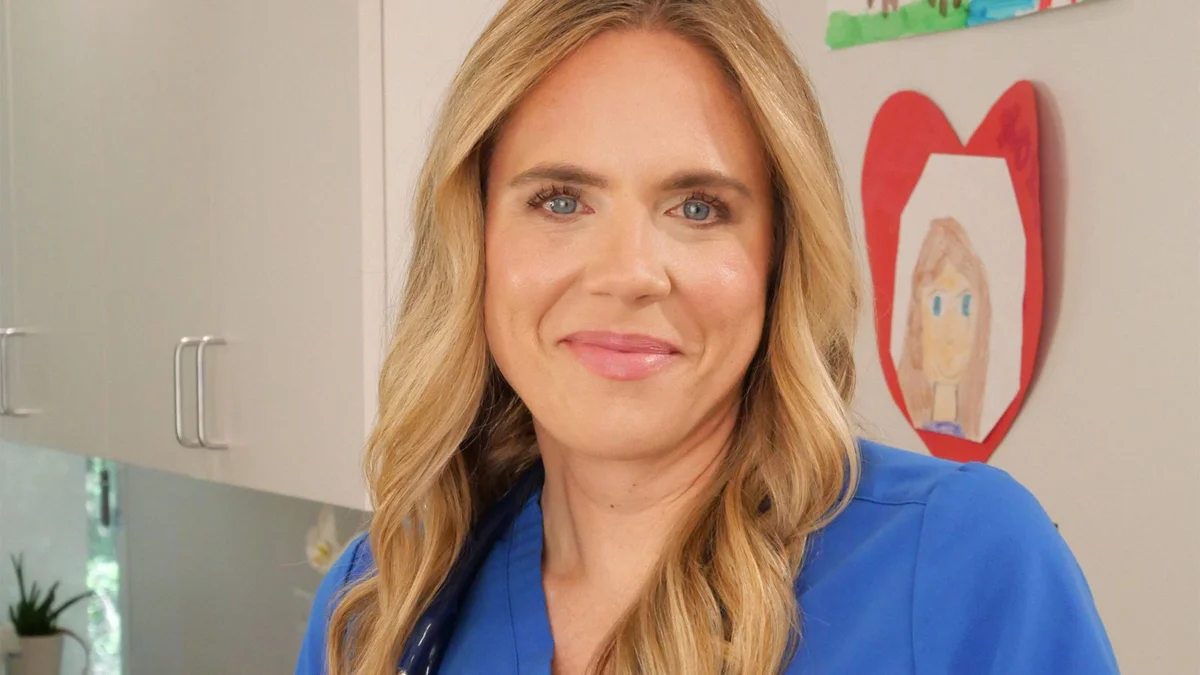
In an era defined by hyper-partisanship and a growing disconnect between federal policy and clinical reality, the U.S. Senate race in South Carolina has taken a distinct turn. Dr. Annie Andrews, a board-certified pediatric hospitalist with two decades of frontline experience, is mounting a challenge that centers on a fundamental premise: that the nation’s healthcare system is in critical condition and requires a physician’s hand to stabilize it.
As part of MedPage Today’s series examining the growing trend of clinicians seeking federal office, Washington Editor Joyce Frieden sat down with Dr. Andrews to discuss her platform, the impact of current federal health policies, and the urgent need for a shift from profit-driven medicine to patient-centered care.
The Case Against Current Federal Health Policy
Dr. Andrews does not mince words when discussing the recent executive actions concerning public health, particularly those championed by Robert F. Kennedy Jr. within the Department of Health and Human Services (HHS). For Andrews, the move to alter standard vaccination protocols—specifically the separation of the measles, mumps, and rubella (MMR) vaccine—is not a matter of scientific debate, but a dangerous assault on public infrastructure.
“What they’re doing is deeply destructive, injecting distrust and disinformation into the American public health infrastructure,” Andrews states. She points to her own backyard in Spartanburg, South Carolina, where she witnessed a measles outbreak resulting in nearly 1,000 documented cases. According to Andrews, this is the direct result of a years-long campaign of misinformation.
She observes that over her 20-year career, the creep of vaccine hesitancy has moved from the fringes to the mainstream, leaving parents unsure of where to find reliable guidance. “Right now, we cannot trust the medical recommendations that are coming from the highest levels of our federal government,” she warns. For Andrews, removing the current leadership at HHS is not merely a policy preference; it is a clinical priority. She advocates for the full restoration of the CDC and NIH, insisting that federal research institutions must be led by scientists rather than political appointees.
Professional Chronology: A Lifetime of Advocacy
Dr. Andrews’ path to the Senate was not forged in political think tanks, but in the sterile, high-stakes environment of pediatric intensive care units. Her commitment to medicine began early; she recalls deciding on her career path at the age of four.
Her academic and clinical journey includes:
- Medical Education: University of Cincinnati College of Medicine.
- Residency: Cincinnati Children’s Hospital.
- Fellowship: Academic generalist fellowship at the Medical University of South Carolina (MUSC).
- Research: Master’s degree in clinical research with a focus on asthma-related health services.
- Clinical Tenure: Practiced as a pediatric hospitalist at MUSC from 2011 through her 2022 congressional run.
This depth of experience, she argues, provides her with a unique diagnostic tool for legislation. “No one is better prepared to fix America’s broken healthcare system than healthcare providers who’ve worked on the front lines,” she asserts.
The South Carolina Crisis: Data and Disparities
When asked about the concerns of her constituents, Andrews presents a portrait of a state suffering from systemic neglect. South Carolina’s failure to expand Medicaid has created a ripple effect of instability, leaving a significant portion of the population uninsured or underinsured.
The Rural Healthcare Desert
The statistics in South Carolina are alarming. Fifteen counties in the state currently have no practicing OB/GYN. The impending Medicaid budget cuts threaten to shutter even more rural hospitals, which serve as the only access point for thousands of families. Andrews notes that voters frequently express fear regarding their ability to secure basic care. Many are forced to cross county lines just to access emergency services, a situation she describes as untenable.
The Economic Burden of Care
The frustration is compounded by economic stressors. With the expiration of Affordable Care Act (ACA) tax subsidies, premiums are rising, while the cost of prescription drugs continues to climb. Andrews describes a cycle where families are forced to make “impossible decisions” between life-saving medications, utility bills, and basic nutrition.
The Provider Perspective: Burnout and Bureaucracy
Dr. Andrews identifies strongly with the growing disillusionment among her peers. She argues that the modern practice of medicine has been subsumed by administrative burdens, distancing doctors from the very patients they intend to serve.
The Fight Against Prior Authorization
Perhaps no issue rankles physicians more than the intrusive nature of insurance mandates. Andrews views the current prior authorization system as a massive failure of resource allocation. She recounts the frustration of spending hours on hold with insurance adjusters who lack clinical training, only to have to justify evidence-based treatments. "I do not believe that insurance companies should be telling doctors what medications, what treatments, or what tests their patients need," she says. She advocates for a legislative overhaul of this process to reduce both wasted spending and clinician burnout.
Implications: A Roadmap for Reform
When pushed on her stance regarding universal coverage, Andrews adopts a pragmatic approach. While she firmly believes healthcare is a human right, she acknowledges the political and structural realities of the U.S. market.
The Public Option as a Catalyst
Her strategy involves a phased transition:
- Immediate Reform: Once in office, she aims to push for a federal public option. By allowing individuals to buy into a government-run health plan, the profit motive is removed from that transaction.
- Market Competition: She theorizes that as the public option grows, private insurers will be forced to compete by offering more comprehensive benefits at lower costs.
- Long-term Stability: Only after the system is stabilized and public trust is rebuilt, she argues, can the country have a productive, bipartisan conversation about moving toward a fully universal healthcare model.
Reproductive Rights as a Public Health Imperative
The conversation inevitably turns to the status of reproductive healthcare in the South. For Dr. Andrews, this is not just a social issue; it is a matter of clinical safety. The state’s restrictive abortion bans have created a "brain drain" of medical talent.
"Ob/gyns are scared to stay here and practice," she notes. The legal jeopardy associated with providing care—even in emergency situations where a woman is hemorrhaging—has chilled the medical environment. Residents are avoiding the state for training, and practitioners are leaving to avoid the risk of criminal prosecution for performing standard, life-saving care.
She highlights the racial disparities inherent in this crisis, noting that Black women in South Carolina are four times more likely to die from pregnancy-related causes than their white counterparts. Addressing these maternal and infant mortality rates, she argues, requires a return to the protections previously afforded under Roe v. Wade and an immediate rejection of legislative interference in the patient-physician relationship.
Conclusion: The Urgency of Representation
As the interview concludes, the sense of urgency in Dr. Andrews’ tone is palpable. Whether discussing the resurgence of vaccine-preventable diseases or the collapse of rural maternal health, her message remains consistent: the status quo is not merely inefficient—it is fatal.
By positioning herself as a candidate who has spent two decades at the bedside, Dr. Andrews is attempting to bridge the gap between abstract policy and the tangible, often devastating, realities of patient care. As the election approaches, her campaign serves as a referendum on whether voters are ready to entrust the future of American healthcare to those who have spent their careers trying to save it, one patient at a time.