





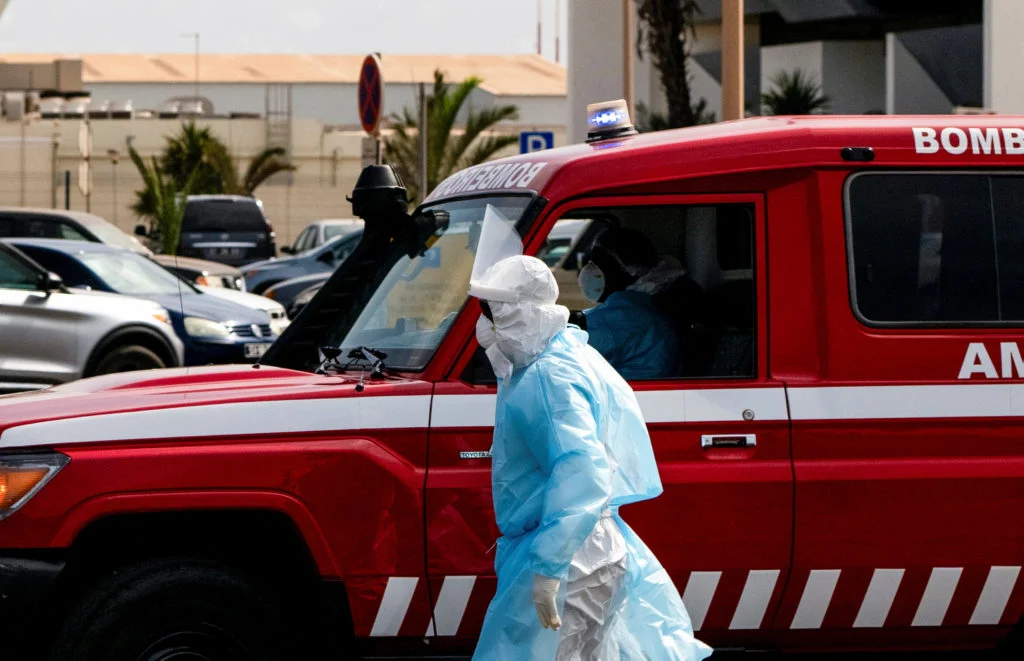
PRAIA, Cape Verde — A maritime medical crisis of international proportions is unfolding as the MV Hondius, a cruise vessel previously lauded for its expeditions to the frozen frontiers of Antarctica, becomes the epicenter of a rare and lethal hantavirus outbreak. As the ship makes its way toward the Canary Islands, global health authorities are scrambling to contain a pathogen that has already claimed three lives and triggered a multi-continental investigation.
The World Health Organization (WHO) has confirmed that the vessel is carrying nearly 150 individuals, all of whom are currently under strict isolation protocols. The situation remains fluid, with public health agencies across Europe, Africa, and South America coordinating to trace the movements of passengers who disembarked at various remote Atlantic outposts before the severity of the outbreak was fully understood.
The Anatomy of the Outbreak: Main Facts
The outbreak involves the Andes virus, a specific, virulent strain of hantavirus native to South America. While hantavirus is primarily transmitted to humans through the inhalation of aerosolized particles from rodent droppings, the current situation has raised alarm due to evidence suggesting the rare phenomenon of human-to-human transmission.
According to the WHO, the outbreak has resulted in eight recorded cases thus far, five of which have been confirmed via laboratory testing. Three individuals have succumbed to the disease. The ship continues to hold the remains of one deceased passenger, while the other two fatalities occurred on land—one in South Africa and another in a transit hub.
The MV Hondius departed South America on April 1, embarking on a journey that included stops at Antarctica, South Georgia, Nightingale Island, Tristan da Cunha, St. Helena, and Ascension Island. It was during this lengthy voyage that the virus, likely introduced by a passenger exposed to rodent habitats in Argentina, began to circulate.
A Chronological Descent: From Ushuaia to the Atlantic
The origin of the crisis appears to be rooted in the windswept landscapes of Ushuaia, Argentina. Investigators are focusing on a Dutch couple who participated in bird-watching excursions prior to boarding the MV Hondius.
- Pre-boarding (Late March): Anonymous Argentine officials suggest the couple visited a local landfill, a high-risk area for rodent exposure, during their tour. This is currently the leading hypothesis for the initial introduction of the virus onto the ship.
- May 2: A German passenger passed away on board the MV Hondius, marking a grim turning point in the voyage.
- Early May: The vessel continued its itinerary, but as symptoms began to manifest in other passengers, the reality of a viral outbreak became undeniable.
- Mid-May: Evacuation efforts intensified. At St. Helena, the body of the suspected index case (the Dutch man) was removed. His wife, who later traveled to South Africa, collapsed at the Johannesburg airport and subsequently died.
- Wednesday, May 15: Health officials in Cape Verde orchestrated a high-stakes evacuation. Three patients—including the ship’s British doctor—were transferred to shore under stringent protective measures. Two were later flown to Amsterdam and moved to specialized hospitals in the Netherlands and Germany.
- Present Day: The MV Hondius is under medical quarantine, en route to the Canary Islands, where Spanish authorities are preparing to receive the vessel despite local political anxieties.
The Pathogen: Why the Andes Virus is Unique
The Andes virus is a formidable adversary. Unlike many other hantavirus strains, which are strictly zoonotic (animal-to-human), the Andes strain is the only member of the Hantaviridae family known to support sustained person-to-person transmission.
Clinical Challenges
When a human is infected, the virus targets the respiratory system. It can lead to Hantavirus Pulmonary Syndrome (HPS), a condition characterized by rapid fluid buildup in the lungs, leading to severe acute respiratory distress. The clinical window is narrow; patients often require mechanical ventilation and advanced life support.
"This is not the next COVID," noted Maria Van Kerkhove, the WHO’s lead epidemic expert. "The risk to the general public remains low because transmission requires very close, prolonged contact with an infected individual’s bodily fluids or secretions."
However, the lack of a specific cure or vaccine for hantavirus underscores the gravity of the situation. Treatment is primarily supportive, focusing on oxygen therapy and stabilization. The incubation period—ranging from one to six weeks—complicates contact tracing, as individuals may be infected and asymptomatic for an extended duration.
Official Responses and Global Coordination
The international response has been characterized by intense, rapid-fire collaboration between the WHO, national health ministries, and the ship’s operator, Oceanwide Expeditions.
The WHO Perspective
The WHO has dispatched infectious disease experts to intercept the ship and assess the status of the remaining passengers. Their primary directive is to prevent further transmission and ensure that those on board receive the clinical monitoring necessary to detect the early onset of respiratory failure.
National Reactions
- Spain: The Spanish health ministry has stated that the arrival of the MV Hondius in the Canary Islands poses no public risk, provided the isolation protocols remain intact. However, the political climate is tense; Canary Islands President Fernando Clavijo has requested an urgent summit with Prime Minister Pedro Sánchez to discuss the safety of the local population.
- South Africa: Having already processed two infected passengers, South African health officials have launched a massive contact-tracing operation. They have successfully identified 42 individuals—including medical staff—who were exposed to the infected patients. All 42 have tested negative to date, providing a glimmer of hope that the local transmission chain in South Africa has been broken.
- Switzerland: Authorities are treating a former passenger who tested positive after leaving the ship in St. Helena. The patient’s spouse is currently under self-isolation, highlighting the persistent uncertainty regarding how many passengers may have unknowingly carried the virus into their respective home countries.
Implications: The Future of Maritime Health Security
The MV Hondius incident serves as a stark reminder of the vulnerability of international travel to the rapid spread of rare infectious diseases.
The "Remote Destination" Paradox
The ship’s itinerary highlights a growing trend in tourism: the desire to reach increasingly remote corners of the globe. When an outbreak occurs in such locations, the logistical hurdles of medical evacuation are magnified. The difficulty in transporting critically ill patients from the mid-Atlantic to specialized facilities in Europe has complicated the clinical outcomes for those on board.
Protocols for the Future
Maritime law and public health protocols will likely undergo a rigorous review in the wake of this outbreak. Currently, there is no standardized international protocol for managing a hantavirus event at sea, largely because such an event was previously considered a statistical impossibility. The WHO is expected to release new guidance for cruise operators regarding rodent control and infectious disease screening in light of this event.
A Test of Resilience
As the MV Hondius nears the Canary Islands, the world watches with bated breath. The situation is a test of the global health community’s ability to coordinate across borders, manage public perception in the face of fear, and provide high-level medical care in the most challenging of circumstances.
While the scientific consensus is that this does not constitute a pandemic-level threat, the loss of life and the ongoing peril faced by the crew and passengers are profound. For now, the priority remains clear: ensure no further transmission, provide life-saving care to those currently fighting the infection, and complete the complex puzzle of tracing every individual who set foot on the ship during its fateful journey.