Published June 4, 2026
For millions of cancer survivors, the battle does not necessarily end when the final treatment is administered. Beyond the physiological hurdles of recovery, many patients find themselves navigating a complex web of lingering side effects—insomnia, chronic fatigue, anxiety, and mood disturbances—that can persist for years. While modern medicine has made extraordinary strides in oncological treatment, the management of these “secondary” quality-of-life issues has often remained elusive.
However, a groundbreaking, long-term analysis led by the University of Rochester Medical Center (URMC) is providing a new, evidence-based roadmap for recovery. The research suggests that a specific, non-rigorous form of yoga can serve as a potent tool to mitigate these systemic side effects. By shifting the focus from treating isolated symptoms to addressing the interconnected nature of post-cancer wellness, researchers are championing a new era of “precision” lifestyle medicine.
The Silent Crisis: When Treatment Ends but Symptoms Persist
In the clinical community, there is a growing recognition that the “cancer trajectory” includes a long tail of suffering. Dr. Karen Mustian, PhD, MPH, and principal investigator for the URMC research, highlights a stark reality: “In some instances, these side effects resolve on their own. But a considerable amount of the time, they don’t.”
The data is sobering. Conservative estimates indicate that more than 50 percent of cancer survivors struggle with persistent sleep disturbances. For context, this is significantly higher than the general population, where research suggests approximately 30 percent of Americans experience difficulty falling or staying asleep.
For the cancer survivor, insomnia is rarely an isolated issue. It is often a symptom of a broader cluster of challenges—fatigue, depression, and anxiety—that feed into one another in a cyclical, debilitating feedback loop. Standard medical interventions, such as pharmaceuticals, often carry the risk of negative drug interactions, while traditional, high-intensity exercise protocols can be too physically demanding for patients still reeling from the systemic exhaustion of chemotherapy and radiation.
A Chronology of Discovery: The YOCAS Protocol
The roots of this research date back to the early 2000s, a time when the intersection of oncology and integrative medicine was still in its infancy. As the research team began to observe the limitations of conventional symptom management, they developed a specialized intervention known as Yoga for Cancer Survivors (YOCAS).
Unlike the high-heat, high-intensity vinyasa classes popular in many boutique fitness studios, the YOCAS protocol was designed with clinical precision. Over the course of four weeks, 410 women who had completed cancer treatment and were suffering from sleep disturbances participated in a program that integrated specific poses, breathwork, and mindfulness.
The Research Timeline:
- Early 2000s: Initial development of the YOCAS protocol by Marget Braun, focusing on gentle movement tailored to the physical limitations of survivors.
- Study Execution: 410 women participated in a thrice-weekly program, utilizing self-reporting tools and wearable technology to track sleep quality.
- Data Analysis (2010s–2020s): Researchers, including Dr. Yuri Choi and Dr. Pu-Jo Lin, began to move beyond sleep, analyzing the data for secondary benefits related to mood and fatigue.
- Modern Implications (2026): Current efforts are focused on expanding access to marginalized communities, including Black and Latina survivors, and adapting the protocol for adolescent and young adult (AYA) patients.
The Interconnectedness of Symptoms: Why One Size Does Not Fit All
A pivotal shift in the URMC team’s research occurred when they stopped looking at sleep as a standalone problem. Dr. Mustian, who serves as the Associate Director for Population Science at the Wilmot Cancer Institute, explains the transition: “Historically, a lot of side effects occur at the same time. You might see a patient struggling with sleep, but they’re also saying, ‘I’m super tired, my mood is off, I feel anxious, frustrated, or agitated.’”
The research team began to test a hypothesis: Could these side effects be causal? If they could reduce the patient’s anxiety and fatigue, would sleep naturally improve?
The data suggests the answer is a resounding yes. According to Dr. Pu-Jo Lin, a Research Assistant Professor and yoga teacher who has long collaborated on the study, the improvement in daytime fatigue is a key catalyst for nocturnal recovery. By lowering the baseline of physical and emotional exhaustion during the day, the body is better positioned to enter restorative sleep cycles at night. This finding validates the need for a holistic approach to oncology—one that acknowledges the mind-body connection as a fundamental pillar of patient care.
Defining the "Prescription" of Yoga
One of the most important takeaways from the URMC study is that not all yoga is created equal. The researchers are emphatic that the benefits observed in their study were not derived from power yoga, hot yoga, or advanced athletic flows. In fact, for a vulnerable cancer survivor, such high-intensity activities could potentially exacerbate stress levels or lead to physical injury.
The YOCAS protocol is characterized by:
- Gentle Hatha and Restorative Poses: A slow-moving sequence that emphasizes energy conservation rather than caloric burn.
- Mindfulness and Breathwork: The integration of movement with non-judgmental observation of the present experience.
- Individualized Modification: The necessity of working with instructors who understand the unique physical limitations and health histories of cancer survivors.
Dr. Yuri Choi underscores the importance of the instructor’s role, noting that in the early 2000s, access to such specialized training was rare. Today, while digital resources like YouTube and yoga apps have made the practice more accessible, they have also created a "quality control" issue. “Not every type of yoga being taught is appropriate for this population,” Dr. Mustian warns. “Not every type of training would position a yoga instructor to be effective and safe in this role.”
Clinical Implications and Future Directions
The goal of the URMC team is to move toward a model of "precision lifestyle medicine," where clinicians can confidently prescribe specific, evidence-based behavioral interventions just as they would a medication.
Where to Find Support
For patients and clinicians looking for appropriate resources, the researchers point toward established cancer support centers, such as the City of Hope and Memorial Sloan-Kettering, which frequently host oncology-specific classes. Additionally, the nonprofit Yoga4Cancer Foundation serves as a vital bridge, offering free online classes and specialized training for instructors who wish to learn the nuances of working with oncology patients.
Looking ahead, the team is committed to social equity in recovery. Their upcoming initiatives will focus on:
- Broadening Access: Developing programs specifically designed for Black and Latina cancer survivors, who may face systemic barriers to traditional wellness resources.
- Age-Specific Protocols: Examining how yoga can mitigate the unique side effects experienced by adolescent and young adult (AYA) cancer survivors, a group with distinct physiological and psychosocial needs.
A Tool, Not a Cure
It is important to emphasize that the researchers view yoga not as a replacement for conventional medical care, but as a critical tool in the survivor’s arsenal. By empowering patients with the ability to manage their own nervous systems, the YOCAS protocol reduces the burden of treatment side effects.
“We’re just giving them the tools,” Dr. Mustian concludes.
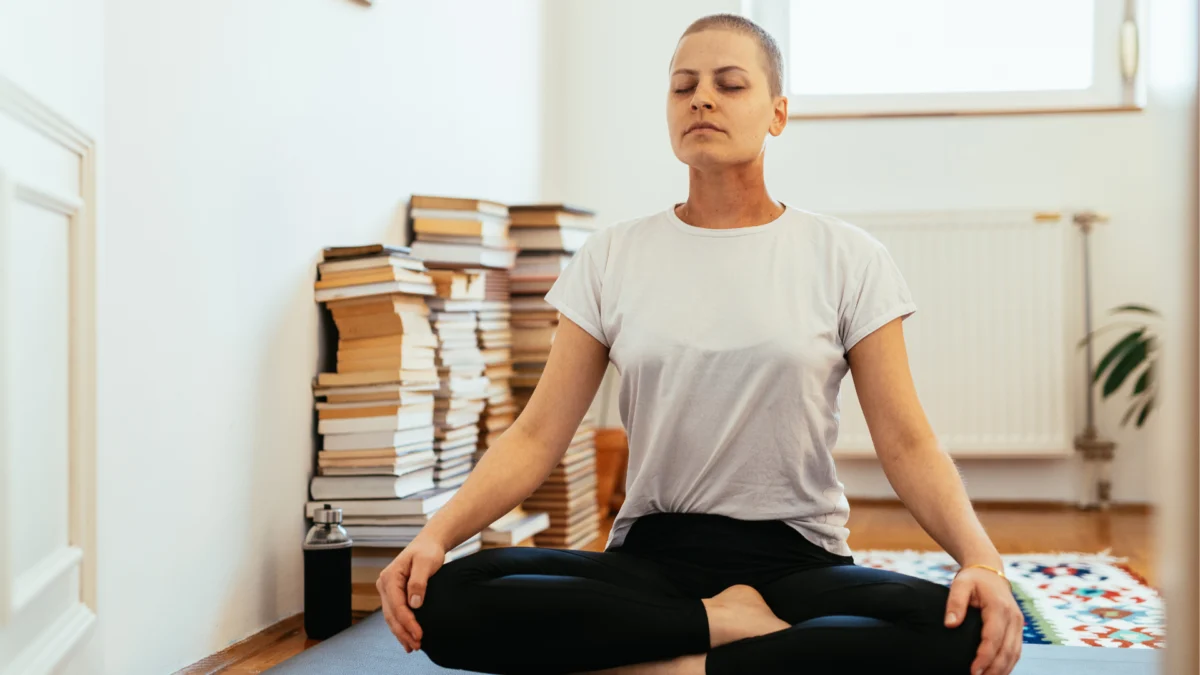
The YOCAS sequence—ranging from seated stretches like the Jnana Mudra to restorative poses like Viparita Karani (Legs-up-the-Wall)—serves as a template for recovery. By focusing on breathing, body awareness, and the gentle release of tension, survivors are learning to reclaim their bodies from the after-effects of their diagnosis. In doing so, they are proving that while cancer may change a life forever, the journey of healing can be guided by the intentional, quiet power of the present moment.
As the medical community continues to integrate these findings, the hope is that cancer treatment will eventually interfere less with the lived experience of the patient, ensuring that once the disease is conquered, the survivors can focus on living fully once again.