Published June 3, 2026
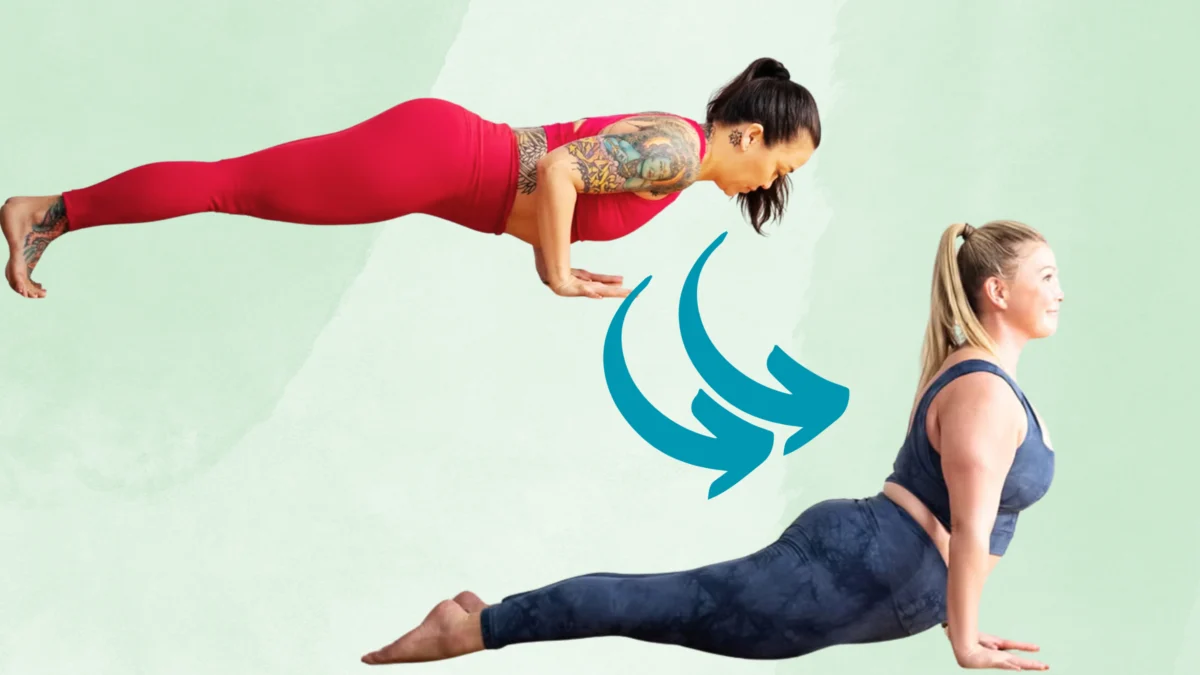
For practitioners of Vinyasa yoga, the flow between Chaturanga Dandasana (Four-Limbed Staff Pose) and Urdhva Mukha Svanasana (Upward-Facing Dog) represents the quintessential "in-between" space. It is a transition that, while often glossed over in fast-paced studio classes, serves as a litmus test for core stability, shoulder health, and mindful movement. Yet, for many, this transition remains a source of frustration, characterized by "mat-burned" toes, collapsing lower backs, and a sensation of being physically stuck between two foundational postures.
As of mid-2026, leading yoga anatomy experts and instructors are advocating for a paradigm shift: moving away from the "one-breath, one-pose" dogma that forces students into potentially injurious, rushed transitions. Instead, the focus is shifting toward anatomical precision and the customization of movement to fit individual biomechanics.
The Anatomy of the Struggle: Why We Get Stuck
The transition from Chaturanga to Upward-Facing Dog is not merely a change in pose; it is a complex kinetic chain reaction. To move effectively, a practitioner must shift their center of gravity, rotate the feet from the balls to the tops, and engage the posterior chain—all within the span of a single exhale and inhale.
When this transition is rushed, the "weak links" in the kinetic chain become immediately apparent. The core often disengages, causing the abdomen to sag toward the floor, which places undue pressure on the lumbar spine. Simultaneously, the shoulders may shrug toward the ears as the practitioner struggles to find the leverage necessary to flip the feet. The result is not just physical discomfort, but a missed opportunity for the strengthening and stabilizing work that Vinyasa is designed to provide.
Chronology of a Transition: A Step-by-Step Breakdown
Understanding the mechanics of this movement requires slowing it down—significantly. By breaking the transition into its constituent parts, practitioners can identify exactly where their movement falters.
- The Initiation: The movement begins in Chaturanga. The body is in a horizontal plane, parallel to the floor, with the core braced and the elbows hugging the ribs.
- The Weight Shift: To free the toes, the practitioner must shift the weight forward—past the point where the shoulders are stacked over the wrists. This is the "fear zone" for many, as it requires significant tricep and pectoral strength.
- The Foot Pivot: This is the most complex phase. The feet must rotate from the metatarsals to the dorsal surface. If the weight shift hasn’t been sufficient, the toes drag against the mat, leading to the infamous "mat burn."
- The Spinal Extension: Once the feet are positioned, the transition completes as the chest reaches forward and upward, moving into the full expression of Upward-Facing Dog.
Four Evidence-Based Approaches to the Transition
Modern yoga pedagogy suggests that there is no "correct" way to execute this transition for every body. Instead, instructors are promoting a "choose-your-path" approach, allowing students to select the technique that best supports their unique anatomy.
1. The Knee-Down Modification: Stability First
For those dealing with chronic lower back pain or those still building the raw strength required for Chaturanga, lowering the knees to the mat is not a "regression"—it is a strategic choice.
- The Logic: By grounding the knees, the practitioner shifts the fulcrum of the pose. This creates a stable platform, allowing the student to untuck the toes with precision rather than through a frantic, high-velocity motion.
- The Technique: From Chaturanga, lower the knees gently to the mat. Untuck the toes, pressing the tops of the feet into the floor. Inhale to lift the chest into a supported Upward-Facing Dog. Using a blanket under the knees can mitigate joint stress, making this an ideal practice for those working on long-term injury prevention.
2. The Asymmetrical "Step-and-Flip"
Many practitioners find the simultaneous flipping of both feet to be a coordination nightmare. The asymmetrical approach allows the brain to process the movement one side at a time.
- The Logic: This method reduces the immediate load on the core and shoulders, allowing the practitioner to focus on the alignment of the feet. By alternating which foot leads, the practitioner ensures balanced development of the hips and ankles.
- The Technique: Lift one foot and roll it over, placing the top of the foot on the mat. Transfer a portion of your weight into that foot, then repeat with the second foot. This allows for a smooth, controlled transition into the final backbend.
3. The Tucked-Toe Strategy: A Rebellious Alternative
Traditional schools of yoga often insist that the tops of the feet must touch the mat in Upward Dog. However, some contemporary teachers argue that keeping the toes tucked can provide greater structural integrity.
- The Logic: Keeping the toes tucked creates a rigid base, which can assist in stabilizing the hips. It also allows for a quicker transition into Downward-Facing Dog, as the feet are already in the "active" position.
- The Technique: From Chaturanga, maintain tucked toes as you push into the palms to straighten the arms. Caution: This variation increases the arch in the lower back. To compensate, practitioners should lift the pelvis slightly higher or keep a micro-bend in the elbows to protect the lumbar spine.
4. The Symmetrical Roll: The Advanced Standard
The most common "ideal" is the simultaneous roll of both feet. This requires the highest degree of core engagement and momentum control.
- The Logic: When done correctly, this movement creates a unified "wave" of energy through the spine. It is the most efficient, yet the most demanding.
- The Technique: As you inhale, shift your chest forward, bringing the weight deep into the hands. Engage the core by drawing the navel toward the spine to prevent the "sinking" feeling. As you straighten the arms, allow the feet to roll over in one fluid motion. For those prone to toe irritation, simple athletic tape can provide a protective barrier until the strength is developed to lift the feet clearly off the mat.
Supporting Data: Why "Slowing Down" is Trending
A 2026 survey of injury rates in metropolitan yoga studios indicated that a significant percentage of upper-body and foot-related complaints stem from "rushed, poorly executed transitions." The data suggests that practitioners who dedicate time to "slow-flow" drills—where transitions are held for 3–5 seconds—report a 40% increase in core activation scores compared to those who prioritize the "one-breath" rhythm.
Physical therapists involved in the study noted that "the transition is where the work happens." By slowing down, the muscles are forced to stabilize under tension, which is the primary driver of functional strength.
Implications for Practice
The goal of Vinyasa is not to perform a series of poses as quickly as possible, but to move with intention. The transition from Chaturanga to Upward-Facing Dog is, perhaps, the most profound expression of this philosophy.
When we rush this movement, we are essentially bypassing the moment where we build the most strength and awareness. By embracing these modifications—whether it is keeping the knees down, tucking the toes, or slowing the movement to a crawl—practitioners can transform a moment of frustration into a moment of mastery.
In the words of leading movement educators, the "yoga" is not in the destination (the pose), but in the journey between them. By discerning what your body needs in that split second between Chaturanga and Upward Dog, you are practicing the very essence of mindfulness. Whether you are a beginner looking to protect your joints or a seasoned practitioner refining your technique, these four approaches offer a sustainable path forward. Don’t be afraid to take a few extra beats, fall behind the rest of the class, and find the movement that feels not just possible, but powerful.