










In the relentless battle against oncology’s most resilient adversaries, scientists have long focused on the concept of "metabolic addiction"—the reliance of cancer cells on specific nutrients to fuel their rapid, uncontrolled proliferation. While many therapeutic strategies have sought to starve tumors by cutting off these supply lines, the inherent flexibility of cancer cells often leads to treatment resistance. Now, a groundbreaking study from the University of Lausanne (UNIL) has identified a critical regulatory checkpoint that could change the calculus of metabolic therapy.
Researchers led by Professor Alexis Jourdain have discovered that the survival of certain cancer cells hinges on a precise biological mechanism involving pyruvate and Vitamin B7 (biotin). By identifying how tumors compensate for nutrient scarcity, the team has not only illuminated a fundamental aspect of cellular survival but has also mapped a new pathway for potential therapeutic intervention.
The Metabolism of Malignancy: A Brief Chronology of Discovery
The trajectory of this discovery, recently published in the journal Molecular Cell, represents the culmination of years of investigation into cellular adaptability.
Phase 1: Identifying the "Glutamine Addiction"
For decades, the scientific community has understood that malignant cells undergo a metabolic reprogramming known as the Warburg Effect. A cornerstone of this shift is an intense "glutamine addiction." Glutamine serves as a vital nitrogen and carbon source, essential for the synthesis of nucleotides, proteins, and the maintenance of the tricarboxylic acid (TCA) cycle. Historically, researchers hypothesized that by inhibiting glutamine uptake, they could effectively arrest tumor growth. However, clinical trials testing glutaminase inhibitors often met with disappointing results, as cells frequently bypassed the blockage by utilizing alternative carbon sources.
Phase 2: The Role of Pyruvate and Biotin
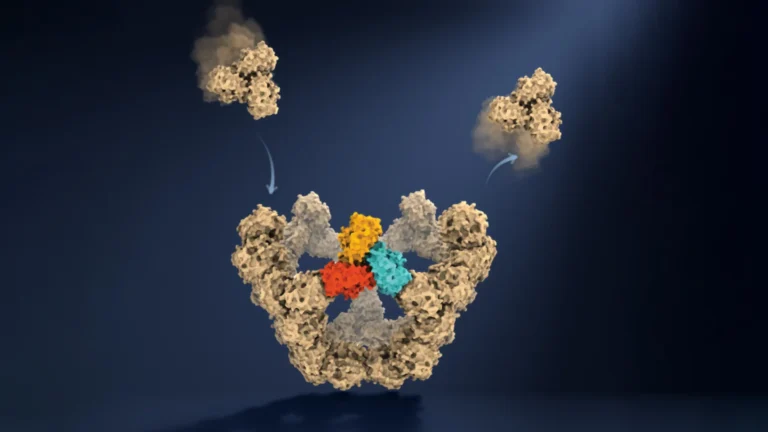
Led by Dr. Miriam Lisci, the research team at the Department of Immunobiology (DIB) began investigating the "Plan B" of cancer cells: pyruvate. The team discovered that when glutamine is scarce, cells shift their reliance to pyruvate, which enters the mitochondria to maintain energy homeostasis. Crucially, this metabolic pivot is not autonomous; it is governed by an enzyme known as pyruvate carboxylase. The team’s breakthrough was identifying that this enzyme functions exclusively in the presence of Vitamin B7 (biotin). Without this essential vitamin, the enzyme is rendered inert, effectively revoking the cell’s "metabolic license" to adapt.
Phase 3: The FBXW7 Link
As the research progressed, the team turned their attention to the FBXW7 gene—a well-known tumor suppressor frequently mutated in human cancers. Through advanced metabolomic and proteomic screening, the researchers observed that when FBXW7 is mutated, the levels of pyruvate carboxylase are significantly depleted. This creates a state where the cell is no longer metabolically flexible; it becomes strictly dependent on glutamine for survival. This finding provided the "missing link" between common genetic mutations in cancer and the resulting metabolic phenotype.
Supporting Data: Mapping the Metabolic Architecture
The research utilized a multi-disciplinary approach, integrating high-throughput proteomics and metabolomics to map the flow of carbon through the cell. By collaborating with the FBM’s core technology platforms and Professor Owen Skinner’s team at Northeastern University, the researchers were able to quantify the exact flux of metabolites under varying nutrient conditions.
The Mechanism of Action
The study confirms that pyruvate carboxylase acts as a gateway. When the cell is deprived of glutamine, the enzyme facilitates the carboxylation of pyruvate into oxaloacetate, effectively replenishing the TCA cycle. The data indicates that biotin serves as a co-factor essential for this reaction. When the researchers introduced biotin-deficient conditions in a laboratory setting, the metabolic flexibility of the cancer cells vanished, leading to a precipitous decline in cell viability.
The Genetic Trigger
The role of FBXW7 is perhaps the most significant finding regarding patient stratification. The study demonstrated that in cells harboring specific FBXW7 mutations, the degradation of pyruvate carboxylase is accelerated. Consequently, these tumors lose their ability to utilize pyruvate as a compensatory fuel. This data suggests that patients whose tumors carry these specific mutations may be significantly more vulnerable to targeted glutamine-deprivation therapies—a hypothesis that could drastically improve the success rate of future clinical trials.
Official Responses and Expert Commentary
"The metabolic flexibility of tumor cells is one of the primary reasons our current therapeutic arsenal often falls short," says Professor Alexis Jourdain, the study’s senior author. "For a long time, we viewed nutrient dependency as a binary choice—either the cell needs it or it doesn’t. We now know it is a highly fluid, regulated system."
Dr. Miriam Lisci, first author of the study, emphasizes the clinical relevance of the FBXW7 findings. "When we looked at the specific mutations found in human cancer cohorts, the story became clear. These mutations aren’t just driving proliferation; they are fundamentally altering the metabolic ‘options’ available to the cancer cell. By mapping these mutations, we are essentially creating a blueprint of where these cells are most vulnerable."
The collaboration with Northeastern University’s laboratory, led by Professor Owen Skinner, provided the computational muscle to map these complex biological networks. "Integrating proteomics with genetic mutation data allowed us to see the ‘why’ behind the cell’s failure to adapt," says Skinner. "This is the essence of precision medicine."
Implications: A New Era for Metabolic Oncology
The implications of this research are twofold: they provide a mechanistic explanation for past clinical failures and offer a concrete roadmap for future drug development.
Rethinking Therapeutic Strategy
The failure of glutamine-inhibiting drugs in the past can likely be attributed to the "metabolic license" granted by pyruvate carboxylase. If a patient’s tumor retains a functional pyruvate pathway, blocking glutamine is merely an inconvenience to the cell. However, if the tumor is also treated with a biotin-depletion strategy or a targeted inhibitor of pyruvate carboxylase, the cell’s compensatory pathway is severed. This implies that the future of cancer treatment lies in synthetic lethality—targeting two metabolic pathways simultaneously to ensure the cell has no way to survive.
Precision Diagnostics
This research highlights the importance of metabolomic profiling in cancer diagnosis. Identifying the status of the FBXW7 gene and the activity of the pyruvate carboxylase pathway could eventually become a routine part of biopsy analysis. Patients could be screened for these specific metabolic markers to determine if they would benefit from metabolic-targeting therapies, thereby avoiding the toxic side effects of treatments that would ultimately prove ineffective.
Future Directions
The research team is now looking toward the development of small-molecule inhibitors that specifically target the biotin-binding site of pyruvate carboxylase. While biotin is essential for normal human physiology, the researchers are optimistic that a "therapeutic window" exists where tumor cells—which are often under higher metabolic stress—can be selectively targeted without harming healthy tissue.
Furthermore, the team is exploring whether other vitamins or micronutrients act as "metabolic licenses" for other cancer types. If the logic holds true, this could lead to an entire catalog of nutritional vulnerabilities that can be exploited across a broad spectrum of oncological diseases.
Conclusion: The Path Ahead
The discovery at the University of Lausanne represents a significant shift in our understanding of tumor biology. By moving beyond the simple "starvation" model of cancer treatment and into the nuanced world of metabolic flexibility, researchers are identifying the specific levers that keep malignant cells alive.
As we look toward the future, the integration of genetic mutation data with metabolic pathway analysis will be crucial. The FBXW7-pyruvate-biotin axis is likely just one of many hidden vulnerabilities waiting to be uncovered. By systematically closing these metabolic "escape hatches," the medical community moves one step closer to transforming cancer from an adaptive, relentless adversary into a manageable—and potentially curable—condition.
The work of Dr. Lisci, Prof. Jourdain, and their colleagues serves as a potent reminder that the most profound insights into human disease often come from examining the fundamental, microscopic choices cells make in their struggle to survive.