










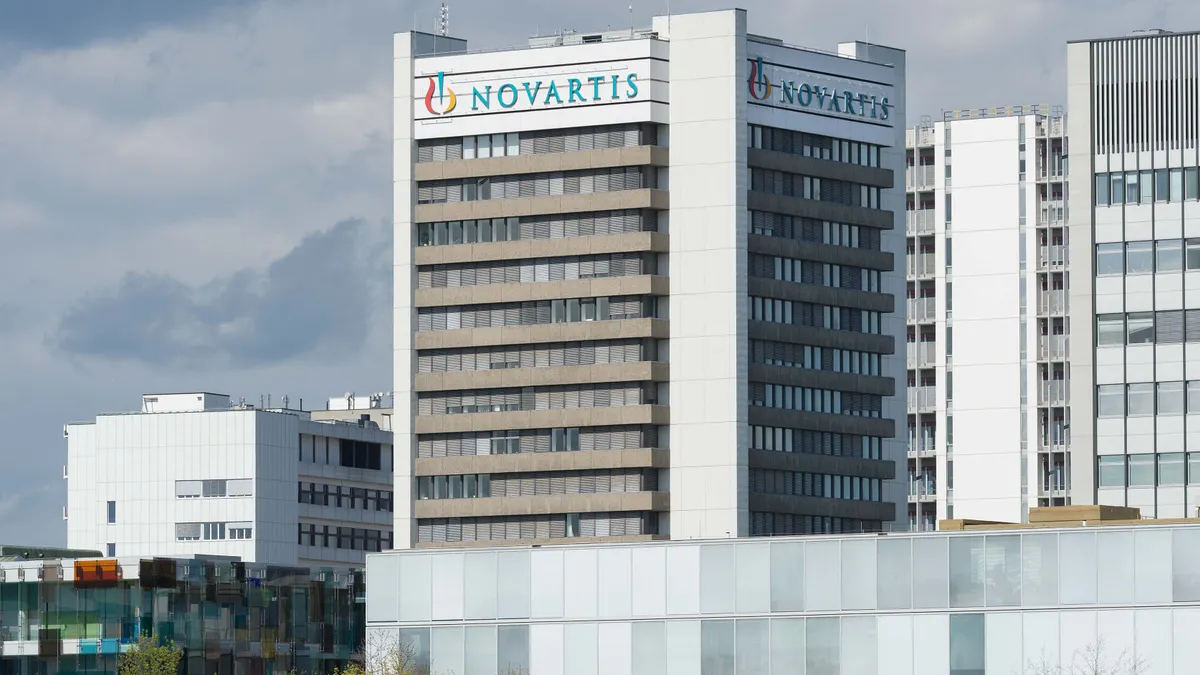
In a landmark move that signals a significant shift in its long-term oncology strategy, Swiss pharmaceutical giant Novartis has announced a definitive agreement to acquire the privately held U.K.-based biotech firm Myricx Bio. The transaction, valued at up to $1.5 billion, marks Novartis’ official entry into the high-stakes world of antibody-drug conjugates (ADCs)—a therapeutic modality that has become the crown jewel of modern precision oncology.
Under the terms of the agreement, Novartis will provide an upfront payment of $1.1 billion, with an additional $400 million contingent upon the achievement of specific clinical and regulatory milestones. The deal, expected to close by the end of 2026, grants Novartis full access to Myricx’s proprietary pipeline of "differentiated" ADCs and its specialized platform technology.
The Core Assets: A New Mechanism of Action
At the heart of the acquisition are two lead ADC candidates targeting HER2 and B7-H3—proteins frequently overexpressed in aggressive forms of breast and lung cancers. While the oncology market is currently saturated with ADCs, most rely on traditional "payloads" such as microtubule inhibitors or topoisomerase inhibitors.
Myricx differentiates itself by utilizing a novel class of payloads: N-myristoyltransferase inhibitors (NMTi). NMT is an enzyme that is essential for the N-myristoylation of proteins, a process critical for cancer cell survival and proliferation. By deploying NMTi as the "warhead" on an antibody, Myricx aims to bypass the drug resistance mechanisms that often plague traditional ADCs. This unique mechanism of action is expected to deliver more potent, durable responses in patients who have become refractory to existing therapies.
Chronology: From Academic Spin-out to Big Pharma Acquisition
The journey of Myricx Bio is a testament to the power of the U.K.’s academic-industrial pipeline. The company was established in 2019 as a spin-out from the world-renowned Francis Crick Institute and Imperial College London, with early support from Cancer Research UK.
- 2019: Myricx Bio is founded with seed funding led by Brandon Capital and Sofinnova Partners, focusing on the untapped potential of NMT inhibition in oncology.
- 2020–2023: The company validates its NMTi platform, demonstrating in preclinical models that these payloads could effectively kill tumor cells while demonstrating a cleaner safety profile than traditional chemotherapy conjugates.
- 2024: Myricx attracts interest from heavyweights, securing backing from Lilly and Novo Holdings, further solidifying its reputation as a "must-watch" player in the ADC space.
- July 2026: Novartis formally announces the acquisition, ending months of industry speculation regarding how the Basel-based giant would fill the gap in its ADC portfolio.
Supporting Data: Why ADCs are the Industry’s "Gold Rush"
The global pharmaceutical industry has been embroiled in an "ADC gold rush" for the better part of the last three years. ADCs function as "guided missiles," consisting of an antibody designed to bind to a specific marker on a cancer cell, connected via a chemical "linker" to a potent cytotoxic payload. This design allows for the delivery of highly toxic doses directly to the tumor while minimizing systemic exposure—the primary cause of side effects in traditional chemotherapy.
The commercial success of AstraZeneca and Daiichi Sankyo’s Enhertu proved that the modality could transform the treatment landscape for HER2-positive cancers, turning previously terminal diagnoses into manageable conditions. Following this success, industry leaders such as Eli Lilly, AbbVie, and Merck & Co. have collectively spent tens of billions of dollars to secure proprietary ADC technology.
Novartis, however, had remained a notable outlier. Instead of chasing the ADC trend, the company focused its resources on radioligand therapies (RLTs), successfully bringing drugs like Lutathera and Pluvicto to market. While these RLTs have been highly profitable, the Myricx acquisition suggests that Novartis management has recognized that a diversified oncology portfolio must include next-generation ADCs to remain competitive.
Official Responses and Strategic Intent
The acquisition is being framed by Novartis leadership as a natural evolution of their biomedical research strategy.
"This proposed acquisition reflects our strategy to scale innovative platforms, as we have with radioligand therapies, to deliver more durable, transformative treatments for patients," said Fiona Marshall, President of Biomedical Research at Novartis, in a press statement. Marshall emphasized that the "differentiated" nature of the Myricx platform is what ultimately attracted Novartis, as it offers a way to address the "limitations of current ADCs," specifically regarding drug resistance.

For Myricx, the deal provides the massive infrastructure and clinical trial expertise required to move NMTi-based drugs from the lab into large-scale human trials. By folding into Novartis, Myricx’s research team will gain access to the scale of one of the world’s largest drug development engines.
Implications for the Future of Oncology
The Novartis-Myricx deal has several profound implications for the pharmaceutical sector:
1. The Death of "Me-Too" ADCs
The industry is moving past the phase of simple, iterative ADC development. By acquiring a company with a truly novel payload (NMTi), Novartis is signaling that the future of the field lies in differentiated chemistry. Investors and competitors are now likely to pivot their focus toward firms with unique "warheads" rather than those simply optimizing existing linker technologies.
2. Validation of the NMTi Platform
The validation provided by a major player like Novartis will likely spark a wave of investment into NMT-targeting research. If the lead candidates succeed in clinical trials, the NMTi payload could become a new standard in the ADC space, potentially rivaling current topoisomerase inhibitors in efficacy.
3. Novartis’ Rebalanced Portfolio
This acquisition effectively balances Novartis’ risk. By combining its industry-leading position in radiopharmaceuticals with a robust, high-potential ADC platform, the company is insulating itself against market shifts. Should RLTs face regulatory headwinds, the new ADC pipeline provides a powerful alternative growth engine.

4. Continued Consolidation of U.K. Biotech
The deal is another "win" for the U.K. life sciences ecosystem. It demonstrates that the London-Oxford-Cambridge triangle remains one of the world’s most fertile grounds for high-value biotech innovation. The success of a spin-out from the Francis Crick Institute reinforces the value of deep integration between basic research and venture capital.
Conclusion: A New Chapter for Novartis
As the deal heads toward completion by the end of 2026, the global oncology community will be watching closely. The integration of Myricx’s NMTi technology into the Novartis machine represents more than just a purchase of assets; it is a calculated bet on the next generation of precision medicine.
While the challenges of clinical development are significant, the potential for these "differentiated" ADCs to redefine patient outcomes in breast and lung cancer is immense. For Novartis, this deal is the missing piece in a broader puzzle—a move that ensures the company remains at the forefront of oncology innovation as the industry enters a new era of targeted, payload-based therapy.