











By Mary Meyer, MD, MPH
Long before its initial identification in 1976, Ebola disease—a viral hemorrhagic fever characterized by sudden onset of fever, severe gastrointestinal distress, and internal and external bleeding—has remained a specter in global medicine. It strikes a visceral fear into the hearts of patients and clinicians alike, and for good reason. With a fatality rate that historically fluctuates between 30% and 90%, the disease causes agonizing physical symptoms. For decades, the lack of proven vaccines or standardized therapeutics left the medical community largely reactive rather than proactive.
Today, the world is once again vigilantly monitoring the progress of the Ebola virus. On May 17, the World Health Organization (WHO) designated the current outbreak of the Bundibugyo virus—one of the four primary strains responsible for human Ebola disease—in Uganda and the Democratic Republic of Congo as a Public Health Emergency of International Concern. As of this reporting, the situation has escalated to more than 130 deaths and 500 suspected or confirmed cases. Most alarmingly, the infection has crossed professional lines, with at least one confirmed case involving an American physician. The CDC has issued a formal alert, warning U.S. health systems to prepare for the potential arrival of infected travelers, a scenario that demands immediate, systemic readiness.
The Evolution of the Threat: A Brief Chronology
The history of Ebola is a timeline of sporadic but devastating surges. From the initial 1976 outbreaks in Yambuku and Nzara to the West African epidemic of 2014–2016, the virus has repeatedly challenged the limits of infectious disease containment.
The 2014 outbreak served as a watershed moment for the global healthcare community. It was during this period that my own organization faced the reality of a "Patient Under Investigation" (PUI). The individual arrived with a credible travel history and symptoms mirroring those of the Ebola virus. Managing this patient was a masterclass in the complexities of modern medical crisis response. We navigated the rigorous demands of personal protective equipment (PPE) protocols, the staggering volume of medical waste generated by a single patient, and, perhaps most importantly, the pervasive anxiety felt by our nursing and medical staff.
The Three-Legged Stool: Identify, Isolate, Inform
In the high-stakes environment of emergency medicine, clarity is a clinical necessity. To manage highly infectious diseases, we rely on a conceptual framework known as "Identify-Isolate-Inform." This algorithm is the cornerstone of any robust Ebola preparedness strategy.
Identifying the Risk
The process begins at the front door. Whether in a bustling emergency department or a quiet outpatient clinic, staff must remain hyper-vigilant regarding travel history. Identification relies on the marriage of screening questions and clinical intuition. If a patient presents with fever, vomiting, or unexplained hemorrhage after traveling to an endemic region, they must be flagged immediately.
Isolation Protocols
Once a potential case is identified, isolation is non-negotiable. The patient should be placed in a private room with the door closed. For patients who remain ambulatory and hemodynamically stable, clinicians donning Tier 1 PPE (gloves, surgical mask, and fluid-impermeable gown) should maintain a three-foot perimeter during transport. However, for symptomatic patients experiencing active vomiting or mobility issues, the threshold for risk increases significantly, necessitating full Tier 3 PPE—the gold standard for containment.
The Inform Chain
Isolation is not a solitary act; it is the first step in a broader notification sequence. Informing state and federal health authorities is essential for tracking and containment. Furthermore, internal communication—alerting infection preventionists, infectious disease specialists, and hospital administration—is critical. Hospital leaders must prepare for the administrative and media scrutiny that follows an Ebola alert. In my experience, failing to have these protocols clearly posted in high-traffic areas leads to the kind of frantic, disorganized response that breeds errors.
PPE and the Logistics of Safety
The most significant source of anxiety for healthcare workers is, without question, the PPE. The CDC’s guidelines for donning and doffing are scientifically sound, but they are also arduous. With a dozen or more steps involved, the margin for error is razor-thin.
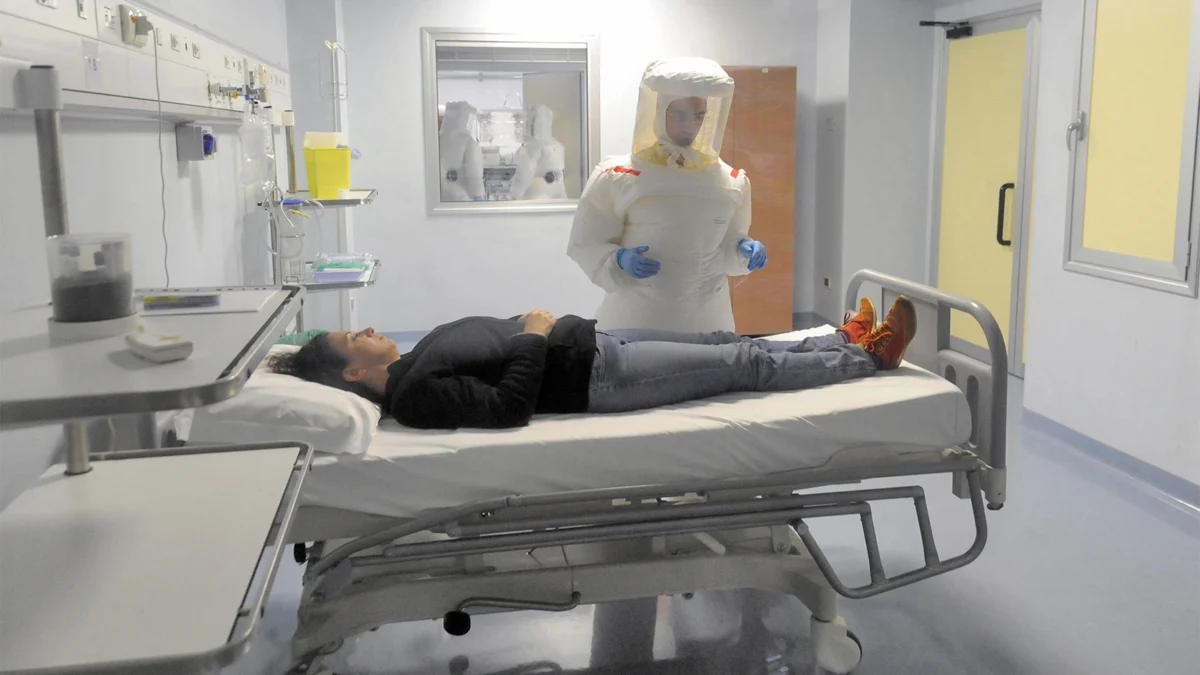
Tier 3 PPE, which includes Tyvek suits with hoods, integrated boots, nitrile gloves, surgical aprons, and powered air-purifying respirators (PAPRs), creates a physical barrier that is as protective as it is cumbersome. Clinicians often find that working in this gear is akin to operating in a pressurized, sauna-like environment. The risk of a "breach"—a tear in the suit or a failure during the doffing process—is the primary driver of clinician stress.
Strategies for Competency
To mitigate these risks, organizations must move beyond generic training. Establishing a "PPE Strike Team"—a cadre of nurses and physicians who are experts in these specific protocols—is vital. These individuals serve as the institutional backbone during a crisis, ensuring that equipment is not only used correctly but also properly maintained.
Redundancy is the secret to safety. Using a trained observer during the doffing process has been proven to significantly reduce the risk of contamination. Furthermore, organizations must conduct regular equipment audits. It is a sobering realization to discover, mid-crisis, that your PAPRs lack charged batteries or that your inventory of specialized tape is insufficient. Now, while the immediate threat to the U.S. remains relatively low, is the time for facilities to audit their supplies and replace outdated gear.
Supporting the Workforce: The Psychological Toll
It is a common misconception that caring for an Ebola patient is purely a mechanical task. It is, in fact, a deeply taxing emotional and physical endeavor. Because Tier 3 PPE is so physically exhausting, bedside shifts should be capped at four hours. Furthermore, the "army" required to care for one patient is substantial; routine bedside tasks that usually require one person may suddenly require two or three to ensure safety and protocol compliance.
The psychosocial aspect of the response cannot be overstated. Clinicians often harbor fears about carrying the pathogen home to their families. Education is the antidote to this fear. We must ensure our staff understands that Ebola is not airborne; it is not transmitted asymptomatically. Transmission is almost exclusively the result of a breakdown in infection control protocols. By providing transparent, evidence-based education and clear policies for leave and monitoring in the event of a breach, leadership can foster a culture of confidence rather than panic.
Implications for the Future
The 2014 Ebola scare was a wake-up call that led to significant refinements in hospital preparedness. However, we cannot afford to be complacent. The recent blows to our nation’s ability to track and deter novel pathogens—ranging from bureaucratic shifts to funding shortages—have left our infrastructure more vulnerable than it was a decade ago.
As we look toward the future, every healthcare organization in the United States must treat Ebola preparedness as a core competency, not an elective exercise. The current outbreak in Central Africa is a reminder that in our interconnected world, the distance between an endemic village and a domestic emergency department is shrinking.
We must use the time we have now to train, to refine our protocols, and to address the legitimate fears of our frontline staff. If we do not prepare now, we risk being caught off guard when the next contagion arrives. True preparedness is not just about having the right suits and the right masks; it is about having a confident, well-trained team that knows exactly what to do when the alarms sound. By investing in our people and our processes today, we ensure that we are ready for the challenges of tomorrow.