Maintaining functional strength after the age of 55 is no longer just about aesthetics—it is a cornerstone of independent living and long-term metabolic health. As the aging process naturally leads to a reduction in muscle mass, known as sarcopenia, the ability to perform everyday tasks—such as lifting groceries, pushing heavy doors, or maneuvering oneself out of a chair—can become increasingly challenging.
While the traditional image of strength training often involves heavy iron plates and crowded gym floors, the reality is that rebuilding "real-world" arm strength can be accomplished within the comfort of your own home, requiring little more than your own body weight and basic resistance tools.
The Science of Strength After 55
Scientific research consistently demonstrates that resistance training is the most effective intervention to combat the physiological decline associated with aging. According to recent studies, consistent strength training—whether utilizing resistance bands or simple bodyweight movements—leads to significant improvements in physical function and muscle density in older adults.
Unlike the high-impact training often associated with younger populations, strength training for the over-55 demographic prioritizes consistency, joint health, and functional carryover. When you integrate these movements into your daily routine, you aren’t just "working out"; you are investing in the mechanics of your daily life.
Expert Insight: Why Home-Based Training Wins
We spoke with James Bickerstaff, a Certified Personal Trainer (CPT) at OriGym, who emphasizes that the barrier to entry for effective strength training is much lower than most people assume.
"The most common misconception about strength training is that you need a gym membership to see results," Bickerstaff explains. "In reality, the tools you already have at home—your body weight, a sturdy chair, and simple resistance bands—are more than enough to facilitate significant growth. The following exercises are specifically curated to strengthen your chest, shoulders, triceps, and core simultaneously, providing a comprehensive upper-body stimulus."
By focusing on compound movements that recruit multiple muscle groups, these exercises optimize time efficiency, ensuring that you receive the maximum functional benefit in the shortest amount of time.
The Foundational Exercises for Lasting Strength
Bickerstaff has identified four key movements designed to rebuild arm strength with greater efficiency and lower joint stress than traditional weight-lifting protocols.
1. Wall Push-ups: The Accessible Powerhouse
The wall push-up is arguably the most underrated movement in the fitness world. It allows for a controlled, scalable approach to building chest and triceps strength.
"Wall push-ups are one of the safest and most effective ways to rebuild upper body strength after 55," says Bickerstaff. "The beauty of this movement lies in its adjustability. You can alter the difficulty simply by adjusting the angle of your body; the further your feet are from the wall, the more load you place on your upper body."
How to execute:
- Stand facing a wall, about an arm’s length away.
- Place your palms flat against the wall at shoulder height and shoulder-width apart.
- Inhale as you slowly bend your elbows, bringing your chest toward the wall. Keep your back straight and your core engaged.
- Exhale as you push yourself back to the starting position, focusing on the contraction of your chest and triceps.
- Repeat for 3 sets of 10–12 repetitions.
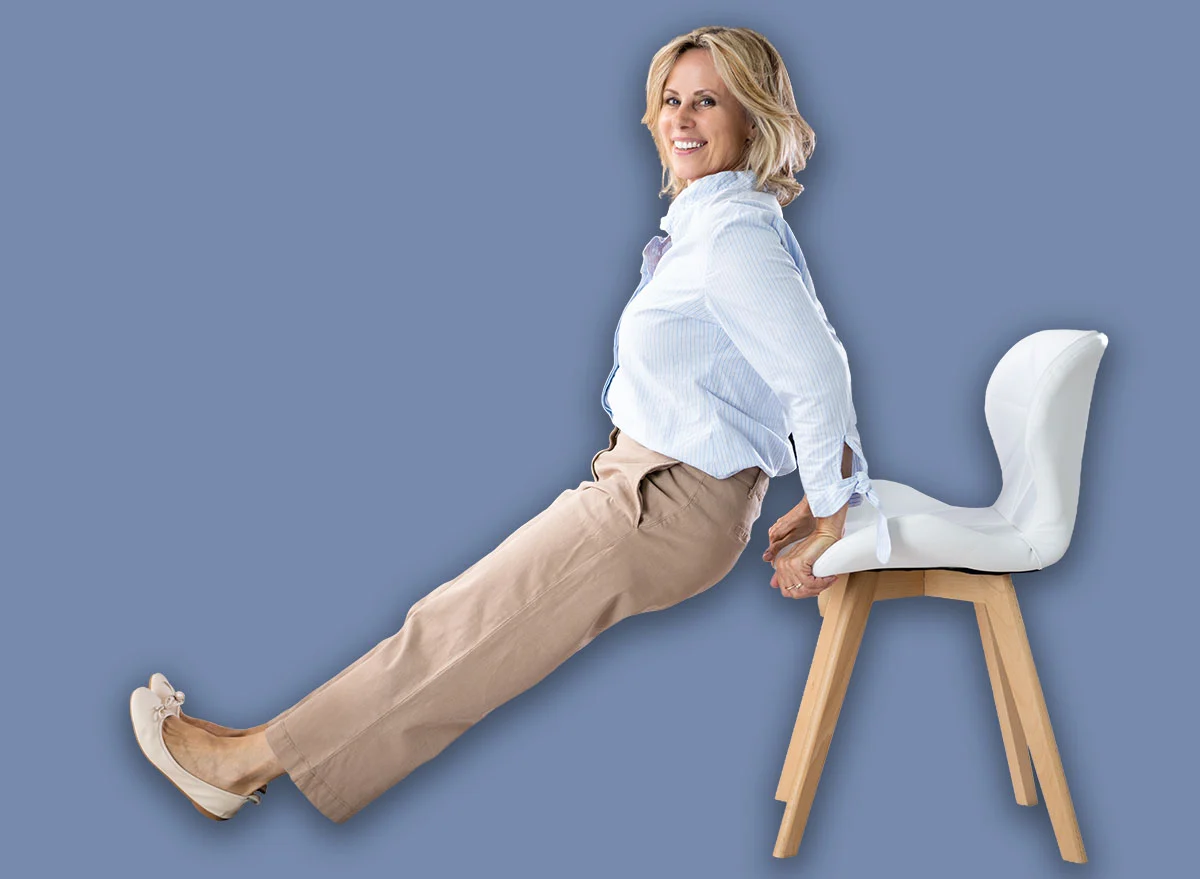
2. Chair Tricep Dips: Daily Functional Mastery
The triceps make up approximately two-thirds of the upper arm. Strengthening them is not just about aesthetics; it is about the "pushing" strength required for daily mobility.
"Chair dips are essential for the mechanics of everyday life," notes Bickerstaff. "Whether you are pushing yourself up from a sofa or navigating heavy doors, your triceps are the primary movers. Strengthening them improves your independence and stability."
How to execute:
- Sit on the edge of a sturdy, non-slip chair. Place your hands on the seat next to your hips.
- Slide your hips off the chair, supporting your weight with your arms.
- Lower your body by bending your elbows until they reach a 90-degree angle.
- Push back up using the strength of your triceps. Keep your back close to the chair throughout the movement to protect your shoulders.
- Repeat for 3 sets of 8–10 repetitions.
3. Resistance Band Bicep Curls: Joint-Friendly Gains
Dumbbells can sometimes place unnecessary stress on the wrists and elbows, particularly for those with existing joint sensitivities. Resistance bands offer a "variable resistance" that is far kinder to the joints.
"Resistance bands provide constant tension throughout the entire range of motion," Bickerstaff explains. "Unlike dumbbells, where the load may feel lighter at certain points of the arc, the band forces the muscle to work consistently. This is exceptionally effective for building strength while minimizing the risk of strain."
How to execute:
- Stand on the center of a resistance band with your feet shoulder-width apart.
- Hold the ends of the band in each hand, with your palms facing forward.
- Keeping your elbows tucked close to your ribs, curl your hands toward your shoulders.
- Slowly lower your hands back to the starting position, resisting the tension of the band on the way down.
- Repeat for 3 sets of 12–15 repetitions.
4. Standing Shoulder Press: The Stability Builder
Strong shoulders are the gateway to overhead mobility. Reaching for items on high shelves or carrying groceries requires a level of shoulder stability that often diminishes if not actively trained.
"This move is non-negotiable for healthy aging," says Bickerstaff. "Using a resistance band for an overhead press challenges the deltoids while simultaneously forcing the core to stabilize the body. It is a dual-purpose movement that enhances both strength and balance."
How to execute:
- Stand on the center of the band with both feet.
- Bring the handles of the band up to shoulder height, with your elbows bent and palms facing forward.
- Press the handles upward until your arms are fully extended overhead, ensuring you keep your core tight and your spine neutral.
- Slowly return to the starting position.
- Repeat for 3 sets of 10–12 repetitions.
Chronology of Progress: What to Expect
When embarking on a new strength program after 55, it is vital to track progress in stages.
- Weeks 1–4 (The Adaptation Phase): Focus on form. Do not worry about resistance levels. The goal is to master the motor patterns of the wall push-up and the band movements. You may experience minor muscle soreness; this is a sign of positive adaptation.
- Weeks 5–8 (The Consistency Phase): As your body acclimates, aim for three sessions per week. You will likely notice an increase in endurance—the ability to perform more reps before fatigue sets in.
- Weeks 9+ (The Strength Phase): Once the movements feel "easy," increase the resistance. Use a thicker band or move your feet further from the wall during push-ups. This progressive overload is what drives long-term physical change.
Implications for Longevity
The implications of this training extend far beyond the arms. By engaging in regular, moderate-intensity resistance training, you are improving your bone mineral density, enhancing your metabolic rate, and significantly reducing the risk of falls—a major concern for the aging population.
Furthermore, the psychological benefits of maintaining physical autonomy cannot be overstated. When you possess the strength to perform your own daily chores without assistance, you retain a level of confidence and freedom that directly contributes to a higher quality of life.
Conclusion
Rebuilding arm strength after 55 does not require a complex gym routine or an expensive trainer. It requires the right tools, a commitment to consistency, and an understanding of how your muscles function in the real world. By incorporating wall push-ups, chair dips, and resistance band work into your weekly routine, you are taking proactive, scientifically backed steps toward a stronger, more independent future.
As always, consult with your physician before beginning any new exercise program, particularly if you have underlying joint or cardiovascular concerns. Once cleared, start slow, stay consistent, and enjoy the process of reclaiming your strength.