For many adults, the milestone of turning 60 is a time of celebration, travel, and newfound freedom. However, it is also the decade where physiological shifts—specifically regarding musculoskeletal health—become impossible to ignore. Among the most critical areas to monitor is the hip complex. Serving as the "engine room" of the human body, the hips facilitate almost every movement, from the simple act of rising from a sofa to the complex coordination required for a brisk morning walk.
As a certified personal trainer with 15 years of experience in geriatric fitness, I have observed a recurring narrative: many seniors mistakenly attribute their physical decline to the inevitable march of time. They accept slower walking speeds, balance issues, and joint discomfort as "just part of getting older." In reality, much of this decline is the result of disuse atrophy. When hip muscles are not consistently challenged, they lose mass and neural drive, leading to a cascade of mobility issues. Fortunately, this process is reversible. By integrating functional, standing exercises into your routine, you can rebuild the strength necessary to maintain independence and vitality for years to come.
The Science of Functional Strength Over Gym Machinery
There is a pervasive myth in the fitness industry that one requires complex, expensive gym machinery to "isolate" and strengthen the hips. While leg-press machines or abduction chairs can build muscle mass, they often fail to translate that strength into the real-world environment. These machines operate on fixed planes of motion, essentially doing the balancing and stabilizing work for you.
In daily life, the body never functions in a vacuum. Walking, climbing stairs, and carrying groceries require the hips to stabilize the pelvis while simultaneously managing the shifting center of gravity. Functional standing exercises—those performed on your feet without the support of a seat—force the hips to work in concert with the core, the lower back, and the stabilizing muscles of the ankles. By training in this manner, you are not just building bigger muscles; you are training your nervous system to be more efficient, balanced, and resilient.
Chronology of Mobility: Why Hip Health Matters
Understanding the progression of hip weakness is vital for prevention. In our 30s and 40s, we may ignore minor stiffness, attributing it to a long day at the desk. By our 50s, this stiffness often evolves into a lack of range of motion. Once we cross the 60-year threshold, if that stiffness hasn’t been addressed, it begins to manifest as a loss of confidence in physical movement.
The Impact of Modern Sedentary Habits
The modern lifestyle is arguably the greatest enemy of hip health. Prolonged sitting causes the hip flexors to tighten while the gluteal muscles (the primary drivers of hip extension) essentially "turn off." This phenomenon, often called "gluteal amnesia," means that when you finally do stand up, your body relies on the lower back or the knees to compensate for the weak glutes. This is the primary driver behind the epidemic of lower-back pain and knee strain observed in the 60+ demographic.
The Feedback Loop of Movement
When hips are weak, walking becomes more taxing. This leads to shorter, more cautious strides. As strides shorten, the range of motion in the hip joint further diminishes, leading to even more stiffness. Breaking this cycle requires a targeted intervention—a "reset" for the hips that prioritizes stability and strength in equal measure.
Supporting Data: The Case for Targeted Exercises
Research in geriatric kinesiology has consistently shown that resistance training in older adults can significantly improve bone mineral density and muscular power. A study published in the Journal of Aging and Physical Activity highlights that multi-joint, standing movements are superior to seated movements for improving postural control.
When you strengthen the gluteus medius and gluteus maximus, you are effectively protecting the "kinetic chain." A strong hip prevents the knees from buckling inward during movement and alleviates the compressive forces on the lumbar spine. My clients who prioritize these movements report not just physical changes, but psychological ones: the "fear of falling" begins to dissipate, replaced by the confidence to navigate stairs, uneven terrain, and crowded environments.
The Five Essential Standing Exercises for Hip Vitality
To effectively target the hips, you must train in multiple planes of motion: forward/backward, side-to-side, and rotational. The following five exercises are the gold standard for restoring hip integrity.
1. Standing Hip Abductions: The Stability Builder
The gluteus medius is the unsung hero of the hip. Located on the side of the hip, this muscle is responsible for keeping the pelvis level when you are standing on one leg. If this muscle is weak, you will notice a "swaying" motion when you walk.
- The Technique: Stand behind a sturdy chair. Keep your posture tall and your core engaged. Slowly lift one leg out to the side, keeping the toes pointed forward. Avoid leaning your torso to the opposite side; the movement should be isolated to the hip. Lower with control.
2. Standing Hip Extensions: The Power Generator
These target the gluteus maximus—the largest muscle in the body. This muscle is essential for "pushing off" the ground during walking and for the strength required to ascend stairs.
- The Technique: Holding the back of a chair, hinge slightly forward at the hips while keeping your back flat. Engage your glutes to kick one leg straight back behind you, squeezing the muscle at the top of the movement. Do not arch your lower back.
3. Lateral Step-Outs: The Coordination Challenge
Life rarely happens in a straight line. Lateral step-outs prepare your hips for the unexpected, such as sidestepping an obstacle or correcting your balance on a sidewalk.
- The Technique: Stand with feet together. Take a controlled step to the side with one foot, bending the knee slightly as you shift your weight, then return to the center. This builds "dynamic" stability that machine-based training cannot replicate.
4. Standing Knee Drives: The Gait Improver
Weak hip flexors often lead to a "shuffling" gait. Knee drives build the strength required to lift the leg cleanly with each stride.
- The Technique: Stand tall and lift one knee toward your chest as high as is comfortable, balancing on the other leg. This forces the core to stabilize the body while the hip flexor performs the lift.
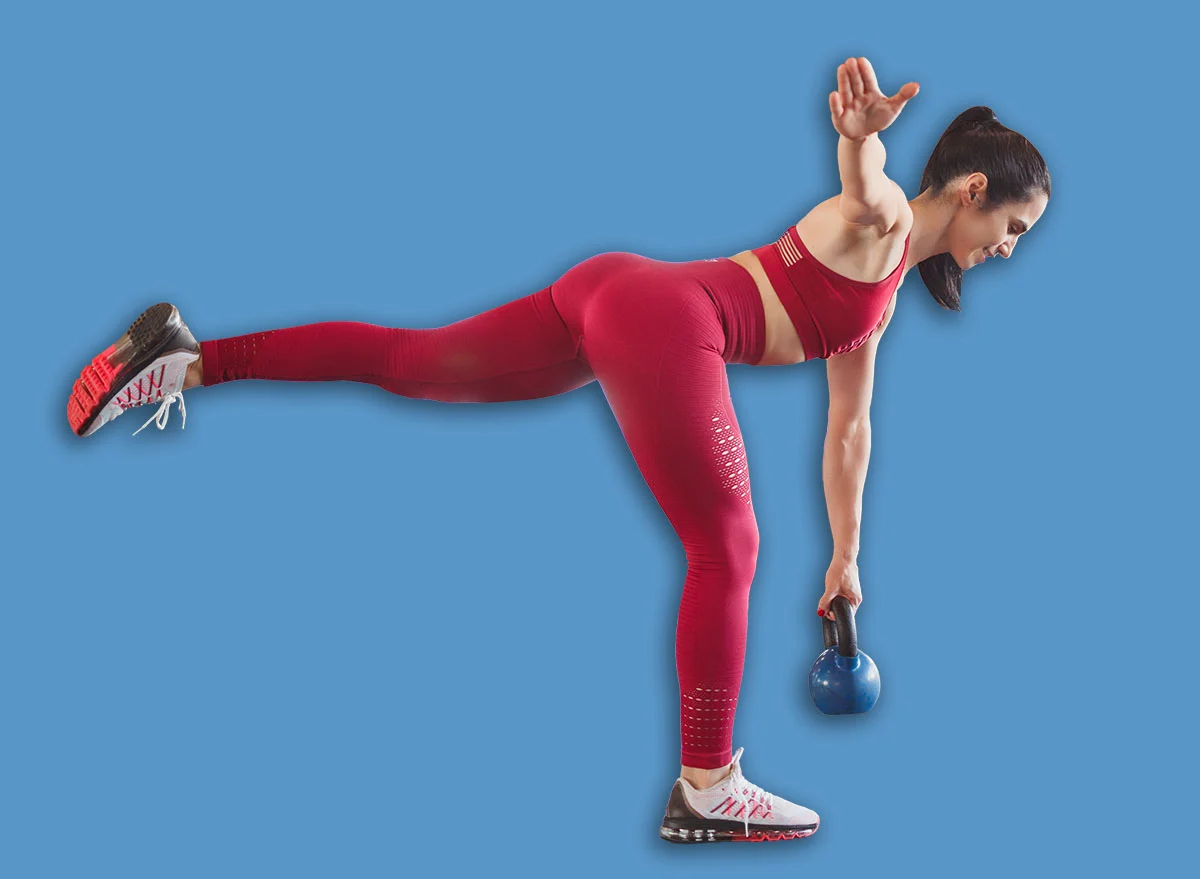
5. Supported Single-Leg Romanian Deadlift: The Master Movement
This is the ultimate functional exercise. It integrates the hamstrings, glutes, and core into a single, cohesive movement.
- The Technique: Holding a chair for support, stand on one leg. Hinge at the hips, sending the other leg straight back behind you while keeping your back perfectly flat. You will feel a deep stretch in the hamstrings and a strong contraction in the standing glute.
Implications for Longevity and Independence
The implications of incorporating these exercises into your weekly routine are profound. By committing to just 15 to 20 minutes, three mornings a week, you are investing in your future independence.
Long-Term Benefits:
- Fall Prevention: By strengthening the stabilizers (gluteus medius), you reduce the likelihood of stumbling and improve your "recovery time" if you do lose your balance.
- Joint Preservation: Strong muscles act as shock absorbers for your knees and spine. Many of my clients find that their "chronic" knee pain disappears once their hips take on the workload they were meant for.
- Metabolic Health: Larger muscle groups like the glutes are metabolic powerhouses. Keeping them strong helps regulate blood sugar and supports healthy body composition.
Conclusion: A New Chapter of Movement
As you enter your 60s and beyond, your body is still capable of remarkable adaptation. You are not destined for a life of physical limitation. The "weakness" you feel is simply a signal that your engine needs a bit of tuning. By moving away from the comfort of seated machines and embracing the challenge of standing, functional exercises, you can rewrite the narrative of your aging process.
Start slowly. Focus on the quality of your movement rather than the quantity of repetitions. Listen to your body, be consistent, and remember: every step you take with stronger hips is a step toward a more active, vibrant, and independent life. The power to reclaim your mobility is quite literally standing right there beneath you.