For many, the transition into their sixties is marked by subtle, almost imperceptible shifts in physical capability. A slightly more cautious descent down the stairs, a lingering hesitation when stepping off a curb, or a newfound need to rely on a banister—these are not just signs of aging; they are early warning signals of a declining neuromuscular system.
With over 35 years of experience as a personal trainer, and two decades spent training the next generation of fitness professionals at TRAINFITNESS, I have observed a recurring pattern. As we enter our seventh decade, we begin to subconsciously avoid movements that challenge our equilibrium. This avoidance, while protective in the short term, leads to a gradual erosion of confidence and physical independence. However, the trajectory of this decline is not inevitable. Through a targeted, consistent approach, it is entirely possible to rebuild stability and strength.
The Mechanics of Decline: Why Balance Fades
To understand how to fix our balance, we must first understand how we lose it. Human balance is a sophisticated symphony involving three primary biological systems: the vestibular system (the inner ear), the visual system, and proprioception—the body’s innate ability to sense its position and movement in three-dimensional space.
After the age of 60, these three systems begin to lose their collective sharpness. When the brain receives conflicting or sluggish data from these systems, it hesitates. This hesitation manifests as a loss of "sure-footedness." Simultaneously, our physical hardware undergoes change. Muscle mass naturally declines by approximately 1% annually from our mid-40s onward, but more critically, power—the ability to generate force quickly—diminishes at nearly double that rate. When you stumble, it isn’t just that your legs are weak; it is that they are too slow to react.
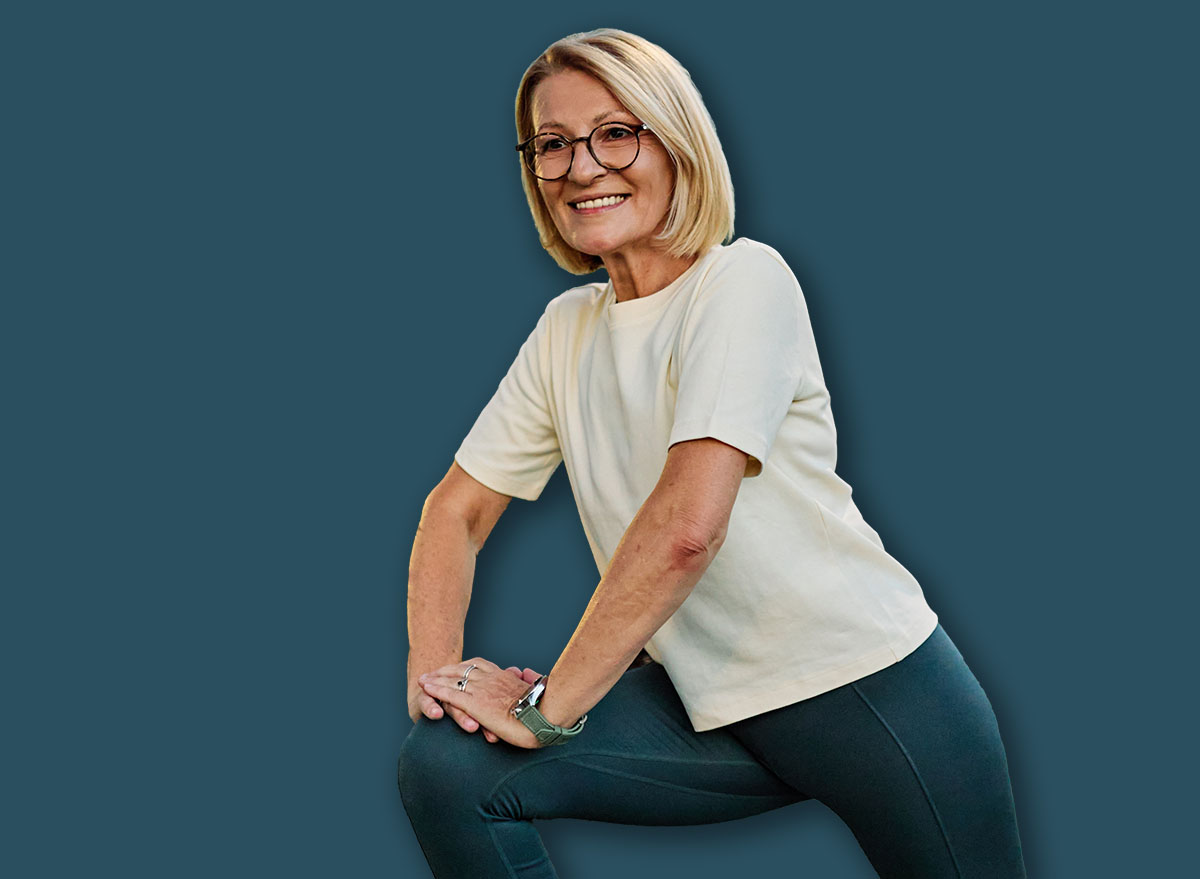
The Fallacy of the Lunge: Why Conventional Wisdom Often Fails
In many fitness circles, the lunge is touted as the "gold standard" for leg development. However, for the over-60 demographic, the lunge can be counterproductive. The movement imposes significant shear force on the knee joint and requires a level of hip mobility that many older adults lack.
When performed with suboptimal form, the lunge ceases to be a corrective exercise and becomes an injury risk. Instead of forcing the body into high-stress, complex movements, we must prioritize exercises that work the glutes, quads, and hamstrings in ways that mimic real-world functionality while remaining gentle on the joints.
The Four Pillars of Stability: A Daily Routine
The following routine is designed to rebuild the neuromuscular connection between your brain and your lower body. By performing these movements consistently, you are not just building muscle; you are retraining your nervous system to respond effectively to the challenges of daily life.
1. The Sit-to-Stand: Restoring Functional Power
Consider the chair as your primary piece of gym equipment. The sit-to-stand movement is a fundamental human action that engages the quads, glutes, and hip flexors.

- The Technique: Sit on the edge of a sturdy chair with feet hip-width apart. Lean forward slightly and drive through your heels to stand, keeping your chest tall.
- The Key to Success: Control the descent. Lower yourself back to the seat as slowly as possible—this eccentric phase is where the most significant strength gains occur.
- Dosage: 3 sets of 10–12 repetitions.
2. Step-Ups: Training Independence
Most of us have a dominant side that compensates for our weaker side. Step-ups, performed on a bottom stair, allow us to isolate each leg, ensuring balanced development.
- The Technique: Place one foot firmly on the step. Drive through the heel to lift your body, bringing the trailing foot to meet the lead foot. Step down with control.
- The Key to Success: Ensure the "trailing" foot does as little work as possible. The goal is to isolate the working leg.
- Dosage: 3 sets of 10 repetitions per leg.
3. The Single-Leg Stand: Sharpening the Neuromuscular Link
This is the most critical exercise for preventing falls. While it looks static, it is a high-intensity workout for the stabilizing muscles in the ankle, knee, and hip.
- The Technique: Stand near a wall or counter for safety. Lift one foot slightly off the ground and hold the position.
- The Key to Success: Fix your gaze on a non-moving point at eye level. This "focal point" anchors your vestibular system and significantly improves stability.
- Dosage: 3 holds of 30 seconds per leg.
4. The Heel-to-Toe Walk: Dynamic Balance
Used in clinical settings to assess fall risk, this exercise forces your brain to manage balance while in motion.
- The Technique: Place one foot directly in front of the other, with the heel of the front foot touching the toes of the back foot. Walk in a straight line.
- The Key to Success: Slow down. The slower you move, the harder your stabilizing muscles must work to maintain the line.
- Dosage: 2–3 full lengths of a room.
Supporting Data: Why Consistency Trumps Intensity
Research consistently highlights that for adults over 60, the frequency of movement is more vital than the intensity of the workout. A 20-minute daily routine is far more effective than a single, grueling hour-long session once a week.

Consistency creates a "habit loop" in the brain. By dedicating time each morning to these movements, you prepare your body for the physical demands of the day. If a full session feels daunting, even practicing the single-leg stand while waiting for the kettle to boil provides a cumulative benefit that compounds over time.
Implications: The Path to Renewed Confidence
The journey to better balance is not a linear sprint; it is a steady climb. We can categorize the expected progression into three distinct phases:
Weeks 1–2: The Psychological Shift
The earliest change is rarely physical strength; it is a psychological reclamation of confidence. You will notice that you are less hesitant when stepping off a curb or navigating a grocery aisle. This is the nervous system beginning to "trust" the legs again.
Weeks 3–4: Functional Gains
By the end of the first month, the physical changes take center stage. Rising from a low chair feels effortless, and descending stairs feels controlled rather than precarious. You are effectively "upgrading" your body’s ability to handle everyday gravity.
Week 6 and Beyond: Sure-Footedness
At the six-week mark, most practitioners report feeling genuinely more sure-footed. The single-leg stand, once a source of anxiety, becomes a moment of quiet focus. The tandem walk becomes fluid. While this program will not turn back the clock to age 30, it will recover a meaningful, functional amount of ability that had been surrendered to inactivity.
Conclusion: Take Ownership of Your Mobility
The decline in balance after 60 is often an "adaptation to inactivity" rather than a biological certainty. By choosing to challenge your balance daily, you are choosing to remain an active participant in your own life. Use a chair for support, start where you are, and prioritize the slow, deliberate movements that reinforce your body’s foundation. In just a few short weeks, the world will feel a little less intimidating, and your place within it will feel significantly more secure.