










Published September 29, 2026
In an era defined by sedentary workflows, prolonged screen time, and the "tech-neck" epidemic, the human body is paying a high price. Whether you are a corporate professional navigating back-to-back virtual meetings or a creative stuck in a continuous coding cycle, the physical toll of sitting for eight or more hours a day is well-documented. From chronic lower back pain to restricted hip mobility and shoulder impingement, the modern office environment is essentially a crucible for poor posture.
However, a revolutionary shift in wellness philosophy suggests that you don’t need an hour-long gym session or a dedicated studio space to mitigate these effects. Yoga teacher Jaffer Hussain has developed a streamlined, three-minute standing yoga sequence designed specifically for the desk-bound worker. Requiring nothing more than your own body and a few moments of intentional breath, this sequence serves as a vital reset for the neck, shoulders, wrists, hips, and hamstrings.
The Physiological Cost of the "Desk-Bound" Life
To understand why a short-form practice is necessary, one must first address the physiological implications of the "sitting disease." Research from the American Journal of Preventive Medicine has highlighted that prolonged sedentary behavior is associated with an increased risk of cardiovascular disease, metabolic syndrome, and musculoskeletal disorders.
When we sit, our hip flexors remain in a shortened state for hours, leading to compensatory tightness in the lower back. Simultaneously, the forward-slumping posture required for typing and mouse navigation forces the chest muscles (pectorals) to tighten while the muscles of the upper back (rhomboids and trapezius) become overstretched and weak. This leads to the classic "rounded shoulders" aesthetic and, more importantly, chronic pain.
"All you need is your body, your breath, and a sincere desire to loosen the stagnation," says Hussain. By integrating brief, high-impact movement breaks into the workday, employees can interrupt the habit-loop of poor posture before it becomes structural.
The 3-Minute Sequence: A Step-by-Step Chronology
This practice requires no yoga mat, making it accessible for any office or home environment. For those with particularly tight shoulders, a simple hand towel or a yoga strap is recommended to facilitate a deeper stretch.
Phase 1: Grounding and Alignment
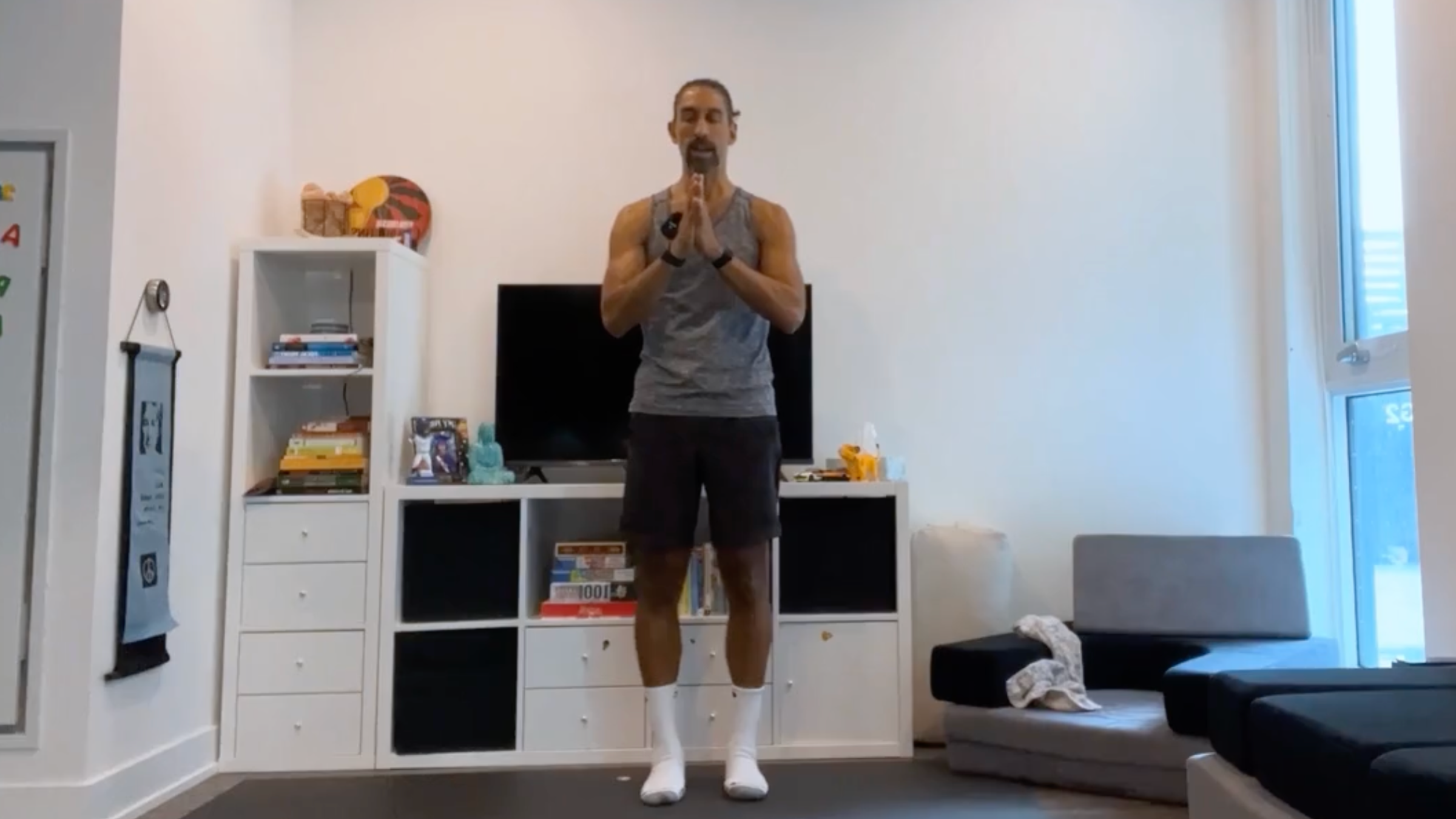
Mountain Pose (Tadasana)
The practice begins with the foundation. Standing in Mountain Pose—with feet hip-width apart and hands at the heart center—is not merely about standing still; it is an exercise in postural awareness. By rooting through the heels and lengthening the crown of the head, you establish the vertical alignment that your body loses while hunched over a laptop.
Phase 2: Opening the Kinetic Chain
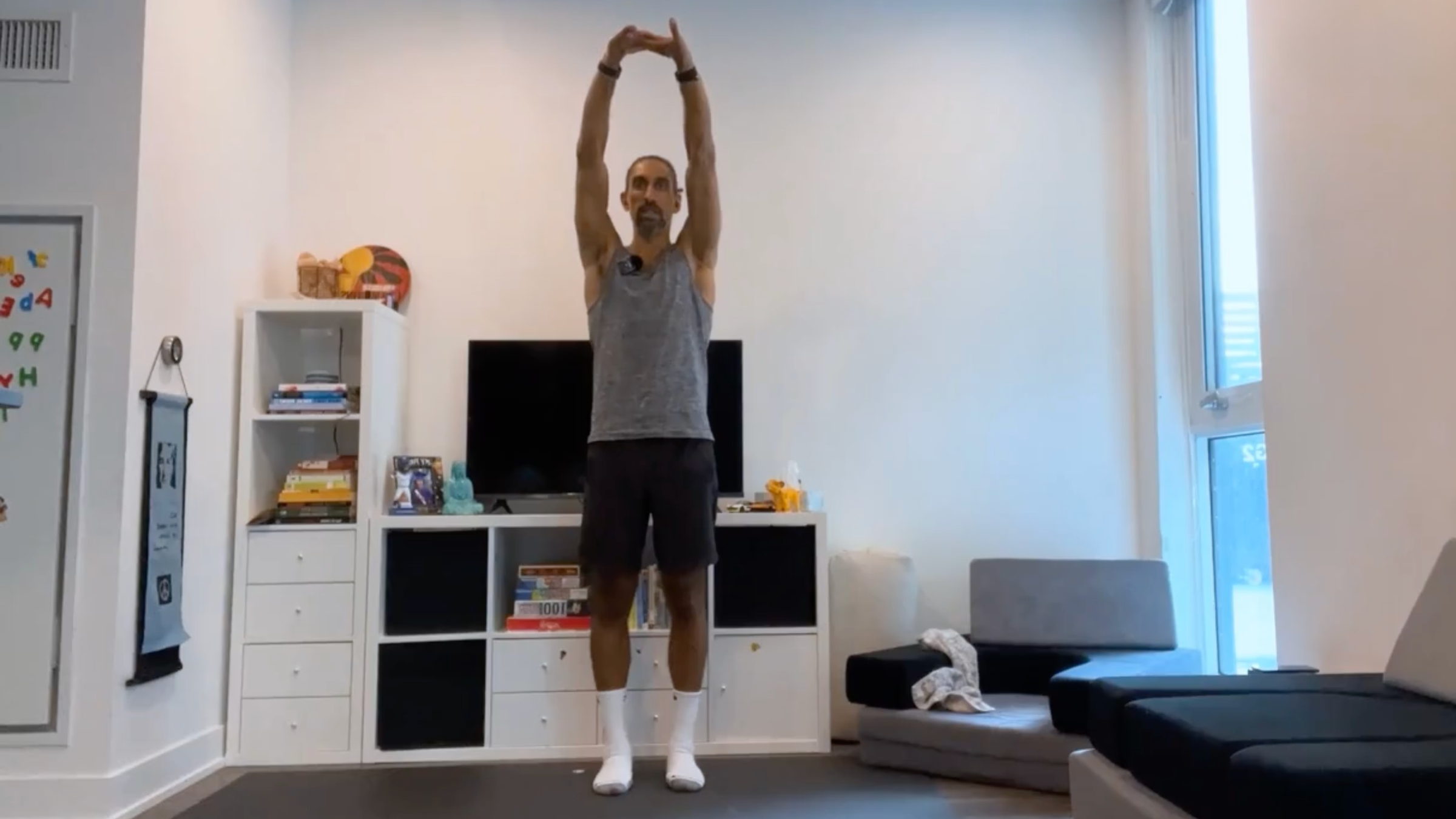
Upward Salute Variation (Urdhva Hastasana)
After establishing stability, interlace your fingers and press your palms outward. Extending the arms overhead while maintaining a neutral spine allows for a deep release in the wrists—a critical area for those who spend hours typing. This movement elongates the intercostal muscles, creating space in the thoracic cavity to facilitate deeper, more oxygenated breathing.
Phase 3: Lateral Release
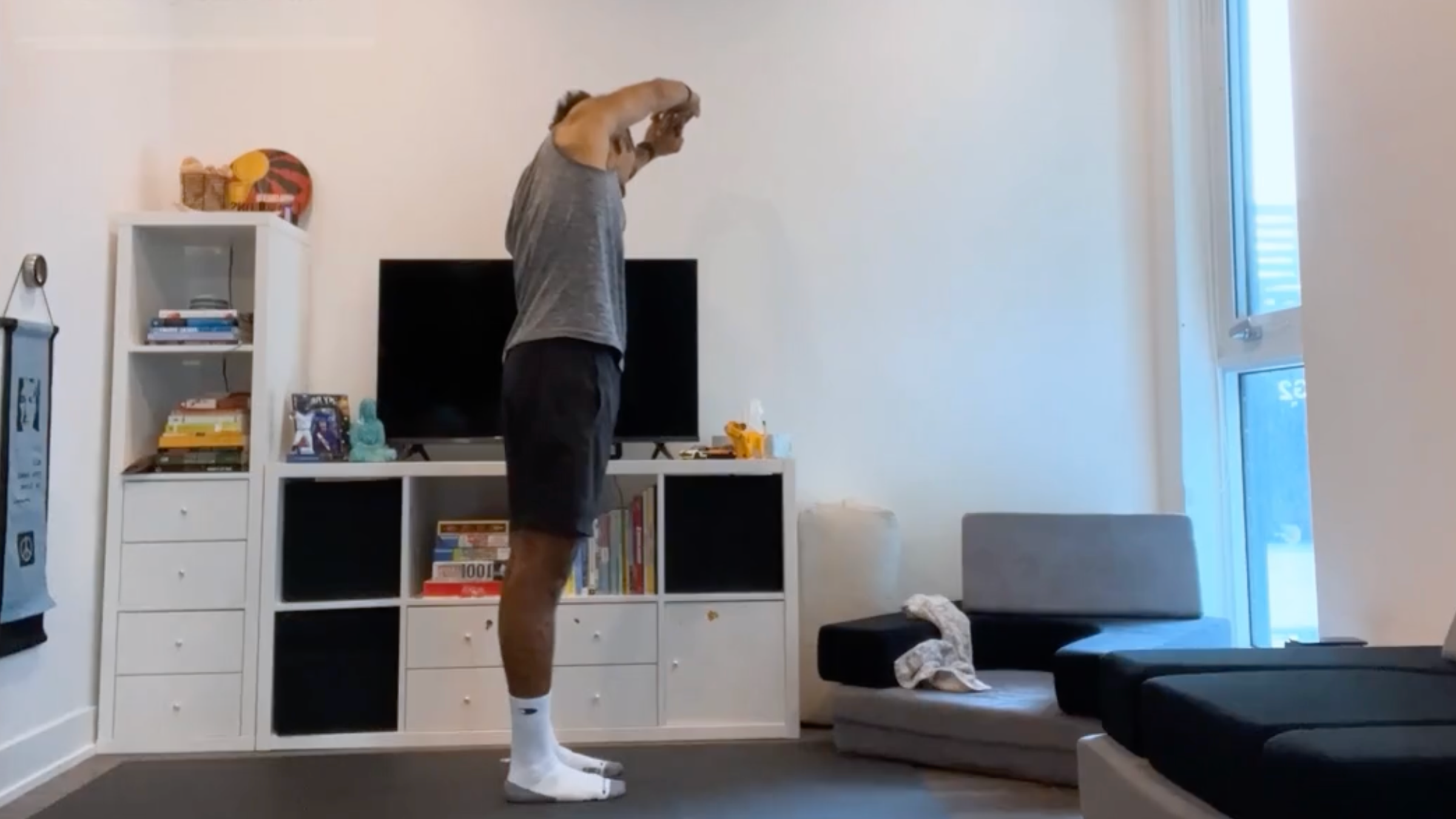
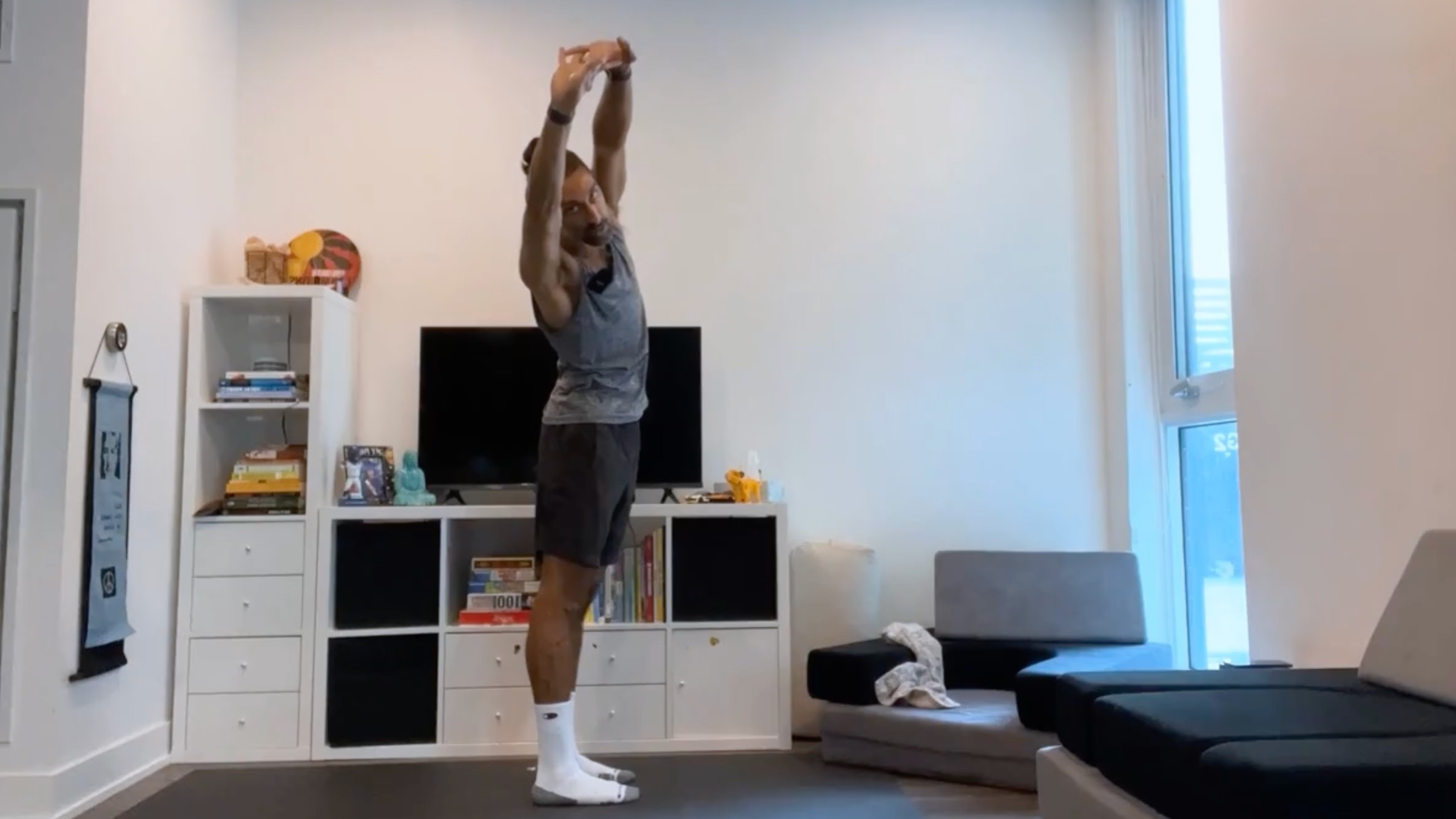
Standing Side Bend
The side body is often neglected in standard office stretching. By leaning into a Standing Side Bend while shifting the hips slightly in the opposite direction, you target the obliques and the quadratus lumborum—a common culprit in lower back discomfort. Holding this for two cycles of breath on each side allows the fascia to respond to the tension, providing immediate relief to the waistline and rib cage.
Phase 4: Decompressing the Posterior Chain
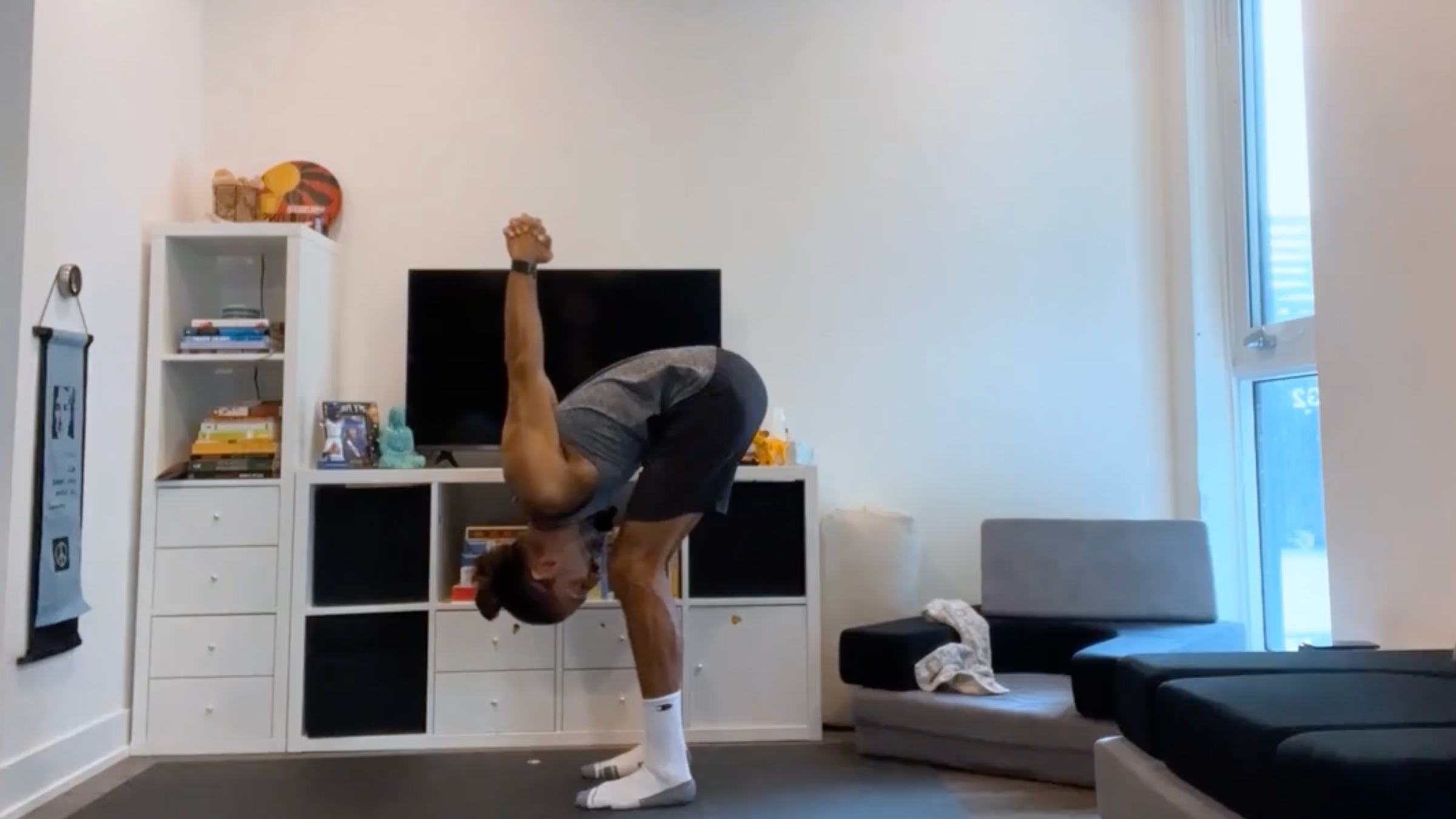
Standing Forward Bend Variation
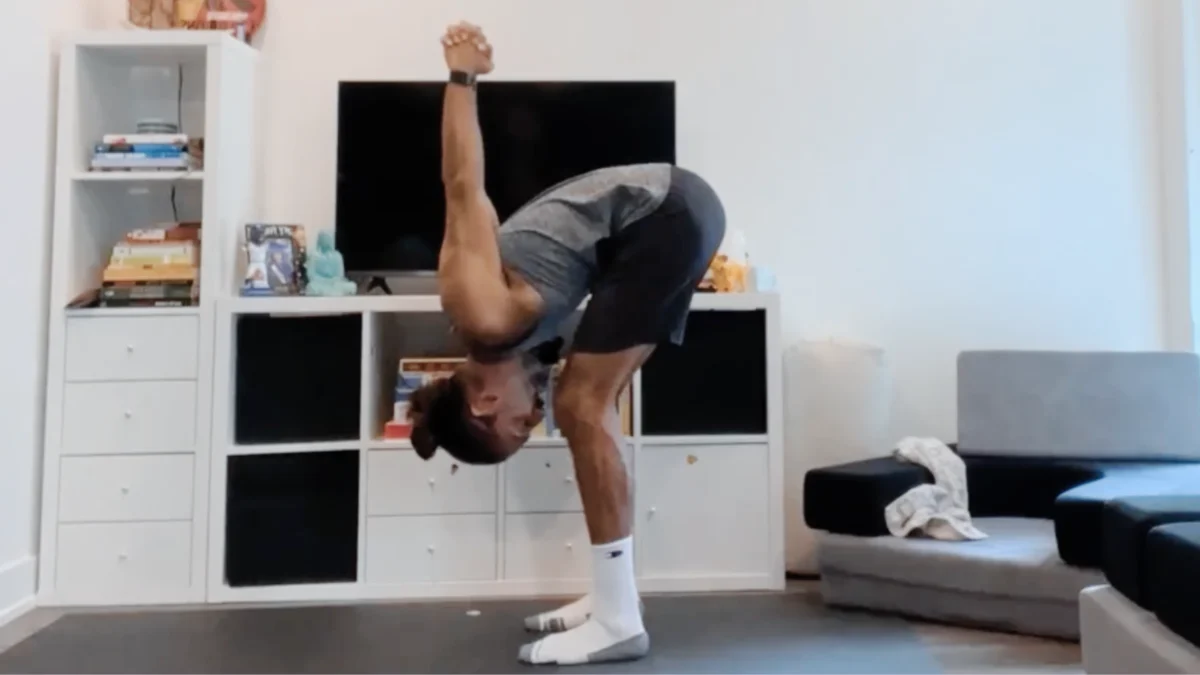
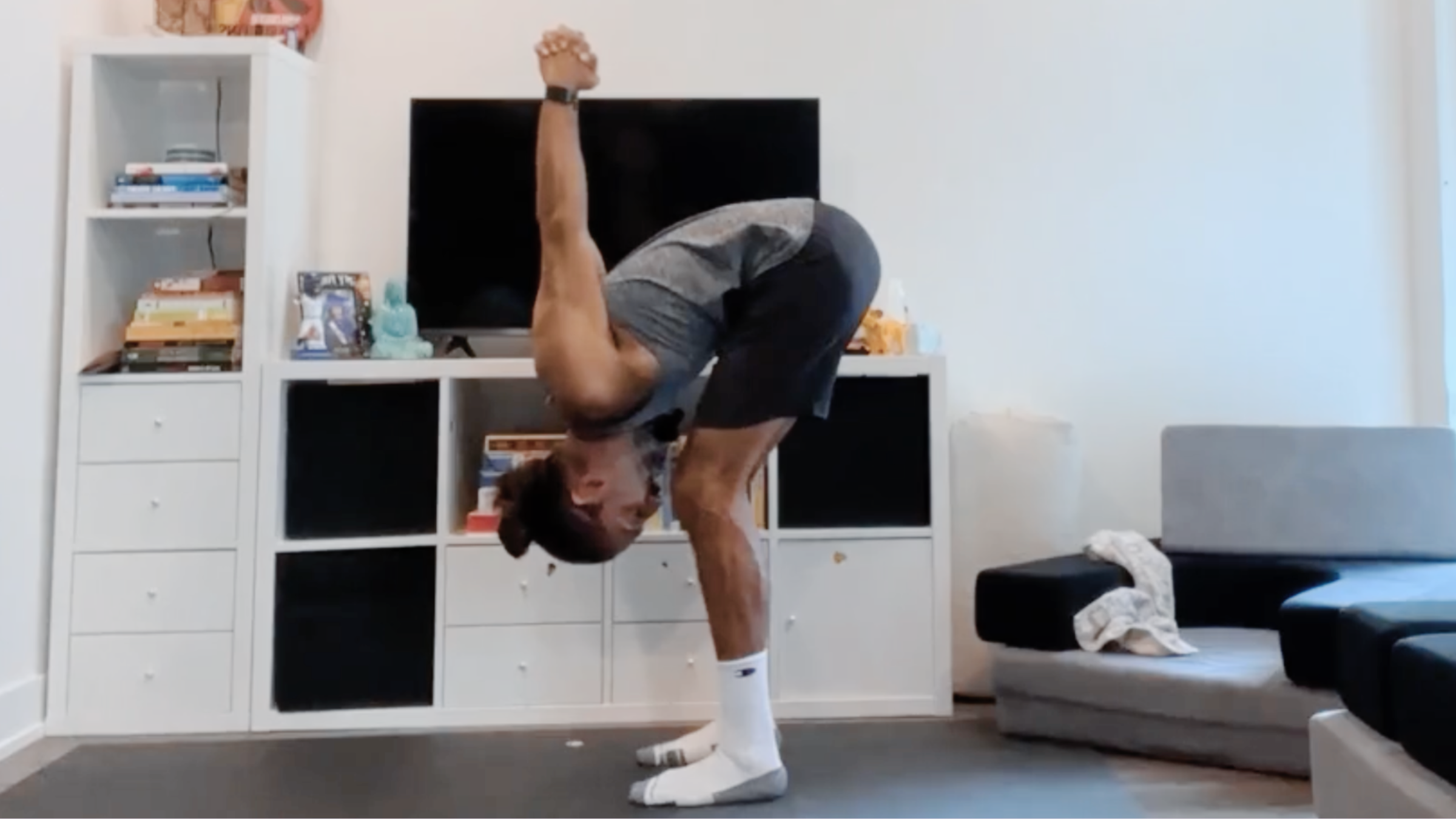
This is the heart of the practice. By interlacing the fingers behind the lower back and folding forward, you engage in a double-action release: opening the chest while lengthening the hamstrings. If the shoulders feel restricted, use a towel between your hands to maintain the connection. Staying here for four breath cycles, and incorporating intuitive movement like "pedaling" the feet, encourages blood flow back into the lower extremities.
Phase 5: The "Halfway Lift" and Revolved Pose
Halfway Lift and Revolved Standing Forward Bend
Transitioning to the Halfway Lift creates a flat-back alignment that resets the spine. Following this with the Revolved Standing Forward Bend introduces a gentle spinal twist. By placing the right fingertips on the floor and reaching the left arm skyward, you create a diagonal stretch across the back that targets the latissimus dorsi and the spine’s rotatory muscles. This rotational movement is essential for maintaining spinal mobility.
Supporting Data: Why "Micro-Movement" Works
The efficacy of Hussain’s sequence is supported by the growing field of "movement snacking"—the practice of engaging in brief bursts of physical activity throughout the day. A study published in the Journal of Applied Physiology suggests that micro-breaks can be as effective as longer, continuous bouts of exercise for managing blood glucose levels and reducing the inflammatory markers associated with sedentary work.
Furthermore, the focus on breath-synchronized movement engages the parasympathetic nervous system. When you are stressed at your desk, your body enters a "fight or flight" mode, which causes the shoulders to rise toward the ears. Conscious breathing during these poses sends a neurological signal to the brain that the body is safe, effectively lowering cortisol levels and improving cognitive focus for the remainder of the workday.
Official Responses and Expert Consensus
Ergonomics experts and physical therapists have increasingly endorsed the integration of yoga-based movement into the workday. Dr. Elena Vance, a consultant in workplace ergonomics, notes: "The problem is not the chair itself, but the lack of movement while in the chair. Hussain’s sequence works because it hits the ‘Big Five’ areas of desk-induced tension: the neck, shoulders, wrists, hips, and low back."
Many corporations are now taking note. In 2026, several tech giants began implementing "Mindful Minute" policies, encouraging employees to step away from their workstations for brief, self-led movement sessions. The feedback from human resources departments indicates a measurable improvement in employee morale and a reported decrease in repetitive strain injury (RSI) claims.
Implications for the Future of Work
The rise of the 3-minute yoga practice represents a broader cultural shift toward "work-life integration." As the lines between the office and the home continue to blur, the burden of health management is shifting toward the individual. By adopting simple, repetitive habits, the modern worker can reclaim autonomy over their physical health.
The implications are clear: if you wait until the end of the day to address your posture, the tension has already set in. By integrating these poses at intervals—perhaps once in the morning and once in the afternoon—you prevent the accumulation of structural damage.
"The goal is not to become a yoga expert," Hussain concludes. "The goal is to maintain the integrity of your body so that you can show up for your work and your life without the constant distraction of physical pain. It is about reclaiming your movement, three minutes at a time."
As we look toward the future of professional life, it is evident that the most effective tool for productivity is not a new software program or a high-end ergonomic chair—it is the consistent, intentional application of movement. Through this simple, standing yoga protocol, we are reminded that even in the most sedentary of environments, we have the power to stay fluid, upright, and resilient.