By Medical News Correspondent
For millions of Americans, the simple act of taking a walk has become a Herculean labor. Spinal stenosis—a narrowing of the spaces within the spine that puts pressure on the nerves—is more than just a medical diagnosis; for many, it is a life-altering condition that strips away independence, mobility, and quality of life. In Southwest Florida, however, a medical breakthrough is providing a beacon of hope for patients who once felt their only options were invasive surgery or chronic pain management.
The introduction of the Superion by Vertiflex has changed the landscape of orthopedic care in the region. By utilizing a small, indirect decompression device, specialists like Dr. Robert Ball are helping patients regain their stride, offering a minimally invasive alternative to traditional spinal surgery.
The Burden of Spinal Stenosis: Understanding the Crisis
Spinal stenosis is a silent epidemic, particularly among the aging "baby boomer" population. According to data provided by the American Academy of Orthopedic Surgeons (AAOS), approximately 30 million Americans currently suffer from the condition. As the spinal canal narrows, the nerves within the lumbar region become compressed, leading to the hallmark symptoms of severe leg pain, numbness, and a debilitating inability to stand or walk for extended periods.
Bernard Uhlmann, a Southwest Florida resident, described the condition with raw candor. "It was really severe pain in my legs, completely limiting my ability to walk," he said. His experience is echoed by Karen Nagel, another local patient, who found the physical toll of the condition to be overwhelming. "It’s really hard to drag yourself around when you can’t do anything," Nagel noted. For patients like Nagel, the condition was not merely a physical nuisance; it was an obstacle to fulfilling essential life roles, such as caring for a sick spouse.
A Technological Leap: The Superion Procedure
The solution to this widespread problem lies in a device no larger than a thumb. The Superion by Vertiflex, which received FDA approval in 2015, functions as a spacer that is inserted between the vertebrae of the spine.
How the Device Works
The core mechanism of the procedure is "indirect decompression." By inserting the device into the affected area, the spacer gently spreads the vertebrae apart. This action effectively opens the neural foramina, the channels through which nerve roots exit the spine. By creating space, the device prevents the "pinching" of nerves, which is the primary source of the agonizing pain associated with spinal stenosis.
The Clinical Experience
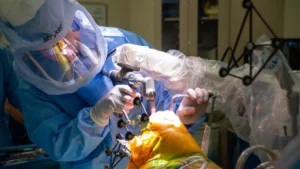
Since 2016, Dr. Robert Ball has been pioneering this technique at his practice in Port Charlotte, Florida. Unlike traditional spinal fusion surgery, which often requires significant hospital stays and lengthy recovery periods, the Superion procedure is designed for efficiency and minimal downtime.
"The procedure takes about an hour," Dr. Ball explained. Because it is minimally invasive, the surgical trauma is significantly reduced. In many instances, patients are able to walk out of the office on the same day as their procedure, a stark contrast to the months of rehabilitation often associated with traditional open-back surgeries.
Chronology of Care: From Diagnosis to Recovery
The journey for a patient suffering from spinal stenosis typically begins with conservative management—physical therapy, anti-inflammatory medications, or epidural steroid injections. When these measures fail to provide lasting relief, patients often feel trapped between living in pain and undergoing major surgery.
- Initial Consultation: Patients undergo imaging to confirm the severity of the nerve compression.
- The Procedure: Under local or light sedation, the physician makes a small incision. Using specialized tools, the Vertiflex spacer is placed to decompress the nerves.
- Immediate Post-Op: Patients are monitored for a short period. Because the procedure avoids cutting major muscle groups, recovery is rapid.
- Long-Term Follow-up: The device remains in the spine to provide ongoing support, though Dr. Ball emphasizes that the procedure is entirely reversible, providing a safety net that major fusion surgeries do not offer.
Supporting Data and Safety Profile
In the medical field, the introduction of any new device is met with rigorous scrutiny. The Superion device has been lauded for its safety profile, particularly for older populations who may not be ideal candidates for general anesthesia or invasive procedures.
Assessing the Risks
Dr. Ball is quick to manage expectations regarding the procedure’s risks. "Any time there is an incision or injection made, there’s the risk of infection or bleeding," he noted. However, because the procedure avoids the complex structural manipulation of the spine required in fusion, the risk profile is statistically lower than that of traditional decompression surgery (laminectomy).
Reversibility and Insurance Coverage
One of the most significant advantages for patients is the reversibility of the device. If, for any reason, a patient’s needs change, the device can be removed. Furthermore, the accessibility of the procedure is bolstered by its coverage. Dr. Ball confirmed that the procedure is widely covered by most private insurance companies and, crucially, by Medicare—a vital factor for the demographics of Southwest Florida.
The Human Impact: Beyond the Operating Room
Medical statistics are important, but the true measure of a procedure’s success lies in the quality of life restored to the patient. For Karen Nagel, the procedure was a bridge back to her normal life. "My husband is very sick, and I have to take care of him, so I had to get right back in the swing of things," Nagel explained. Her story highlights the reality that for many elderly patients, spinal stenosis is not just a personal struggle; it is a barrier to providing care for others.
Similarly, Bernard Uhlmann expressed high levels of satisfaction with his outcome. When asked if he would choose to undergo the procedure again, his answer was immediate. "I would do it again in a quick minute, because the results are very good."
Implications for Future Orthopedic Care
The success of the Vertiflex procedure in Port Charlotte serves as a case study for the shift toward minimally invasive medicine. As the population continues to age, the demand for procedures that offer high efficacy with low recovery time will only increase.
A Regional Hub for Innovation
Currently, Vertiflex has indicated that the clinic in Port Charlotte is the primary center for this specific procedure in the Southwest Florida region. This has turned the area into a focal point for patients traveling from surrounding counties to seek relief from chronic spinal pain.
Moving Toward "Outpatient Spine Care"
The broader implication of this technology is the decentralization of spine care. Historically, spinal issues were treated almost exclusively in hospital operating rooms. The move toward office-based, minimally invasive procedures represents a shift in the healthcare model, where the focus is on maximizing patient comfort and minimizing healthcare costs associated with hospital stays.
Conclusion: The Path Forward
Spinal stenosis remains a challenging diagnosis, but it is no longer the career-ender or life-stopper it once was. Through the combination of innovative device engineering and specialized surgical expertise, patients in Southwest Florida are finding that they can reclaim their mobility without the fear of daunting surgery.
As Dr. Ball continues to treat patients in Port Charlotte, the success stories of individuals like Bernard Uhlmann and Karen Nagel stand as a testament to the power of modern medicine. By addressing the root cause of nerve compression with a simple, effective, and reversible device, the medical community is proving that aging does not have to be synonymous with physical decline. For those living in the shadow of chronic back and leg pain, the message is clear: there is a path forward, and it is paved with innovation.