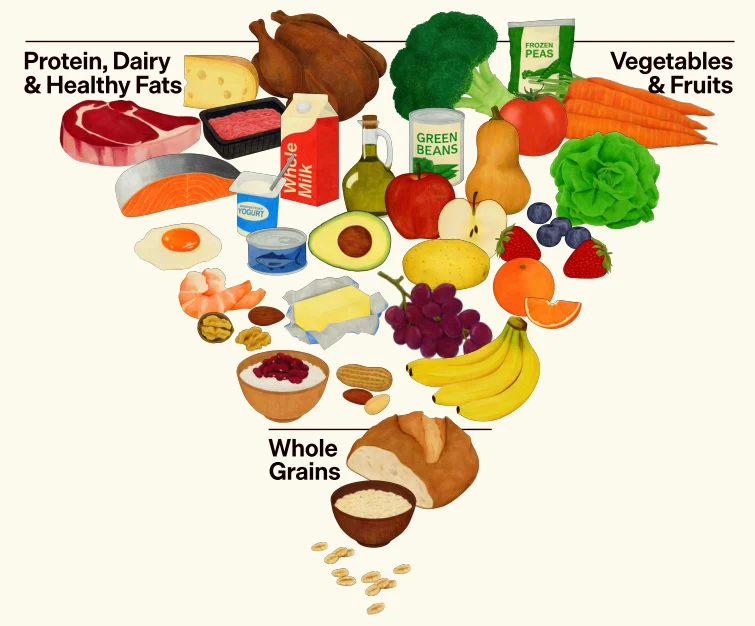







The release of the 9th edition of the Dietary Guidelines for Americans 2020-2025—centered around the evocative mantra, "Make Every Bite Count"—marks a significant, if contentious, milestone in federal public health policy. Spanning nearly 150 pages, this comprehensive document is designed as a foundational blueprint for policymakers, healthcare practitioners, and nutrition educators. While the document represents a monumental effort to provide evidence-based guidance across the entire life cycle, it has simultaneously ignited a robust debate regarding the intersection of human health, environmental sustainability, and industrial food systems.
The Evolution of Federal Nutrition Policy: A Chronology
The Dietary Guidelines for Americans have long served as the cornerstone of federal nutrition programs, influencing everything from school lunch mandates to the nutritional standards of food assistance programs.
- 1980: The inaugural edition of the Guidelines was published, focusing on basic nutrition and the prevention of chronic disease.
- The Mid-2010s: Recognizing the complexity of modern diets, the 2015-2020 edition shifted focus from individual nutrients to "dietary patterns," acknowledging that how we eat as a whole is more predictive of health than isolated food items.
- 2020-2025: The current edition expands this scope, incorporating guidance for infants and toddlers for the first time, while reinforcing the "life cycle" approach. This transition acknowledges that nutritional needs fluctuate significantly from pregnancy and early childhood through the senior years.
By moving away from "superfood" trends—which often encourage the consumption of isolated, expensive products—the new Guidelines emphasize the cumulative benefit of nutrient-dense food choices across all categories. This flexible approach is designed to accommodate the realities of diverse American lifestyles, where food access, economic status, cultural traditions, and personal beliefs play as much of a role in health as the food itself.
Core Pillars of the "Healthy U.S.-Style" Dietary Pattern
At the heart of the current guidelines lies the "Healthy U.S.-Style Dietary Pattern." While this model is intended to be the gold standard for American health, it remains structurally consistent with its predecessors. The pattern relies on a balanced intake of:
- Vegetables: A variety from all subgroups, including dark green, red, and orange.
- Fruits: Particularly whole fruits rather than juices.
- Grains: Emphasizing whole grains over refined carbohydrates.
- Dairy: Including fat-free or low-fat milk, yogurt, and cheese.
- Protein Foods: Focusing on lean meats, poultry, eggs, seafood, beans, peas, lentils, nuts, seeds, and soy products.
- Oils: Choosing healthy fats like those found in nuts and liquid vegetable oils.
Despite these clear pillars, the Guidelines maintain strict limits on three dietary villains: saturated fats, added sugars, and sodium. For the first time, however, these limits are clearly delineated by age, providing more precise targets for toddlers, children, and adults.
The Sustainability Gap: Where the Guidelines Fall Short
Despite the positive steps taken in this edition, the document has faced significant criticism from the scientific community, particularly regarding its failure to address the environmental cost of the American diet.
Dr. Walter Willett, Professor of Epidemiology and Nutrition at the Harvard T.H. Chan School of Public Health, has been a vocal critic of the current iteration. According to Dr. Willett, the Guidelines represent a "minimal change" from the previous edition. He argues that by failing to integrate scientific evidence on the environmental consequences of food production, the Guidelines miss a critical opportunity to steer the American public toward a more sustainable future.
The Meat and Dairy Paradox
A primary point of contention is the continued recommendation of three servings of dairy per day. Critics argue that this recommendation is not supported by robust, modern evidence for health outcomes. Furthermore, the promotion of low-fat or fat-free dairy products creates a secondary logistical nightmare: what happens to the massive quantities of dairy fat removed during processing?
"Because the disposal of dairy fat would be hugely wasteful, it would almost certainly remain in the food supply, which makes this recommendation somewhat of a fantasy," Dr. Willett notes. If Americans truly followed these guidelines while ignoring the environmental footprint, the reliance on high-volume dairy and red meat consumption would continue to drive climate change through high greenhouse gas emissions.
The Guidelines acknowledge soy milk as a potential alternative to cow’s milk, yet they fail to explicitly advocate for a shift toward plant-based dairy, which would be the most effective way to reduce the sector’s carbon footprint. Similarly, while the Guidelines advise consumers to choose "lean meats," they remain silent on the fate of non-lean cuts. In a market-driven economy, these fatty cuts are rarely discarded; instead, they are converted into processed meats—the very products that contribute to the high rates of diabetes and obesity in vulnerable, low-income populations.
Hidden Implications: Protein and Public Health
One of the most nuanced concerns involves the ambiguity surrounding "protein." The guidelines prioritize "lean meats" at the top of their protein recommendations. While later chapters clarify that this excludes processed items like hot dogs, sausages, and luncheon meats, this distinction is buried, not emphasized.
This is a critical oversight. A wealth of peer-reviewed research indicates that substituting red and processed meats with plant-based proteins—such as beans, lentils, and nuts—or fish and poultry significantly lowers the risk of chronic disease and premature death. By placing "lean meat" at the forefront without sufficient caveats, the Guidelines risk reinforcing dietary habits that are inherently linked to higher disease burdens.
A Path Forward: Beyond the 150 Pages
The Dietary Guidelines for Americans 2020-2025 is a document of immense scale, attempting to provide a one-size-fits-all solution for a nation of 330 million people. Its strength lies in its recognition that dietary patterns are deeply personal, influenced by a complex web of environmental, economic, and cultural factors. It succeeds in moving the needle toward a more holistic, life-cycle-based understanding of human nutrition.
However, the silence on sustainability and the continued adherence to animal-heavy protein structures suggest that the Guidelines are still caught between modern nutritional science and the powerful agricultural lobbies that shape them.
For the average American, the lesson remains: health is not found in a single "superfood" or a rigid list of prohibited ingredients. It is found in the sustainable, diverse, and conscious selection of nutrient-dense foods. Yet, until federal policy bridges the gap between individual health and the health of the planet, the Dietary Guidelines will remain a work in progress—a document that offers a map for healthy eating, but perhaps not the most sustainable route to get there.
Summary of Key Recommendations for Consumers
To navigate the current Guidelines effectively, experts suggest:
- Prioritize Whole Foods: Focus on fruits, vegetables, and whole grains as the base of every meal.
- Scrutinize Protein: Choose plant-based proteins (beans, nuts, seeds) and seafood over red and processed meats whenever possible.
- Read Beyond the Headlines: Look past the summary "lean meat" recommendations to understand the health risks associated with processed deli meats and sausages.
- Consider the Environment: Recognize that plant-based food choices generally have a lower environmental impact, contributing to a healthier planet for future generations.
As we look toward the next edition in 2025, the scientific community continues to advocate for a "planetary health diet"—one that acknowledges that the health of our bodies is inextricably linked to the health of the earth that sustains us. Until then, "Making Every Bite Count" requires a critical eye and a commitment to personal and environmental stewardship.