For many, the quest for a toned, defined midsection feels like an elusive goal reserved for those who spend hours tethered to cable machines or grueling, floor-based abdominal equipment. However, the latest trends in functional fitness suggest that the secret to a stronger core doesn’t lie in isolation—it lies in integration. As we navigate life past the age of 50, the focus of our physical training must shift from aesthetic isolation to functional longevity.
We sat down with Elizabeth “Liz” Hilliard, a renowned Certified Pilates Instructor and the founder of the Hilliard Studio Method, to uncover why standing abdominal exercises are not just a convenient alternative to the gym, but a superior method for building a resilient, capable, and defined body after 50.
The Core Philosophy: Why "Functional" Beats "Isolated"
The traditional "crunch" is a staple of fitness culture, yet it is often misunderstood. By isolating the rectus abdominis through spinal flexion, crunches fail to replicate how our core actually functions in the real world.

"Standing abdominal exercises train the core the way it’s actually used in daily life," explains Hilliard. "They stabilize the spine while you move, twist, and balance, rather than isolating a single flexion movement. For adults over 50, that’s a meaningful advantage. Standing moves reduce the strain on the neck and low back while building the functional balance and rotational strength necessary to reduce fall risk. Furthermore, they act as light cardio because you remain on your feet for the duration of the workout."
Chronology of a Core Revolution: From Floor to Feet
Historically, core training was dominated by the "gym floor" era—a period defined by sit-ups, crunches, and heavy machine-based resistance. This approach was highly effective for bodybuilders looking for muscle hypertrophy, but it often left the average aging adult with neck strain or lower back discomfort.
In the last decade, a shift toward "Functional Training" began to gain traction. Coaches and physical therapists started advocating for exercises that mimicked daily living—the "Activities of Daily Living" (ADL) approach. This movement prioritized core stabilization under load and movement, leading to the current popularity of standing ab routines. By moving the core workout to a standing position, practitioners are finding that they can achieve the same—if not better—aesthetic results while simultaneously improving their coordination, posture, and longevity.

Supporting Data: The Science of Stability
The efficacy of standing core training is rooted in the concept of "anti-rotation" and "postural stability." When you stand, your core must engage the transverse abdominis—the body’s natural corset—to keep you upright.
Why Standing Moves Work:
- Kinetic Chain Engagement: Unlike lying on a mat, standing requires the entire kinetic chain—from your feet to your shoulders—to participate in stabilization.
- Reduced Spinal Load: The compression of the spine associated with traditional sit-ups is significantly minimized in a standing position.
- Proprioception: Standing movements challenge your vestibular system, which is critical for balance. As we age, proprioception (the body’s ability to sense its position in space) naturally declines; these exercises actively combat that degradation.
- Energy Expenditure: Because the body is working to maintain an upright posture while performing complex movements, the heart rate remains elevated, contributing to higher caloric burn during the session.
Official Guidance: The 7-Move Standing Routine
Hilliard’s approach is designed to be accessible, requiring no heavy equipment—only your focus and consistency. Here is the breakdown of her seven-step protocol.
1. High Knee March
This is the foundational movement. By lifting the knees, you force the lower abdominals to contract to stabilize the pelvis.

- The Benefit: Builds hip flexor strength and improves single-leg balance.
- Execution: Keep the chest tall and the shoulders back. March in place, lifting your knees to hip height while engaging your lower core.
2. High Knee March with Twist
Once the march is mastered, adding a twist targets the obliques, which are responsible for rotational control.
- The Benefit: Improves rotational strength, mirroring the movement required to look behind you while driving or turning to talk to someone.
- Execution: As you lift the right knee, twist your torso gently to the right, bringing your left elbow toward the right knee. Alternate sides.
3. Standing Oblique Crunch
Unlike a traditional side-bend, this move uses controlled tension to isolate the side of the midsection.
- The Benefit: Defines the waistline without putting pressure on the neck or lumbar spine.
- Execution: Stand with feet hip-width apart. Reach one arm overhead and lift the corresponding knee to the side, crunching your obliques to bridge the gap between elbow and knee.
4. Standing Woodchops
This mimics the "diagonal" patterns of human movement.

- The Benefit: Enhances rotational and anti-rotational strength. It’s essential for functional activities like golf, tennis, or simply reaching across the body to lift an object.
- Execution: Interlace your fingers and reach both hands toward the ceiling on one side, then swing them diagonally down toward the opposite knee in a chopping motion. Keep the core tight to control the momentum.
5. Low Lunge Hinge
This movement incorporates the lower body to create a "total-body" core engagement.
- The Benefit: Stretches the hip flexors while engaging the glutes and hamstrings, creating a stable platform for the core.
- Execution: Step into a shallow lunge. Keep your torso long and hinge forward from the hips, maintaining a straight spine. You will feel the core fire up to keep you from falling forward.
6. Low Lunge Hinge with Twist
Building on the previous move, the added rotation taxes the thoracic spine.
- The Benefit: Increases spinal mobility and deepens the engagement of the obliques.
- Execution: While in the low lunge hinge, twist your torso toward the front leg, keeping your hips stable. This is a powerful move for those looking to improve their range of motion in the upper back.
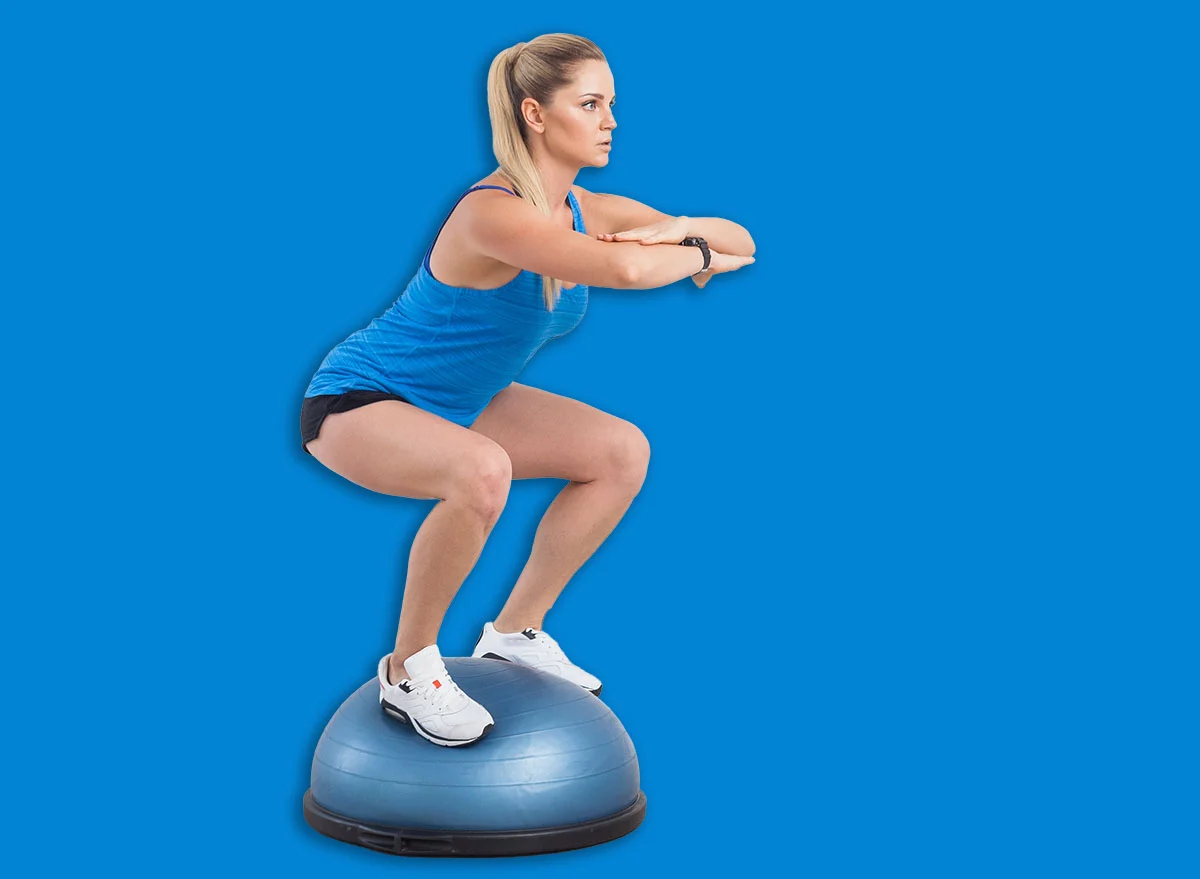
7. Squats on a Bosu Ball
The final movement introduces an unstable surface, which is the "gold standard" for balance training.

- The Benefit: Develops proprioception and extreme core stability. It is highly recommended for fall prevention.
- Execution: Step onto a Bosu ball (or any stable-yet-challenging surface). Perform a slow, controlled squat. The core must constantly adjust to prevent you from losing balance, resulting in intense abdominal activation.
Implications for Long-Term Health
The implications of adopting a standing core routine go far beyond "six-pack" abs. For the demographic over 50, this shift represents a move toward proactive healthcare.
Falls are a leading cause of injury among older adults. By training the core in a standing position, you are essentially "training for life." You are teaching your nervous system how to react to shifts in gravity, how to stabilize under movement, and how to maintain a tall, healthy posture.
Furthermore, the psychological impact of feeling capable and physically secure cannot be understated. As Hilliard notes, these exercises allow you to remain active, mobile, and confident. By swapping the gym bench for a standing posture, you are not just working out; you are investing in a future where you move with ease, strength, and grace.

Conclusion: Starting Your Journey
You don’t need to overhaul your entire life to see results. Hilliard suggests starting with this seven-move circuit 3 to 4 times a week. The beauty of this routine is its portability; whether you are at home, in a hotel, or at the local park, your core is with you, ready to be challenged.
As you progress, focus on the quality of the movement rather than the speed. The slower you move, the more the deep stabilizing muscles—the ones that actually define your waist and protect your spine—are forced to work. Embrace the challenge of being on your feet, and watch as your core strength transforms your daily life.
About the Expert:
Elizabeth “Liz” Hilliard is the founder of the Hilliard Studio Method, a fitness philosophy that combines Pilates, strength training, and cardiovascular conditioning. With over a decade of experience, she is dedicated to helping individuals over 50 achieve their peak physical potential through science-backed, functional movement.