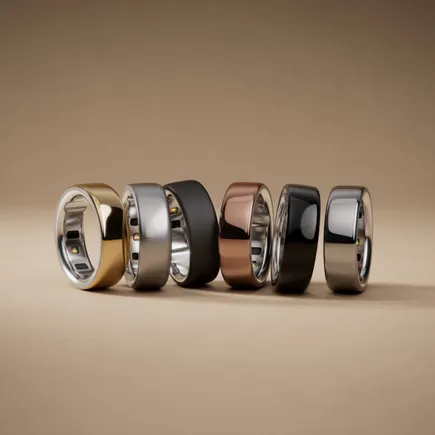









In a move that has reverberated through the corridors of Silicon Valley and the med-tech sector, Oura, the pioneering wearable technology firm behind the ubiquitous Oura Ring, announced on Tuesday that it is officially postponing its highly anticipated initial public offering (IPO). The decision, attributed to broader market uncertainty, marks a significant tactical pivot for a company that had appeared poised to become one of the most high-profile public listings of the year.
While the appetite for high-growth, profitable technology companies remains present, Oura’s leadership has opted for a "wait-and-see" approach. This decision serves as a stark reminder that even companies with robust financials and massive consumer brand loyalty are not immune to the cooling temperatures of the current macroeconomic climate.
The Core Facts: A Strategic Pause
Oura confirmed the postponement in a formal announcement, noting that while the company has already filed its registration statement with the Securities and Exchange Commission (SEC), that statement has not yet been declared effective. By choosing to hold off, Oura is signaling a desire to avoid the volatility that has recently plagued newly minted public stocks.
The company, which had been aiming to raise an ambitious $2.2 billion in its market debut, is currently operating from a position of relative strength. Unlike many tech startups that prioritize growth at all costs, Oura has achieved profitability—a rarity in the crowded wearable space. Despite the delay, the company insists that the IPO is not canceled, but rather deferred to a more opportune window.
Chronology of a High-Stakes Journey
To understand why this delay is so significant, one must look at the timeline of Oura’s meteoric rise and its path toward the public markets.
The Foundation and Funding Surge
Oura’s trajectory was solidified last year when the company secured a massive $900 million in funding. This capital injection brought the company’s valuation to approximately $11 billion, placing it firmly in the "unicorn" category and providing it with the resources to aggressively expand its health-monitoring feature set. This infusion was intended to catalyze the development of next-generation sensors and data analytics.
The Path to Wall Street
In May 2026, Oura took the first formal step toward the public markets by confidentially filing for an IPO. This move was widely viewed as a signal that the company had matured beyond its startup phase and was ready to compete with the likes of Apple, Samsung, and Garmin on a global stage. Throughout the summer, excitement built as reports emerged that the company was targeting a $2.2 billion raise, a figure that would have cemented it as one of the most significant consumer health hardware listings in recent memory.
The Pivot
Throughout late summer and early autumn, market analysts began to express concerns regarding inflationary pressures and shifting consumer spending patterns in the wearable sector. Recognizing that a turbulent market could result in a lower-than-desired valuation, Oura’s board and leadership team elected to pause the process this week. The decision reflects a calculated risk-management strategy, prioritizing long-term shareholder value over immediate public market entry.
Financial Resilience and Growth Metrics
Oura’s decision to delay is not a result of internal weakness, but rather a strategic response to external variables. The company’s financial disclosures paint a picture of a business that is hitting its stride.
Revenue and Profitability
According to its prospectus, Oura has successfully transitioned from a venture-backed growth machine into a sustainable, profitable entity. The company reported $907.9 million in revenue for its 2025 fiscal year. More impressively, the company is projecting a massive 90% year-over-year revenue growth for fiscal 2026.
User Base and Ecosystem
The "Oura ecosystem" currently boasts 5.7 million paid members. This membership model is the cornerstone of their success, providing recurring, high-margin revenue that differentiates them from competitors who rely solely on hardware sales. By locking users into a subscription model for advanced health insights, Oura has transformed from a one-time product seller into a data-driven health services provider.
Official Perspectives: The View from the Top
The tone coming from Oura’s executive team is one of deliberate patience. CEO Tom Hale, in a statement released Tuesday, framed the delay not as a failure, but as a strategic luxury.
"We aim to deliver an extraordinary IPO for our employees and investors, and we have the luxury of choosing our moment," Hale noted. "In the meantime, we will execute against the opportunities ahead."
This statement is designed to reassure current investors—including the venture capital firms that fueled its $900 million round—that the company remains in a state of hyper-growth. Hale’s emphasis on "choosing our moment" is a direct signal to the market that the company is not desperate for cash. Because Oura is already profitable, it lacks the existential need to tap the public markets for survival, giving it a level of leverage that many pre-IPO companies lack.
Broader Market Implications
The delay of Oura’s IPO serves as a bellwether for the current state of the med-tech and wearable sectors.
The "Health-Tech" Cooling Period
For the past three years, the health-tech sector was a darling of the venture capital world. However, as interest rates remain elevated and investors demand clearer paths to profitability, the window for tech IPOs has narrowed significantly. Oura’s decision may prompt other companies currently in the "waiting room" of the SEC to reconsider their timelines.
Impact on Competition
The postponement provides a momentary reprieve for competitors. While Oura focuses on internal execution and steady growth, rivals like Samsung—which has recently entered the smart ring market—may attempt to capture market share. However, Oura’s established brand equity and its massive, engaged user base of 5.7 million people provide a formidable "moat" that is difficult for newcomers to bridge.
The Future of Wearables
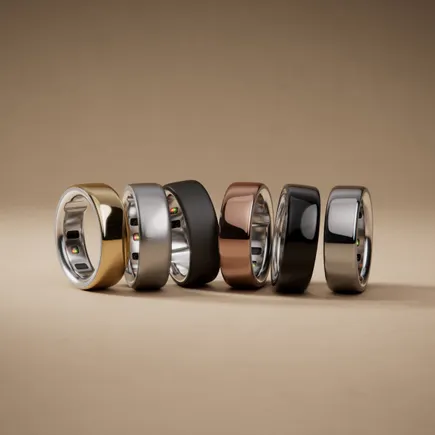
Industry analysts remain bullish on the long-term potential of the smart ring form factor. As consumers move away from screen-heavy devices toward "ambient computing"—technology that works in the background without constant interaction—Oura’s discreet design remains highly attractive. The delay of the IPO does not change the fundamentals of the product; it merely shifts the date of its exposure to public market scrutiny.
The Road Ahead: What to Expect Next
While the IPO is paused, Oura is not sitting idle. The $900 million raised last year is being put to work. Industry experts expect the company to double down on three key areas in the coming months:
- AI-Driven Diagnostics: Leveraging the millions of data points collected from its users to provide more proactive, rather than reactive, health alerts.
- Clinical Integration: Expanding partnerships with healthcare providers and insurance companies to move the Oura Ring from a "wellness device" to a "medical-grade monitoring tool."
- Hardware Iteration: Refining the form factor and battery life to maintain the company’s lead in the "discreet wearables" category.
As Oura waits for the macro environment to stabilize, the company remains one of the most closely watched entities in technology. By prioritizing the "extraordinary" nature of their eventual debut, they are setting a high bar for themselves. When the time finally comes to ring the opening bell on the stock exchange, the company is clearly betting that the patience they exercise today will be rewarded with a more favorable reception from investors tomorrow.
For now, the smart ring maker remains a private powerhouse, growing its membership, refining its data, and waiting for the right moment to step into the glare of the public markets. The decision to delay is a testament to the fact that in today’s volatile economy, timing is just as important as the technology itself.