





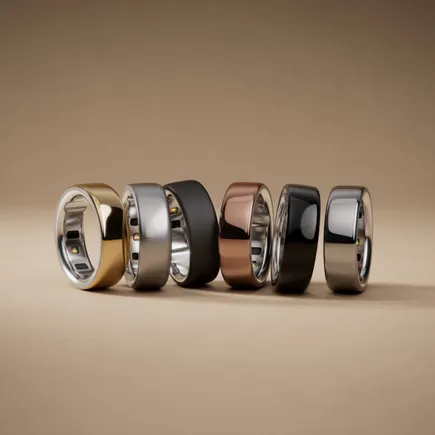
In a move that has sent ripples through the health-tech sector, Oura—the prominent manufacturer of the Oura Ring—announced on Tuesday that it is officially postponing its highly anticipated initial public offering (IPO). Despite a strong financial trajectory and a commanding presence in the wearable technology market, the company has cited pervasive “market uncertainty” as the primary driver for delaying its public debut.
The decision represents a strategic pivot for a company that had, until very recently, been on a fast track to becoming one of the most significant IPOs in the med-tech space. By hitting the brakes, Oura is signaling a disciplined approach to capital markets, choosing to wait for a more favorable environment rather than rushing to list under potentially suboptimal conditions.
The Chronology: From Private Giant to Public Ambition
To understand the weight of this decision, one must look at the rapid evolution of Oura over the past few years.
The Foundation of Growth
Oura first disrupted the wearable market by shifting the focus from wrist-worn fitness trackers to a discreet, high-performance smart ring. By prioritizing sleep quality, recovery metrics, and physiological data, the company carved out a niche that resonated deeply with both high-performance athletes and the general health-conscious public.
The Confidential Filing
In May 2026, the company took its first major step toward the public markets by confidentially filing for an IPO. This move followed a massive $900 million funding round in the previous year, which valued the company at approximately $11 billion. This injection of capital was explicitly earmarked for the research and development of new health-tracking features, further cementing Oura’s ambition to move beyond simple activity tracking and into the realm of medical-grade health monitoring.
The Push for $2.2 Billion
As the IPO process matured, expectations grew. Reports surfaced that Oura was aiming to raise as much as $2.2 billion in the offering—a figure that would have cemented its status as a titan of the wearable industry. The company continued its preparations throughout the summer, keeping investors and analysts in suspense as they worked toward a targeted listing date.
The Sudden Halt
The announcement on Tuesday confirms that, despite having filed a formal registration statement with the Securities and Exchange Commission (SEC), the company has decided to withdraw from the immediate firing line. While the registration statement remains on file, it has not yet been declared effective, allowing the company to retain the flexibility to resume the process when the market sentiment shifts.
Supporting Data: A Robust Financial Profile
One of the most intriguing aspects of Oura’s postponement is that it is not driven by internal financial weakness. On the contrary, the company’s prospectus paints a picture of a business that is hitting on all cylinders.
Revenue and Profitability
Unlike many tech startups that prioritize growth at the expense of the bottom line, Oura has achieved the rare milestone of profitability. According to its prospectus, the company has seen consistent revenue growth over the last three years. In fiscal year 2025, Oura reported an impressive $907.9 million in revenue. Looking ahead to fiscal 2026, the company is projecting a staggering 90% year-over-year revenue growth, a testament to the surging demand for its rings.
A Massive User Base
The company’s growth is underpinned by a loyal and active user base. Oura currently boasts 5.7 million paid members. This subscription-based revenue model has been a critical component of its success, ensuring recurring income that makes the company’s valuation more attractive to institutional investors who prioritize predictable cash flows.
Official Responses and Strategic Rationale
CEO Tom Hale provided a measured response to the decision, framing the delay as a position of strength rather than a concession of weakness.
“We aim to deliver an extraordinary IPO for our employees and investors and we have the luxury of choosing our moment,” Hale stated. “In the meantime, we will execute against the opportunities ahead.”
This statement underscores a key philosophy within Oura’s leadership: the company is not in a desperate scramble for cash. Because they are already profitable and backed by a significant war chest from their previous funding rounds, they are under no immediate pressure to raise capital to maintain operations. By positioning the delay as a "luxury," Hale is attempting to reassure shareholders that the long-term vision remains intact and that the company is simply waiting for a window where the market will properly value their assets.
Implications: What Does This Mean for the Market?
The decision by Oura to delay its IPO has broader implications for the wearable technology sector and the IPO market at large.
A Signal of Caution for Tech IPOs
Oura’s move is likely to be viewed as a barometer for the current state of the IPO market. Market volatility, driven by macroeconomic concerns, interest rate uncertainty, and shifting investor risk appetites, has made the environment for tech listings notoriously difficult. Other companies currently in the pipeline may take note of Oura’s decision and choose to follow suit, potentially leading to a quieter Q4 for the markets.
The Valuation Tug-of-War
The $11 billion valuation achieved during the 2025 funding round serves as a benchmark for the company. By waiting, Oura is hoping that when they do eventually list, they can secure a valuation that meets or exceeds that figure. If the market continues to be skittish, they may face pressure to lower their expectations; by delaying, they avoid the "stigma" of a down-round or a disappointing public debut.
Future Focus: Innovation as a Buffer
While the IPO is on hold, Oura is clearly signaling that its primary focus remains on product development. The $900 million raised last year is still being deployed. We can expect to see an accelerated rollout of new health features, potentially including advanced diagnostic capabilities, heart health alerts, and deeper integration with clinical healthcare systems. By continuing to innovate, Oura aims to widen the moat between itself and competitors like Apple, Samsung, and Whoop, ensuring that when they do return to the IPO path, their value proposition is even more compelling.
Investor Sentiment
For current investors—which include some of the world’s leading venture capital firms—the delay may be frustrating, but it is likely viewed as the prudent move. Protecting the value of their equity in a volatile market is a priority. Oura’s leadership has maintained transparency throughout this process, and their proactive communication is likely to maintain trust among stakeholders.
Conclusion: A Pause, Not a Pivot
The news that Oura is postponing its IPO is undoubtedly a headline-maker, but it should not be mistaken for a decline in the company’s fortunes. On the contrary, the company’s financial health—defined by profitability and rapid revenue expansion—suggests that it remains a powerhouse in the health-tech landscape.
Oura is currently in a position that few startups ever reach: it has the capital to grow, the technology to lead, and the discipline to wait. By choosing to hold off on its public listing, the company is demonstrating a level of maturity that is often missing in the hyper-growth tech sector. For employees, investors, and the millions of users who wear the Oura ring daily, the message is clear: the company is focused on the long game.
As the markets continue to navigate uncertainty, Oura’s journey will be one to watch. When the timing is right, their eventual entry into the public market is likely to be one of the most significant events in the history of consumer health technology. For now, the "luxury of choosing their moment" allows them to keep building, keep growing, and keep refining the future of personalized health.