











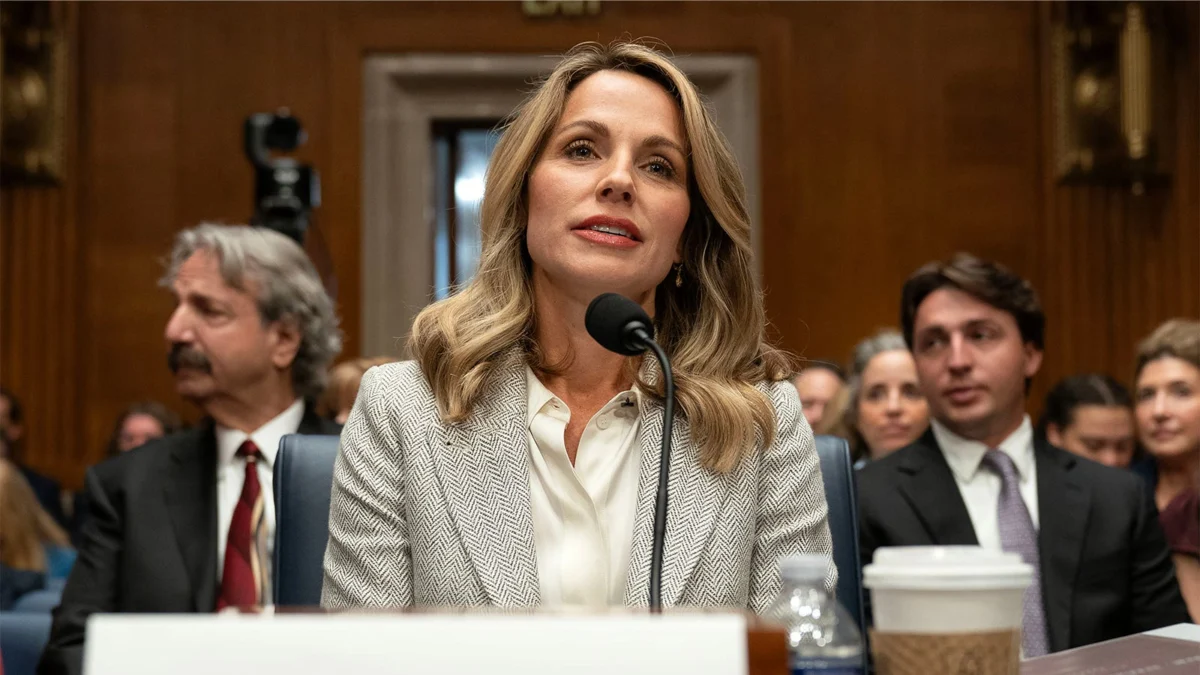
In a high-stakes confirmation hearing that underscored the deepening divide between scientific consensus and the Trump administration’s public health agenda, Dr. Nicole Saphier appeared before the Senate Committee on Health, Education, Labor, and Pensions (HELP) this Wednesday. As the third nominee for Surgeon General in the current administration, Saphier, a radiologist and former Fox News contributor, found herself at the epicenter of a political and medical firestorm, tasked with reconciling her own professional medical standing with the administration’s aggressive, often controversial, stance on childhood immunizations.
The Conflict: Science vs. Administration Policy
The central tension of the hearing revolved around the administration’s ongoing efforts to reshape federal vaccine guidance. Under the influence of HHS Secretary Robert F. Kennedy Jr. and President Donald Trump, the administration has signaled a desire to revisit established policies regarding the childhood immunization schedule, specifically targeting the measles, mumps, and rubella (MMR) vaccine.
Senator Bill Cassidy (R-La.), acting as a lead interlocutor, pressed Saphier on the fundamental question of whether she believes a link exists between vaccines and autism. Despite overwhelming scientific evidence and decades of rigorous clinical research confirming no such connection exists, the current administration has repeatedly suggested the link warrants further investigation.
"I do not believe childhood vaccines cause autism," Saphier stated clearly, attempting to anchor her position in established medicine. She further affirmed the importance of the MMR vaccine, labeling it the "greatest tool for combating measles"—a pointed remark given that the United States is currently experiencing its most severe measles outbreak in decades.
However, Saphier’s testimony was characterized by a delicate balancing act. While she maintained her support for core immunizations, she frequently framed these positions as personal beliefs rather than objective, indisputable scientific facts. This semantic choice drew frustration from Senator Cassidy, who argued that such hedging only serves to amplify public confusion during a time of heightening vaccine hesitancy.
Chronology of a Vacant Office
The nomination of Dr. Saphier marks the third attempt by the Trump administration to fill the Surgeon General’s office, a role that—while lacking broad legislative authority—serves as the nation’s primary "megaphone" for public health messaging.
The path to this nomination has been fraught with turbulence:
- The Initial Nominee: Dr. Janette Nesheiwat, a Fox News medical contributor, was the administration’s first choice. Her nomination was abruptly withdrawn following intense scrutiny regarding her academic credentials.
- The Second Nominee: Casey Means, an entrepreneur and wellness influencer with close ties to Robert F. Kennedy Jr., saw her nomination stall in the Senate. Concerns regarding her professional background and her alignment with the administration’s anti-vaccine rhetoric made her a polarizing figure who failed to garner sufficient support.
- The Current Status: The position of Surgeon General has remained vacant throughout the entirety of President Trump’s second term, leaving a vacuum in federal health leadership at a time when the Department of Health and Human Services (HHS) is actively seeking to dismantle or overhaul long-standing health protocols.
Supporting Data and Ethical Disclosures
Beyond her policy views, Saphier’s financial and professional background became a focal point of the committee’s review. Her mandatory ethics filing, dated September 7, revealed a complex web of holdings that intersect with the very industries the current HHS leadership has campaigned against.
Saphier currently holds investments in major healthcare and insurance firms, as well as several companies heavily involved in the production of ultra-processed foods—a sector that Secretary Kennedy has identified as a primary driver of the American chronic disease crisis. Furthermore, her involvement with DropRx, a company producing unregulated tinctures containing ingredients like kava kava root—which the FDA has linked to potential severe liver injury—raised significant questions about her judgment.
In response to these disclosures, Saphier pledged to resign from her leadership roles at both DropRx and Empower MD LLC, and committed to divesting from assets that could pose a conflict of interest. However, for critics, the mere existence of these holdings suggests a potential misalignment with the "Make America Healthy Again" (MAHA) philosophy that the administration claims to champion.
Official Responses and Internal Discord
Saphier’s confirmation hearing was not merely a referendum on vaccines; it was an examination of her loyalty to an administration she has both supported and criticized. A proponent of the "Make America Healthy Again" movement long before it was popularized by Kennedy, Saphier has nonetheless voiced public dissent against the administration’s more radical departures from established science.
In previous public statements, Saphier characterized the administration’s firing of CDC director Susan Monarez as "a mess," and dismissed the administration’s inaugural MAHA report—which cited non-existent studies—as "pretty embarrassing." She has also publicly challenged President Trump’s advisories to pregnant women regarding the use of Tylenol, labeling his stance as "patronizing."
These past criticisms were brought to light during the hearing, forcing Saphier to reconcile her history of independent, evidence-based critique with the demands of a high-level executive appointment. When asked by senators if she would comply with potentially unlawful orders from the President or Secretary Kennedy, Saphier offered a firm commitment to the rule of law, attempting to reassure the committee that her primary duty would be to public health, not political expediency.
The Broader Implications for Public Health
The stakes of the Surgeon General’s confirmation extend far beyond the individual. The U.S. is currently grappling with a public health crisis characterized by rising vaccine hesitancy, a trend that medical experts warn is being actively exacerbated by federal rhetoric.
Senator Cassidy’s line of questioning highlighted the "terrible legacy" that the current administration risks cementing. By pushing to downsize the childhood immunization schedule and casting doubt on the safety of the MMR vaccine, the administration has placed itself in direct opposition to the nation’s leading medical associations and pediatric organizations.
The implications of Saphier’s potential confirmation are twofold:
- The "Messenger" Effect: As Surgeon General, Saphier would be the primary face of federal health guidance. If she continues to frame established medicine as "belief," critics fear she will inadvertently provide legitimacy to the misinformation circulating within the administration.
- Institutional Stability: With the HHS leadership already engaged in efforts to rewrite foundational health guidelines—many of which have been challenged in court—the Surgeon General’s office serves as a critical check. A nominee who is willing to stand by scientific data could mitigate the impact of the administration’s most radical impulses, whereas one who is seen as a political instrument could accelerate the erosion of public trust in federal institutions.
Looking Ahead
As the hearing concluded, the Senate HELP committee offered no immediate timeline for a vote on Saphier’s nomination. She must still face a full Senate confirmation vote, a hurdle that will require not only Republican unity but also a demonstration of her independence from the more controversial elements of the Kennedy-led health agenda.
Alongside Saphier, the committee also interrogated Chris Klomp, nominee for chief counselor of HHS, and Dr. Timothy Westlake, the nominee for assistant secretary for mental health and substance use. The collective testimony of these individuals will likely determine whether the current administration can successfully steer the nation’s health policy toward its desired, albeit highly contentious, new direction.
For the American public, the proceedings represent a critical juncture. The appointment of the next Surgeon General will effectively signal whether the federal government intends to double down on a policy of "radical transparency" that has, to date, resulted in increased skepticism and decreased immunization rates, or if it will attempt to navigate a return to evidence-based, traditional public health guidance. Until a vote is cast, the vacancy at the heart of the U.S. health system remains a symbol of the volatility and uncertainty defining the current era of American public health.