










The release of the 2025–2030 Dietary Guidelines for Americans (DGAs) was met with significant anticipation, as public health advocates looked for a robust, science-backed framework to navigate an increasingly complex food environment. While the new edition—touted under the banner of “eat real food”—takes a commendable and long-overdue stance against the proliferation of ultra-processed foods and added sugars, the document is simultaneously embroiled in controversy. Critics, including prominent nutrition scientists, argue that the guidelines suffer from internal contradictions and a lack of transparency in their development, raising questions about whether these recommendations truly serve the public interest or the interests of the industries that helped shape them.
The Core Mandate: Progress and Paradoxes
The latest iteration of the DGAs arrives at a time when the United States is grappling with record levels of diet-related chronic illnesses. The guidelines attempt to address this by moving beyond simple caloric counting to emphasize the quality of food intake.
At the heart of the new guidelines is an explicit warning against "highly processed" foods. For the first time, the DGAs attempt to categorize and discourage the consumption of items like sugar-sweetened beverages, ready-to-eat snacks, and refined carbohydrates, such as white bread. This pivot toward "real food" is a significant departure from previous versions that focused heavily on individual nutrient targets.
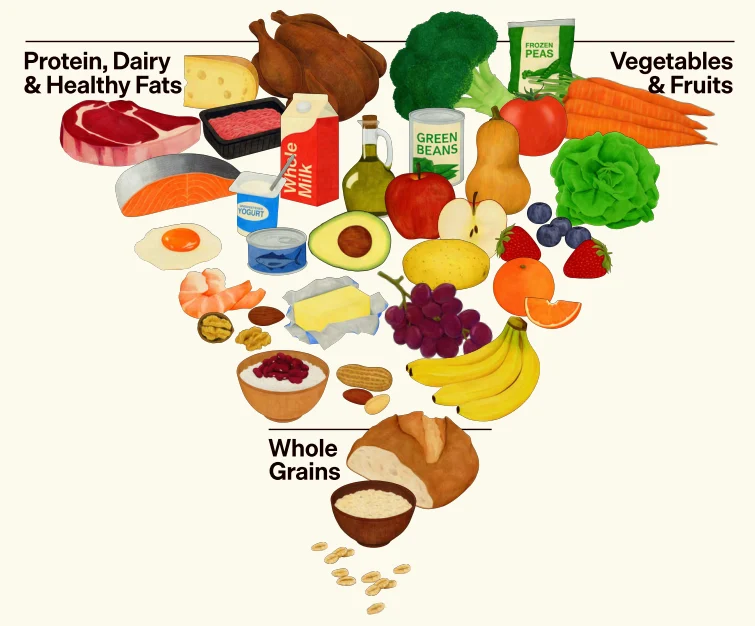
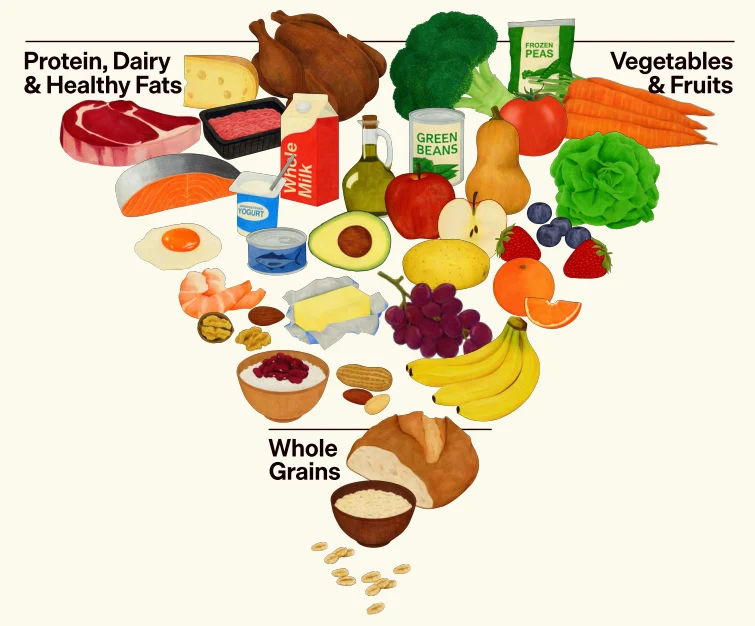
However, this progress is visually and logically undermined by the return of a pyramid-style graphic. Unlike its predecessors, this version is inverted, placing foods like red meat, full-fat dairy, and butter in a prominent position. This visual hierarchy creates a glaring dissonance with the text of the guidelines themselves, which maintain the longstanding recommendation that saturated fat intake should remain below 10% of total daily calories.
"I think the new Guidelines move in the right direction by reinforcing the importance of reducing added sugars and cutting back on refined grains and other highly processed foods," says Frank Hu, chair of the Department of Nutrition at the Harvard T.H. Chan School of Public Health. "However, there appear to be several contradictions within the DGAs and between the DGAs and the new pyramid. The mixed messages surrounding saturated-fat-rich foods such as red meat, butter, and beef tallow may lead to confusion and potentially higher intake of saturated fat and increased LDL cholesterol and cardiovascular risk."
A Chronology of Controversy: How We Got Here
The journey toward the 2025–2030 guidelines was anything but standard. Typically, the DGAs are developed through a rigorous, transparent process. An independent Dietary Guidelines Advisory Committee (DGAC)—composed of esteemed nutrition scientists—reviews the current state of evidence and produces a comprehensive Scientific Report. This report is then used by the USDA and HHS to draft the final guidelines.
For the 2025–2030 cycle, the process hit an unprecedented roadblock: the administration rejected the DGAC’s initial report. In its place, a supplemental scientific analysis was commissioned, conducted by a group of individuals selected through a private "federal contracting process" rather than the traditional public-facing scientific committee.
This deviation has drawn sharp criticism from experts like Deirdre Tobias, an assistant professor at Harvard who served on the original 2025–2030 DGAC. "As of today, there has not been transparency in who wrote the new DGAs," Tobias noted. "Although there are documents included in the appendices by named scientists, there is no transparency in the methodology and rigor that was employed… The reviews themselves, as well as their overall presentation and integration, deviate significantly from the rigorous process that the HHS developed."
The concern is not merely procedural. Reports have emerged detailing that several reviewers involved in the supplemental analysis held financial ties to the beef and dairy industries. Given the prime placement of steak, cheese, and butter in the new "New Food Pyramid," these disclosures have fueled allegations of industry influence over federal health policy.
Supporting Data: The Saturated Fat Math
The confusion surrounding the guidelines is perhaps best illustrated by a simple mathematical exercise. The DGAs suggest that for a standard 2,000-calorie diet, saturated fat should not exceed 10%—or approximately 22 grams—per day.
If a consumer follows the DGAs’ recommendation of three servings of dairy per day, and chooses full-fat options (such as one cup of whole milk, 3/4 cup of full-fat Greek yogurt, and one ounce of cheddar cheese), they hit 17 grams of saturated fat. Adding a single tablespoon of butter or beef tallow for cooking—both of which are prominently featured in the new pyramid—pushes the total to 23 or 24 grams. The consumer has exceeded their daily limit before even considering the saturated fat present in the protein sources or other foods consumed throughout the day.
This math highlights a failure in the guidelines to provide practical, actionable advice. While the document mentions olive oil as a healthy fat, it does so in a way that minimizes its benefits compared to other unsaturated plant oils. Dr. Hu notes, "All these plant oils have been shown to lower LDL cholesterol and cardiovascular risk compared with animal fats such as butter or tropical fats such as coconut oil and palm oil." By failing to distinguish clearly between these fats, the guidelines leave the average consumer at risk of prioritizing the wrong sources of energy.
Official Responses and the "Protein Hype"
One of the most notable changes in the 2025–2030 edition is the significant increase in recommended protein intake. The guidelines suggest that adults consume 1.2 to 1.6 grams of protein per kilogram of body weight, a jump of 50–100% over previous minimum requirements.
While individual protein needs vary, many health experts argue that the average American is already consuming more than enough protein. By raising the target without emphasizing the "protein package"—the fats, fiber, and sodium that come along with various sources—the guidelines risk promoting the consumption of high-fat red meats over healthier plant-based or fish-based alternatives.
"Substantially raising overall protein intake without distinguishing between different protein sources may have unintended long-term health implications," Dr. Hu warns. "Evidence continues to suggest that plant-based proteins and fish are associated with more favorable health outcomes than diets high in red meat."
Furthermore, the guidelines offer only vague, non-committal language regarding alcohol consumption, stating that people should "consume less." By failing to define what "less" means in concrete terms, the guidelines miss an opportunity to provide clear, actionable advice on a significant public health risk factor.
Implications for Public Health and Policy
The implications of these mixed messages are profound. The DGAs are intended to serve as the foundation for federal nutrition programs, including school lunches, WIC, and SNAP. When the guidelines are ambiguous or seemingly influenced by industry, the programs that follow them risk failing the very populations they are meant to support.
Moreover, the omission of environmental and socioeconomic factors from the guidelines is a missed opportunity. Modern nutrition science increasingly recognizes that the "health of the plate" cannot be separated from the "health of the planet." By ignoring the environmental footprint of food production, the DGAs remain an outdated, siloed document in an era that requires a more holistic approach to public health.
The move toward a more "consumer-friendly" format, including an interactive website and shorter text, is a positive step in terms of accessibility. However, if the underlying science is muddied by conflicting advice or industry bias, the accessibility of the document becomes a liability rather than an asset.
Conclusion: Navigating the Confusion
The 2025–2030 Dietary Guidelines represent a fragmented attempt at reform. While the stronger stance on ultra-processed foods is a victory for nutritionists who have long advocated for a focus on whole foods, the lack of transparency in the development process and the contradictory guidance on fats and proteins cast a long shadow over the document’s credibility.
For the average American, these guidelines may be more confusing than clarifying. When official government graphics prioritize foods that medical experts suggest limiting, it is natural for the public to feel skeptical.
As we look toward the next five years, the priority must be to return to a process that is transparent, independent, and strictly evidence-based. In the interim, health professionals suggest that individuals look beyond the government’s "New Food Pyramid." Resources like the Harvard Healthy Eating Plate continue to offer a more consistent, scientifically rigorous, and simple framework for healthy eating. When in doubt, the best advice remains: prioritize whole, plant-based foods, choose healthy fats, and consult a registered dietitian to tailor your nutritional needs to your unique health profile. The guidelines are a starting point, but they should not be the final word on your health.