








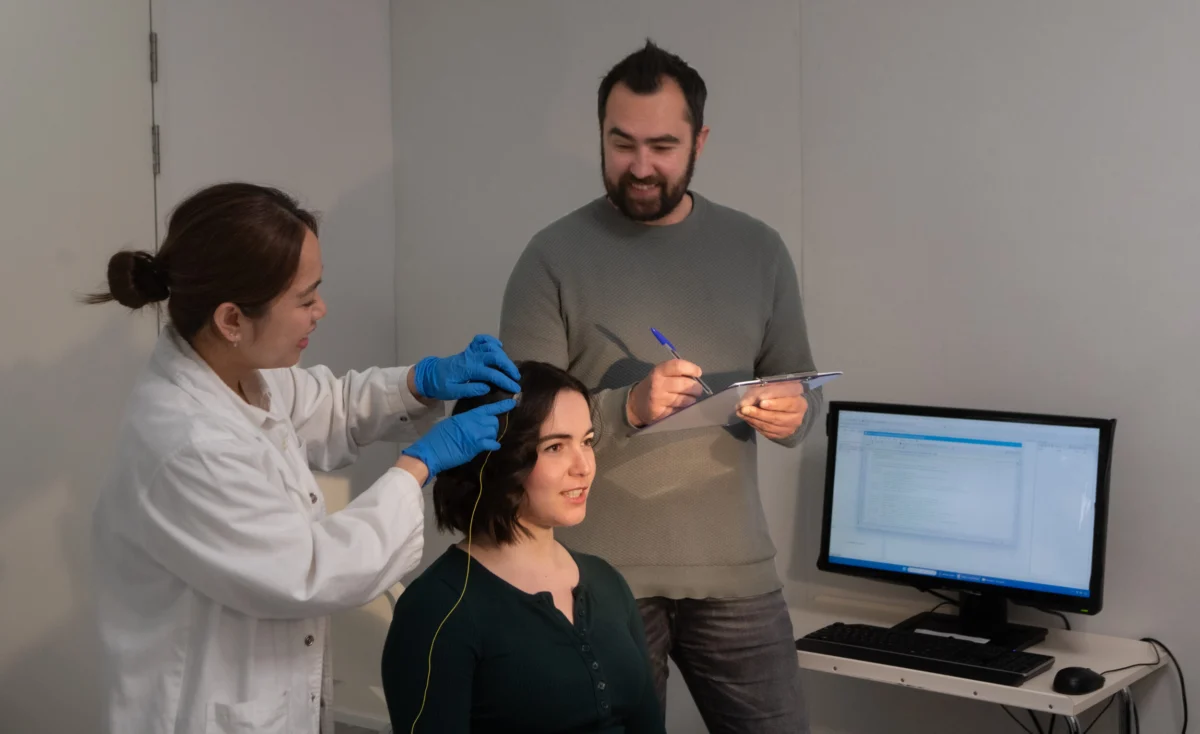
For decades, the gold standard of sleep research was as rigid as the laboratory beds used to conduct it. A patient would spend a single, often uncomfortable night in a clinical facility, hooked up to polysomnography equipment, providing a static "snapshot" of their sleep architecture. Researchers relied on these snapshots and subjective, retrospective questionnaires to understand how we rest. However, this approach suffered from a fatal flaw: it failed to account for the fluid, unpredictable reality of human life.
Today, a groundbreaking shift is underway. By leveraging the continuous, objective data streams provided by wearable technology, an elite international partnership between Monash University and Brigham and Women’s Hospital is moving the field toward an integrated understanding of circadian health. This 17-year collaboration is not merely tracking sleep; it is mapping the complex, 24-hour interplay between human biology, daily behavior, and the long-term prevention of chronic disease.
Main Facts: Moving Beyond the "Snapshot"
The fundamental premise of this new era of sleep science is that sleep cannot be treated as an isolated event that occurs when the lights go out. Instead, it is a critical component of a continuous 24-hour cycle.
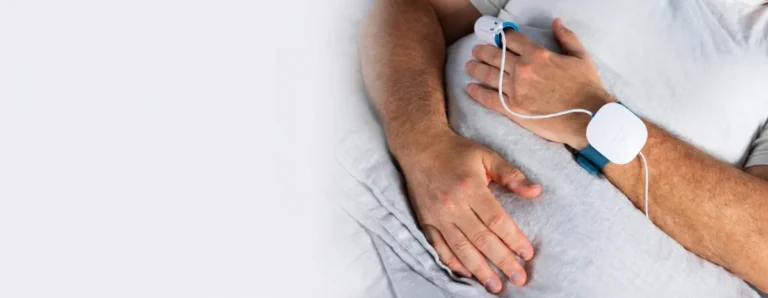
Wearable devices—ranging from research-grade triaxial accelerometers to sophisticated consumer smartwatches—have enabled researchers to track physical activity, posture, and sleep quality in natural, real-world environments over weeks, months, and years. This longitudinal data reveals patterns that were previously invisible to science.
"Wearables allowed us to recognize that sleep is not something that happens during night hours and then that’s it," explains Dr. Emmanuel Stamatakis, director of Brain Park at Monash University’s Turner Institute for Brain and Mental Health. "The advantage of wearables is they’ve popularized that idea of living whole lifestyles. They capture in great detail all behaviors—including posture, sleep parameters, and physical activity—and wrap them into one package."
The primary goal of the Monash-Brigham collaboration is to use this data to bridge the gap between basic physiological research, clinical trials, and actionable public health policy. By moving away from the "noise" and measurement error inherent in self-reported questionnaires, researchers can now identify the subtle, incremental changes in lifestyle that, when combined, produce significant improvements in cardiovascular and metabolic health.
A Chronology of Collaboration: 17 Years of Scientific Synergy
The partnership between Monash University (Australia’s largest university) and Brigham and Women’s Hospital (a global leader in Boston’s medical corridor) is a testament to the power of international academic synergy.
The Foundation (2007–2012)
The collaboration began as a modest scholarly exchange, designed to share expertise in sleep and circadian physiology. Early efforts focused on foundational clinical trials, establishing a cross-institutional culture of rigorous data sharing and methodology development.
The Expansion (2013–2018)
As the partnership matured, it evolved into a formal research program. Faculty and PhD students began moving fluidly between Melbourne and Boston, cross-pollinating ideas and clinical protocols. This era saw the development of key analytical tools, most notably the Sleep Regularity Index (SRI), led by Dr. Andrew Phillips.
The Digital Integration (2019–Present)
The current phase, supported by a significant five-year Wellcome Trust grant, focuses on the "digital transformation" of sleep medicine. The team has successfully moved from lab-based testing to large-scale, population-level analysis, utilizing databases like the UK Biobank to analyze millions of hours of objective data.
Supporting Data: The Synergy of Small Changes
One of the most profound insights to emerge from the Monash-Brigham research is the concept of behavioral synergy. Epidemiological data suggests that the combined impact of small, sustainable lifestyle adjustments is far greater than the sum of its parts.
Recent findings published by the team indicate that a "trifecta" of modest improvements—adding just 5 to 10 minutes of sleep per night, increasing moderate-to-vigorous physical activity by 2 to 4 minutes daily, and consuming roughly half a cup of fresh vegetables—is associated with an approximately 10% reduction in the risk of major adverse cardiovascular events over an eight-year period.
To achieve this same 10% risk reduction through a single behavior, a person would need to make much more drastic, and likely unsustainable, changes, such as adding 30 minutes of sleep every single night.

"There seems to be a synergy," Dr. Stamatakis notes. "It may sound modest, but it’s not modest at all. Health-related behavior is very difficult to change." By identifying these "micro-interventions," researchers believe they can design public health strategies that are far more achievable for the general population.
The Sleep Regularity Index (SRI)
While duration has historically been the primary focus of sleep health, the Monash-Brigham team has championed a more nuanced metric: regularity.
The Sleep Regularity Index (SRI), developed by Dr. Andrew Phillips and his colleagues, measures how consistently a person falls asleep and wakes up at the same time each day. Using over 10 million hours of data from 61,000 UK Biobank participants, the research team demonstrated that sleep regularity is a more robust predictor of all-cause mortality than sleep duration alone.
Individuals with high SRI scores—those who maintain a consistent sleep schedule—exhibited significantly lower risks of cancer, cardiometabolic disease, and all-cause mortality. This finding has reshaped the medical community’s understanding of "good sleep," shifting the focus from the total number of hours to the internal consistency of the circadian rhythm.
Official Responses and The "Black Box" Challenge
Despite the enthusiasm for wearables, the research community remains cautious regarding the use of consumer-grade devices.
The Research-Consumer Divide
Dr. Stamatakis highlights a significant hurdle: the proprietary nature of consumer-grade algorithms. "By not making the data processing algorithms transparent, it is very hard to use them in scientific research because the consumer-grade wearables become black boxes," he explains.
While consumer devices often feature advanced sensors (like photoplethysmography for heart rate and temperature monitoring) that surpass traditional research-grade accelerometers, their "black box" nature prevents scientists from validating the accuracy of their data.
The Push for Open Science
In response, initiatives like The Wearable Landscape and Open Wearables are working to standardize validation protocols. These projects aim to create a centralized platform where researchers can pool validation studies and access AI-ready APIs, ensuring that wearable data is transparent, reproducible, and ready for clinical application.
Global Implications and Future Directions
The implications of this research extend far beyond the clinic. Public health guidelines, such as those issued by the World Health Organization and the US government, are currently undergoing a transition. Future guidelines are expected to abandon the "sleep-in-isolation" model in favor of a 24-hour framework that explicitly includes recommendations on sleep timing, regularity, and physical activity.
Expanding the Global Reach
A critical critique of current sleep research is its reliance on high-income, Western populations. The Monash-Brigham team is actively addressing this through the ProPASS (Prospective Physical Activity, Sitting and Sleep) consortium. By providing standardized tools and training to research teams in Malaysia, Chile, and Mexico, the consortium is ensuring that future sleep recommendations account for diverse cultural, socioeconomic, and environmental contexts.
A New Era of Personalized Medicine
Dr. Charles Czeisler, a co-leader of the collaboration and chief of the division of sleep and circadian medicine at Mass General Brigham, views this work as a critical step toward a future where health is managed through real-time data. "It’s been exciting to see how the initiative has grown from just a few scholars in the exchange to now a steady drumbeat," Czeisler says.
By capturing sleep continuously and objectively, the Monash-Brigham partnership is enabling a fundamental rethink of human health. We are no longer limited to guessing how we slept; we can now quantify our circadian health with precision. As the technology matures and the research expands, the goal is clear: to leverage these digital insights to make the prevention of chronic, life-limiting disease as simple as maintaining a regular, healthy rhythm in our 24-hour lives.