




Published May 31, 2026
The human body is a masterpiece of kinetic engineering, yet in our modern, sedentary world, it is often treated as a static machine. Among the most critical components of our physical architecture are the quadriceps—the four-headed muscle group spanning the front of the thigh. Whether you are a seasoned yogi or a novice stepping onto the mat for the first time, these muscles are the silent workhorses of your daily movement. However, as noted in Yoga Journal’s archives, which date back to a foundational 2004 feature, the relationship between quad strength and flexibility is a delicate, often neglected, balancing act.
The Anatomy of the Four Heads
The term "quadriceps" is derived from the Latin for "four heads," referring to the four distinct muscles that converge into a singular, powerful tendon. Understanding this anatomy is essential for any practitioner looking to improve their structural longevity.
- Vastus Medialis: Located on the inner front portion of the femur, this muscle is critical for tracking the kneecap correctly.
- Vastus Lateralis: Situated on the outer front of the thigh, it provides the bulk of the muscle’s lateral power.
- Vastus Intermedius: Tucked beneath the other two, this deep muscle is vital for overall stability.
- Rectus Femoris: Unlike its three counterparts, which originate on the femur, the rectus femoris originates on the pelvis. This unique attachment makes it a "two-joint" muscle, meaning it acts both as a knee extensor and a hip flexor.
These four muscles join at the quadriceps tendon, encompassing the patella (kneecap) and connecting via the patellar ligament to the tibia (shinbone). When you engage your quads, you are essentially initiating a chain reaction that stabilizes the knee joint—a joint that is, by nature, notoriously unstable.
Chronology of Muscle Adaptation: From 2004 to Today
The conversation surrounding muscle maintenance has evolved significantly since the early 2000s. In the 2004 Yoga Journal issue, the focus was primarily on correcting the "shortening" effect of intense yoga practice. Practitioners often found that while poses like Virabhadrasana I and II (Warrior I and II) built immense strength, they left the muscles in a contracted state.
Over the past two decades, sports science has reinforced these observations. We now know that muscle adaptation is a cumulative process. If a practitioner spends years engaging the quads without intentional lengthening, the fascia and muscle fibers conform to that contracted shape. This "shaping" of the body is not merely an aesthetic concern; it is a functional one. The body adapts to the shapes it spends the most time in. If you spend eight hours a day sitting at a desk (a hip-flexed position) and then practice yoga without counter-stretching, you are essentially "locking in" the tightness of your rectus femoris.
Supporting Data: Why Strength Matters
The medical community has reached a consensus regarding the importance of quad strength for long-term health. Data indicates that quad weakness is a primary predictor of osteoarthritis in the knee. When the muscles surrounding the knee are weak, the joint itself absorbs the shock of every step, leading to premature cartilage degradation.
Furthermore, the "functional independence" index—a metric used by geriatric specialists—highlights the quadriceps as the key indicator of mobility in later years. The ability to climb stairs, rise from a chair, or maintain balance is dictated almost entirely by the endurance and strength of the quadriceps.
It is a common misconception that walking or jogging provides sufficient strengthening for these muscles. While these activities offer cardiovascular benefits, they are often insufficient for the eccentric loading required to build true muscle density. Yoga, when performed with controlled, long-held postures like Navasana (Boat Pose) or repetitive standing sequences, provides a level of muscle endurance training that many traditional cardio exercises lack. Experts recommend at least three dedicated sessions per week where the quads are challenged through repetition and sustained contraction.
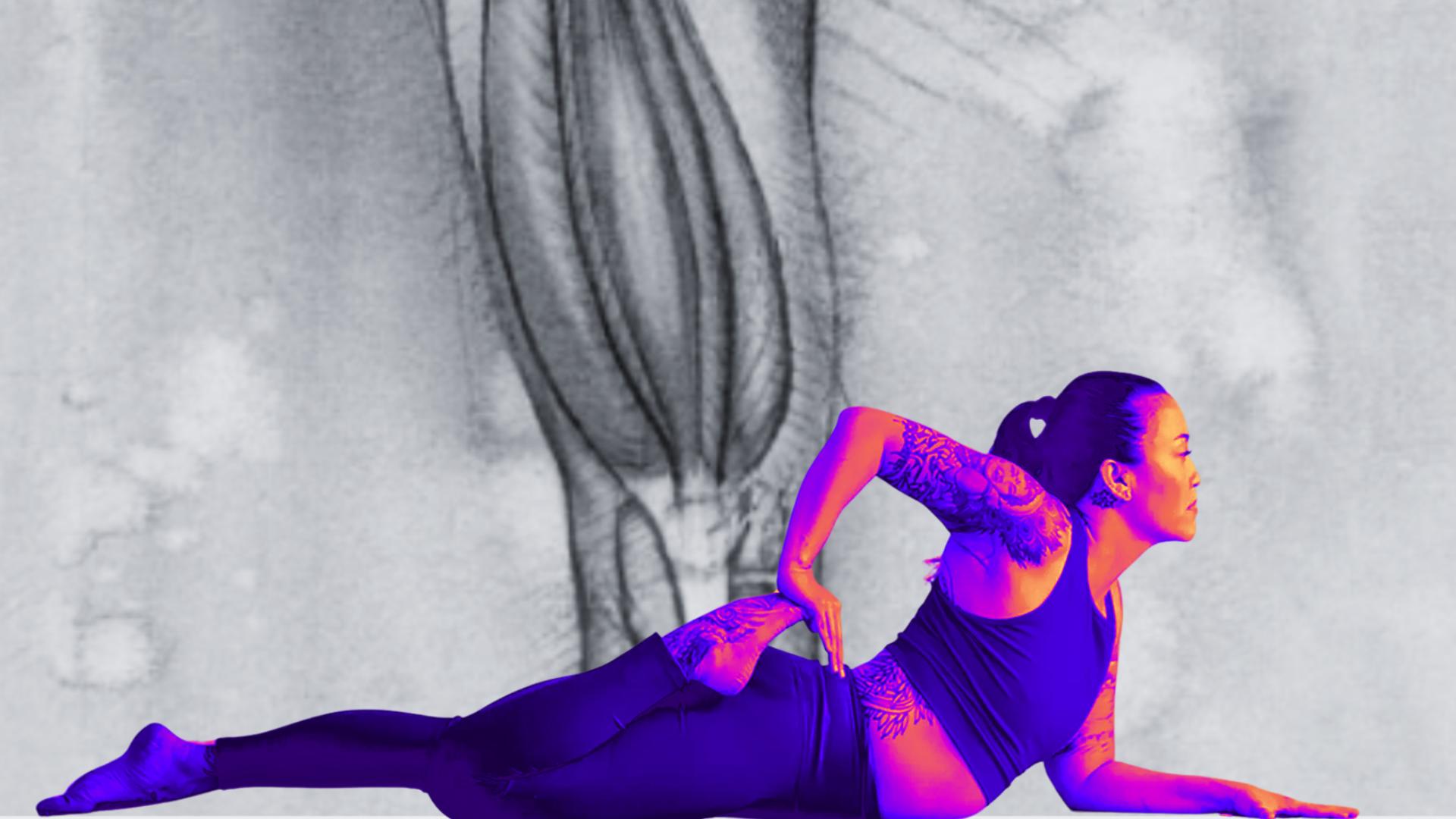
Implications of Imbalance: The "Tightness" Trap
When the quadriceps remain chronically tight, the implications ripple throughout the entire kinetic chain. A shortened rectus femoris does more than just make your legs feel stiff; it actively pulls the pelvis into an anterior tilt.
The Domino Effect on the Spine
When the pelvis tilts forward due to tight hip flexors, the lower back (lumbar spine) is forced into an unnatural, excessive curve. This creates a cascade of issues:
- Reduced Knee Flexion: You may find it impossible to perform Virasana (Hero Pose) or sit comfortably in Padmasana (Lotus Pose).
- Lower Back Pain: During backbends like Ustrasana (Camel Pose) or Urdhva Dhanurasana (Upward-Facing Bow), the tightness in the quads prevents the hips from opening, forcing the lower back to "dump" the movement, leading to potential disc stress.
- Compromised Alignment: In standing poses like Vrksasana (Tree Pose), a tight quad can pull the leg out of alignment, making it difficult to find the grounding necessary for balance.
Strategies for Balance: Expert Recommendations
To achieve the "Long, Strong Quads" advocated by leading yoga instructors, one must embrace the duality of the practice: strengthening and stretching must occur in equal measure.
Gentle Flexion for Maintenance
To begin the process of lengthening, one must safely flex the knee. Lying supine and drawing the knees toward the chest is the most accessible entry point. By wrapping the hands around the shins and applying gentle, consistent pressure, you encourage the muscle fibers to release their contraction.
The Power of Props
Many practitioners fear deep stretches like Supta Virasana (Reclining Hero Pose) because of knee discomfort. The use of bolsters, folded blankets, or yoga blocks is not a "crutch"—it is a sophisticated tool for anatomical alignment. By raising the torso, you reduce the extreme angle of the knee, allowing the quadriceps to stretch without compromising the health of the joint.
Targeted Stretching Protocols
For those seeking to address the rectus femoris specifically, isolate the legs. Stretching both quads simultaneously often causes the pelvis to tip, which defeats the purpose of the stretch.
- Half Reclining Hero Pose (Ardha Supta Virasana): This allows you to focus on one side at a time, keeping the pelvis neutral and the lower back protected.
- Modified Frog Pose (Bhekasana): By lying prone and drawing the heel toward the outer hip, you can access the deeper fibers of the rectus femoris. The key here is to keep the pubic bone grounded. If the hip lifts off the floor, the muscle has "escaped" the stretch by using the hip joint to compensate.
Conclusion: The Path Toward Freedom
The journey toward greater flexibility is not a race; it is a lifetime practice of observation. When you feel that initial resistance in a stretch, you are encountering the physical history of your body—the hours spent sitting, the lack of movement, and the compensations your muscles have made to keep you upright.
By systematically strengthening the quadriceps through yoga and pairing that work with mindful, targeted stretches, you are not just improving your yoga postures; you are investing in your future mobility. You are ensuring that as the decades pass, your body remains a tool of freedom, capable of movement, stability, and ease. Whether you are holding a challenging Boat Pose or resting in a reclined stretch, remember that you are building the foundation for a healthier, more capable self.