










Updated August 7, 2026
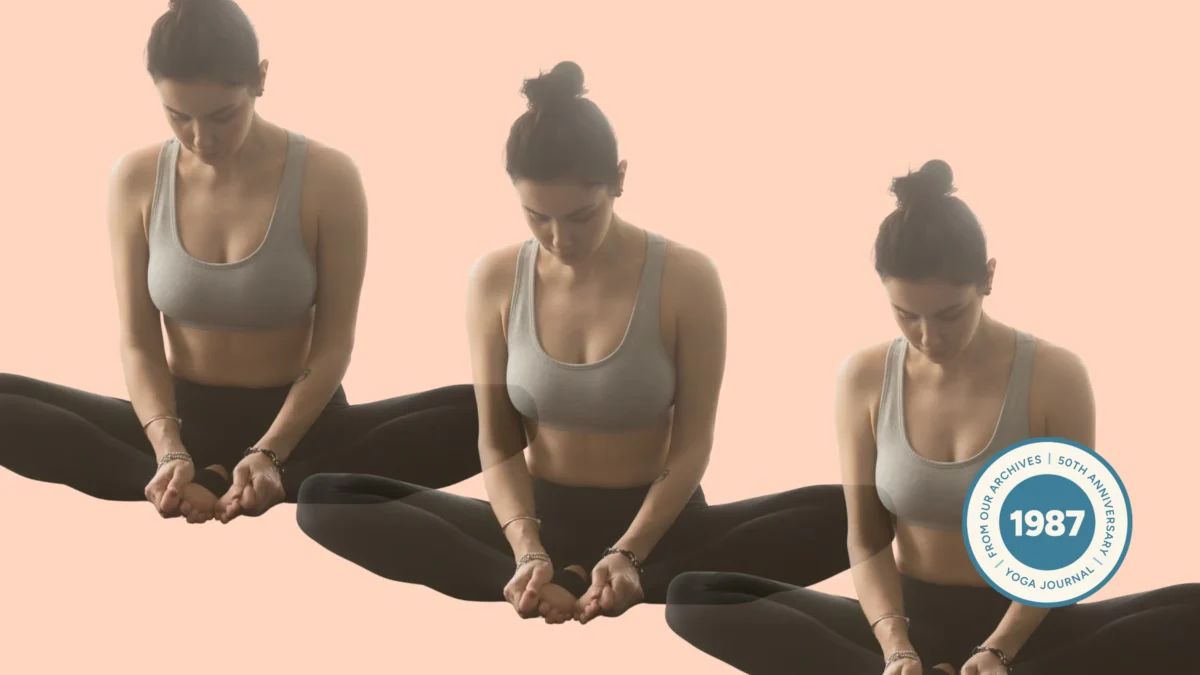
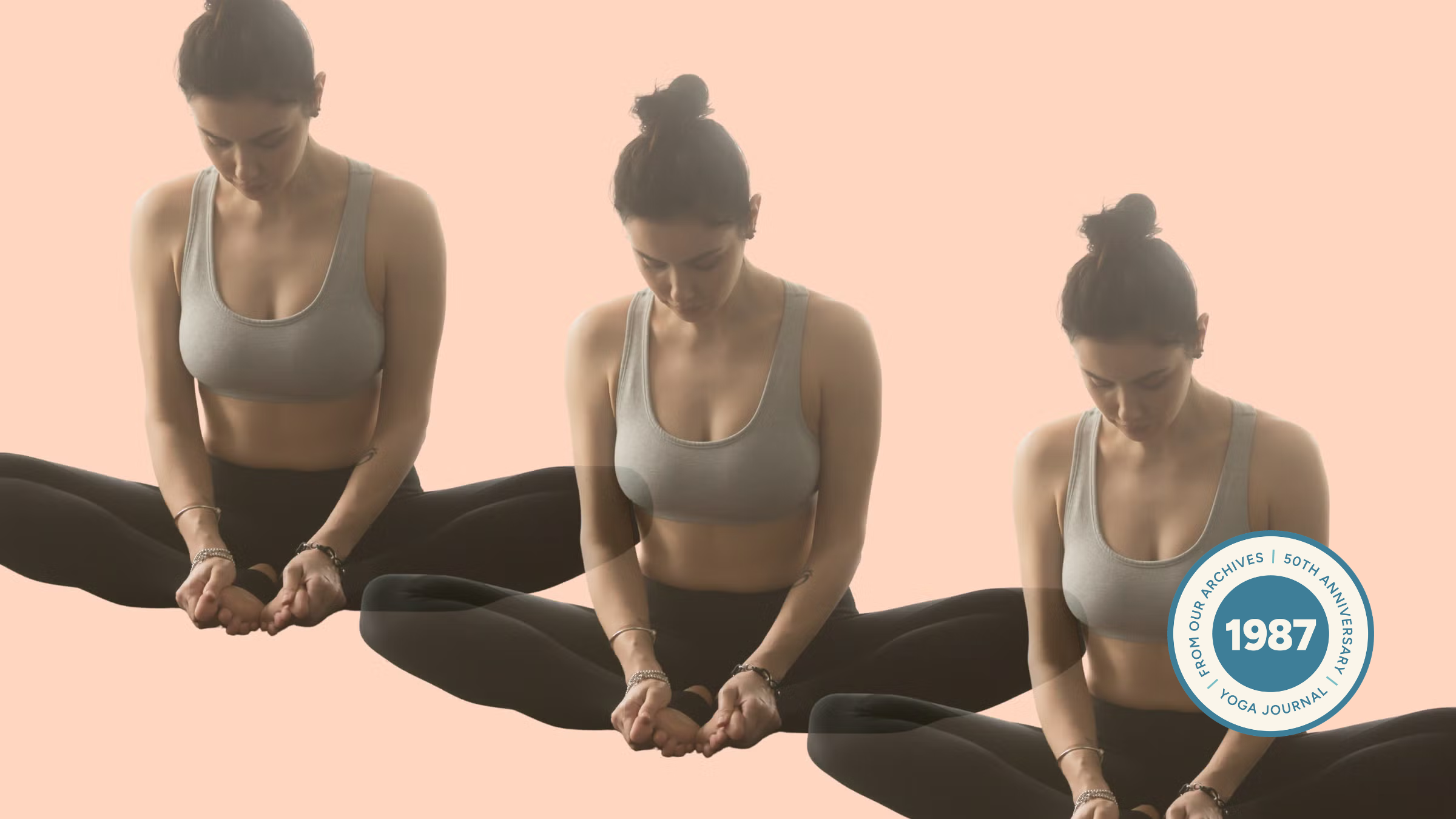
In the landscape of modern yoga, few postures are as ubiquitous or as deceptively simple as Baddha Konasana, or Bound Angle Pose. Often referred to as "Butterfly Pose," this seated configuration—soles of the feet touching, knees falling toward the earth—serves as a cornerstone for both beginner practitioners and advanced students. Yet, behind its unassuming exterior lies a history that spans millennia and a physiological complexity that challenges modern understandings of movement, pelvic health, and the mind-body connection.
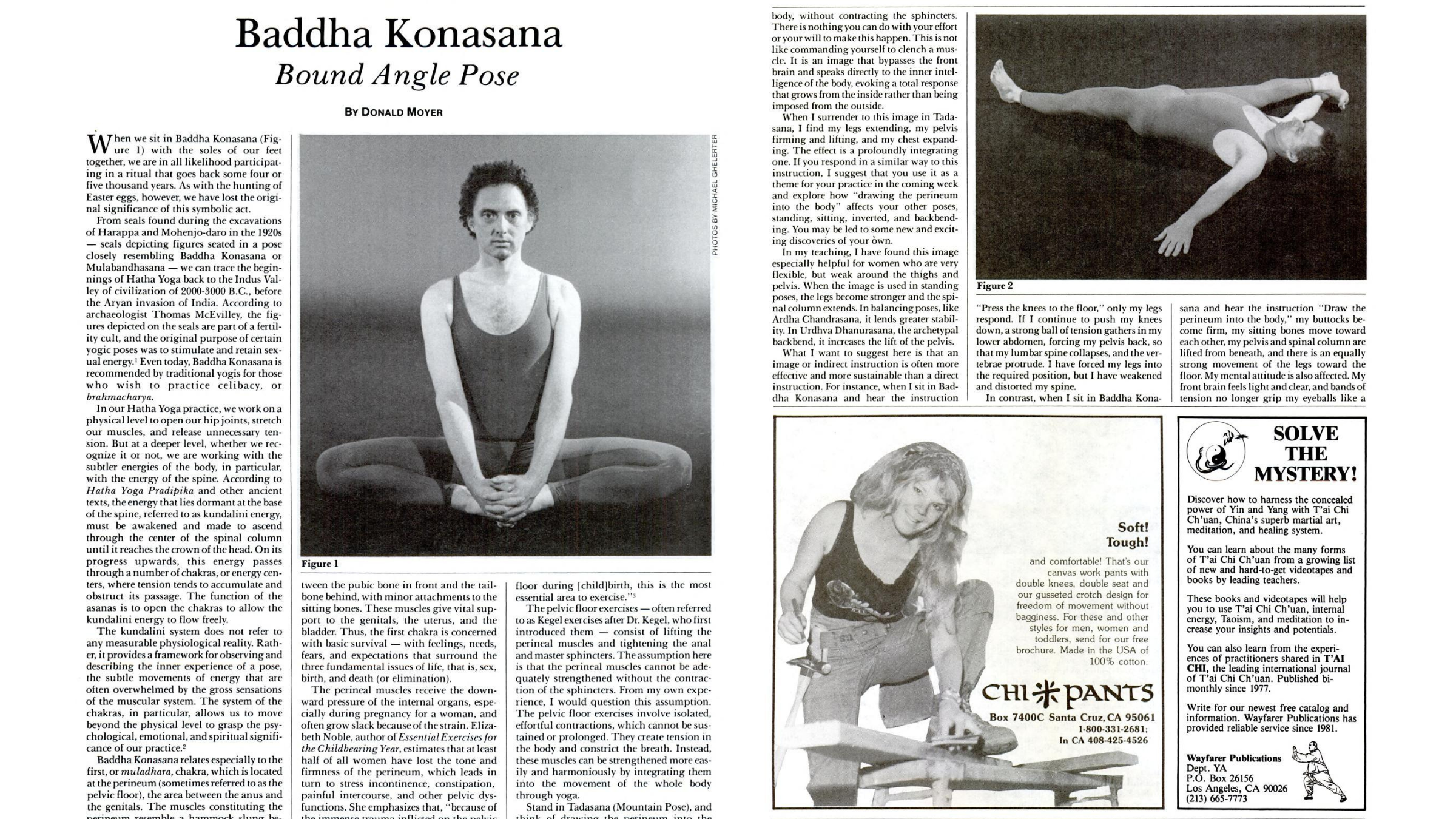
This exploration, originally chronicled in the January–February 1987 issue of Yoga Journal, remains as relevant today as it was nearly four decades ago. It invites us to look past the "gross" mechanics of the muscles and into the "subtle" energetic architecture that defines the yogic experience.
The Ancient Lineage: A Ritual of Five Millennia
When a practitioner settles into Butterfly Pose, they are not merely performing an exercise; they are participating in a ritual with roots stretching back four to five thousand years. Archaeological evidence suggests that the origins of this posture—or at least its precursors—precede the Aryan migration into the Indian subcontinent.
A Chronology of the Pose
- 2000–3000 B.C.: Excavations at the ancient Indus Valley civilization sites of Harappa and Mohenjo-daro uncovered seals depicting figures in positions strikingly similar to Baddha Konasana or Mulabandhasana.
- 1920s: These artifacts were unearthed, providing the first modern academic glimpse into the proto-yogic practices of the region.
- 1987: Yoga Journal formally documents the connection between these ancient fertility cults and contemporary Hatha Yoga, highlighting the pose’s historical intent.
Archaeologist Thomas McEvilley has argued that these early figures were representative of a fertility cult, suggesting that the primary function of these early asanas was the cultivation and retention of sexual energy. Even in the modern era, traditional yogic schools continue to recommend the Butterfly Pose as a foundational practice for those dedicated to brahmacharya (celibacy or the conscious regulation of sexual energy).
The Energetic Framework: Beyond Physiological Reality
While modern fitness science focuses on muscle fiber elongation and joint range of motion, the Hatha Yoga tradition offers a different framework: the subtle energy body. According to ancient texts like the Hatha Yoga Pradipika, the human body is more than a collection of bones and tissues; it is a conduit for kundalini, the dormant energy situated at the base of the spine.
The goal of the asana is not simply to "stretch," but to clear the path for this energy to ascend through the central spinal column to the crown of the head. Along this path lie the chakras—energy centers that act as conduits or, when blocked, as dams. When tension accumulates in the pelvic floor, the passage of energy is obstructed. By engaging in postures that open these centers, practitioners attempt to move beyond the physical "gross" sensations and enter a space of spiritual and emotional integration.
Pelvic Floor Health: The First Chakra’s Domain
The first chakra, Muladhara, is situated at the perineum—the delicate area between the anus and the genitals. Physically, the muscles here function like a hammock, slung between the pubic bone and the tailbone, supporting vital organs including the bladder, uterus, and intestines.
Supporting Data: The Crisis of Pelvic Tone
The importance of this region cannot be overstated. Elizabeth Noble, in her seminal work Essential Exercises for the Childbearing Year, notes that a significant percentage of women experience a decline in perineal tone. This loss of firmness is often exacerbated by the trauma of childbirth, leading to:
- Stress incontinence.
- Chronic constipation.
- Pelvic pain and sexual dysfunction.
For years, the medical establishment has relied on "Kegel exercises"—a system of isolated, effortful contractions of the sphincters. However, the yogic approach offers a radical departure from this methodology.
Implications: The Failure of Direct Instruction
In modern yoga classes, one often hears the direct command: "Press your knees to the floor." While this is meant to deepen the hip opening, it often produces the opposite effect. Forcing the knees downward triggers a compensatory response: the lower abdomen tightens, the pelvis tilts backward, and the lumbar spine collapses. The result is a distortion of the spine and a buildup of "miserly" tension around the eyes and jaw.
The Power of Indirect Cueing
The alternative is found in the "image" or "indirect instruction." By visualizing the perineum drawing into the body without the need for conscious, forceful sphincter contraction, the body undergoes a systemic shift:
- Integrative Response: The legs extend, the pelvis firms, and the chest expands naturally.
- Psychological Clarity: The front brain remains light and clear, avoiding the "hard-grip" tension of forced effort.
- Whole-Body Engagement: The pose ceases to be a localized stretch of the inner thighs and becomes a movement of the entire being.
This principle—that the body responds more effectively to internal intelligence than to external, willful commands—is the hallmark of advanced practice. It transforms a simple physical shape into a meditation.
Practical Applications and Variations
To truly master the Butterfly, one must move past the limitations of tightness. If inner knee pain or hip restriction persists, consider the following technical adjustments.
1. The Bench Variation for Joint Health
By lying on the back with the feet supported on a low bench or platform, the practitioner can relieve the strain on the inner knee.
- The Technique: Ensure the shins are parallel to the floor. If the knees are higher than the feet, use blankets to bridge the gap.
- The Result: The femur glides smoothly into the hip socket, creating space without the drama of aggressive stretching. This can be held for 5–10 minutes as a restorative practice.
2. The Strap Support for Spinal Alignment
Many students struggle with the forward collapse of the pelvis. Using a long strap around the back of the pelvis, crossed under the feet and pulled taut, provides an external "anchor."
- The Effect: The strap supports the lumbar spine, allowing the practitioner to find the "true place of balance." When the lower back is supported, the mind is freed from the distraction of physical struggle, allowing the practitioner to experience the pose in a state of ease.
Conclusion: The Practice of Presence
The journey into Baddha Konasana is a microcosm of the yoga path itself. It begins in the physical body, addressing the structural reality of the hips and the pelvic floor. It then transitions through the subtle energetic landscape of the chakras, and finally, it settles into a state of mental stillness.
By moving away from "efforting"—the tendency to impose our will upon our limbs—and toward an "integrative response," we honor both the ancient history of the pose and the modern needs of our bodies. Whether you are seeking to resolve pelvic floor weakness or simply looking to find a deeper sense of stillness, remember that the most profound results often come not from the force we apply, but from the intelligence we invite into the body. As you practice this week, let the image of "drawing the perineum into the body" be your guide, and see what new, quiet discoveries await you in the stillness of the Butterfly.