The fitness industry stands at a significant crossroads. For decades, the sector has been defined by the intimate, high-touch relationship between trainer and client. However, the rapid integration of artificial intelligence (AI), machine learning, and advanced wearable technology is fundamentally altering this dynamic. A landmark survey conducted in early 2026 offers the first comprehensive look at how seasoned fitness professionals are navigating this technological revolution, revealing a workforce that is cautious, curious, and deeply committed to preserving the "human element" of wellness.
Main Facts: The Current State of AI in Fitness
Artificial intelligence is no longer a futuristic concept—it is a functional reality. From sophisticated algorithms that analyze real-time physiological data to mobile apps that generate bespoke exercise programs, technology is increasingly influencing health, fitness, and wellness.

The core promise of AI in this sector is scalability and personalization. By analyzing vast datasets—including training history, recovery markers, sleep patterns, and biometric data—AI systems can suggest adjustments to exercise prescriptions that were once the sole domain of human intuition. However, as noted by industry experts like Dr. Jan Schroeder, these systems are currently functioning best as "decision-support tools." The prevailing consensus among practitioners is that while AI can crunch the data, it cannot replicate the complex, nuanced art of human coaching.

Chronology: The Road to AI Integration
The trajectory of AI in fitness has accelerated over the past decade.

- 2014–2020: The rise of wearable sensors (heart rate monitors, activity trackers) established the foundation for data-driven fitness. During this period, the industry focused on simple tracking and basic feedback loops.
- 2021: Research by Parmenter, Diehl, and Scott underscored that wearables are most effective when paired with human behavioral support strategies, setting the stage for a hybrid model of care.
- 2022–2025: The explosion of generative AI and machine learning platforms allowed for more complex applications, including automated programming and virtual coaching.
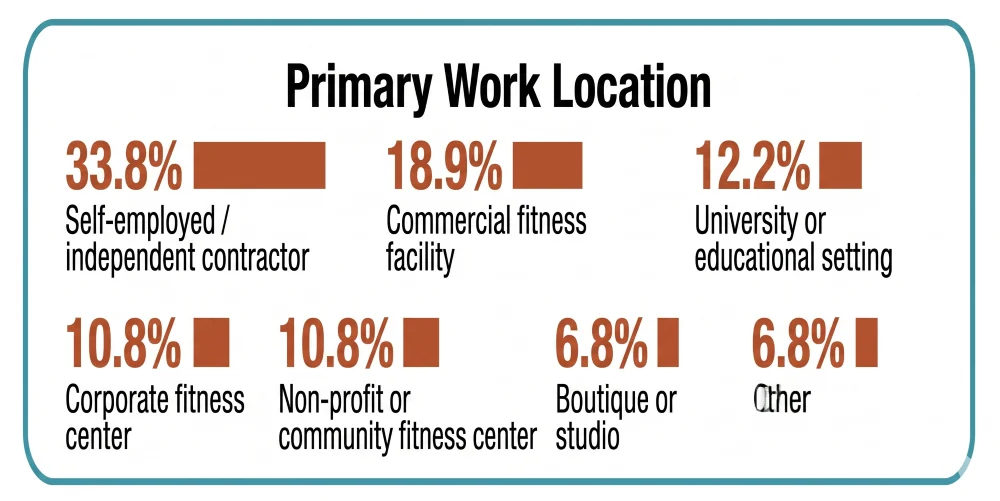
- January 2026: A cross-sectional survey was launched to capture the industry’s pulse. By February 13, 2026, 74 veteran professionals—mostly certified personal trainers and instructors with over 15 years of experience—provided a snapshot of the current state of professional adoption.
Supporting Data: What the Practitioners Say
The 2026 survey, which polled a highly educated and experienced demographic (over 75% holding bachelor’s degrees or higher), provides critical insights into the industry’s readiness for change.

Proficiency and Usage Patterns
While the workforce is digitally fluent—feeling highly comfortable with apps and standard wearable technology—they remain hesitant about AI specifically.

- Familiarity Gap: A significant portion of respondents reported being only "slightly" or "moderately" familiar with AI.
- Adoption Rates: Approximately 50% of respondents reported that they "never" or "rarely" use AI tools in their professional practice.
- Utility: Among those who do use AI, the primary applications are administrative: managing daily tasks, saving time on programming, and streamlining client communication. Advanced applications, such as VR-based training or complex performance analysis, remain on the periphery.
Perceptions and Barriers
The survey highlighted a clear tension between the potential benefits of AI and the practical hurdles of implementation:

- Top Concerns: Accuracy and reliability of AI-generated advice top the list of professional anxieties.
- Ethical Hesitation: Privacy, data security, and the potential for algorithmic bias are significant barriers.
- The "Human" Value: Despite the excitement surrounding tech, respondents rated human interaction as "extremely important." There is a strong, collective belief that AI cannot replace the motivational, empathetic, and contextual guidance that a human trainer provides.
Official Perspectives and Professional Implications
The integration of AI poses both an existential question and an opportunity for growth. The central debate is whether automation will erode the need for human services or simply shift the professional role.

The Shift in Professional Roles
Experts suggest that the role of the fitness professional is evolving. As machines take over the rote tasks—such as tracking sets and reps or basic scheduling—the human trainer is freed to focus on "higher-order" tasks: behavioral change, long-term habit formation, and emotional support. In this model, the trainer acts as an "interpreter" of data, helping the client understand what their wearable device is actually telling them.

Ethical Governance
The World Health Organization and other leading bodies have emphasized that as AI becomes more prevalent in health, transparency and ethical design are non-negotiable. For fitness professionals, this means being responsible stewards of client data and ensuring that they maintain the "human in the loop" to oversee safety and exercise intensity.

Implications for the Future: A Hybrid Reality
The findings of the 2026 survey suggest that the future of fitness is not "human vs. machine," but rather a synthesis of both.

1. Education is the New Frontier
The most glaring takeaway from the survey is the industry-wide demand for more education. Because most professionals feel "somewhat prepared" at best, there is a clear opportunity for certification bodies (like NASM, ACSM, and ACE) to develop curriculum focused on AI literacy. Training professionals to interpret AI data and audit its recommendations will be the next major step in professional development.

2. The Competitive Advantage
Professionals who successfully integrate AI to handle the "heavy lifting" of data analysis will likely find themselves more competitive. By using AI to automate the mundane, these trainers can offer more "high-touch" coaching to more clients, effectively scaling their businesses without sacrificing the quality of the client relationship.

3. Maintaining the Core Identity
Despite the push toward high-tech fitness, the industry remains grounded in its core identity. The survey results show no significant fear of being "replaced" by robots. Instead, there is a pragmatic acknowledgment that the future of the industry lies in a hybrid model. The machine provides the insight, but the human provides the inspiration.

Conclusion: The Path Forward
The integration of AI into the fitness industry is not a fleeting trend; it is a structural shift. As the 2026 data illustrates, the workforce is in a transition phase. While the foundation of the industry—the human connection—remains unshakable, the tools that support that connection are becoming smarter, faster, and more data-centric.

For the fitness professional of the future, success will not depend on competing with AI, but on mastering it. By adopting AI as a supportive system—one that enhances accuracy in programming, improves operational efficiency, and provides deeper insights into client health—professionals can elevate their services. The challenge ahead lies in ensuring that this technological adoption is guided by ethics, tempered by human experience, and focused firmly on the needs of the individual client.

In this new era, the most successful coaches will be those who use technology to make their practice more efficient, while doubling down on the empathy and human connection that technology can never truly replicate. The machine may track the heartbeat, but the human will always be the one to provide the heart.