




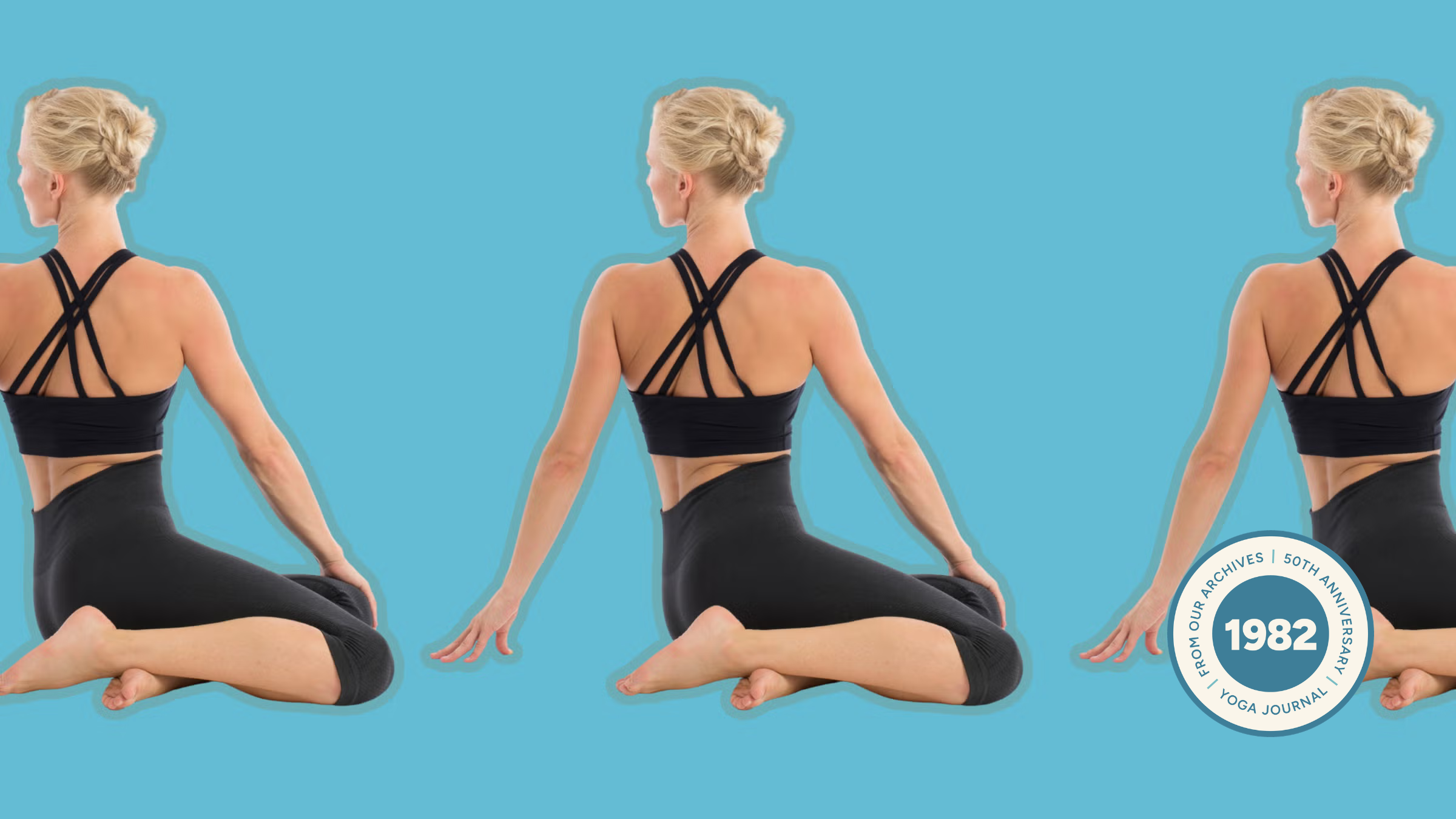
Originally published in the November-December 1982 issue of Yoga Journal, this archival feature explores the anatomical precision and philosophical depth of the Seated Twist (Bharadvajasana). As part of our ongoing series, we revisit this foundational practice to understand how ancient wisdom meets modern physiological needs.
The Foundation: Understanding the Seated Twist
Named after the legendary sage Bharadvaja—a character central to the Indian epic Mahabharata—the Seated Twist, or Bharadvajasana, stands as a cornerstone of beginning-level yoga practice. While often categorized as a "beginner" pose, its utility spans the entire spectrum of experience, offering unique benefits for the less flexible, older students, and individuals navigating the unique physical demands of pregnancy.
At its core, the Seated Twist is an exercise in spinal mobility. Twisting asanas are designed to systematically stretch the ligaments that anchor the vertebrae, effectively expanding the range of motion across every segment of the spinal column. By eliminating localized areas of tightness, the practitioner not only gains physical freedom but also achieves a marked improvement in posture, allowing the spine to reclaim its natural, elegant curvature.
Chronology of a Practice: From Ancient Roots to Modern Application
Yoga, in its classical sense, is not a modern invention but a lineage of practices refined over millennia. The integration of Bharadvajasana into Western yoga curricula in the mid-20th century marked a shift toward a more anatomical understanding of the asana.
In 1982, Yoga Journal highlighted the intersection of this ancient pose with the burgeoning field of biomechanics. The teaching of the time—heavily influenced by B.K.S. Iyengar’s seminal work, Light on Yoga—emphasized that yoga was not merely about aesthetic form, but about "releasing" the body’s innate potential. Over the past four decades, this perspective has become the gold standard for therapeutic yoga, moving away from "forceful" exercise toward a philosophy of surrender and alignment.
Anatomical Integrity: Protecting the Sacroiliac Joint
One of the most critical aspects of practicing the Seated Twist is maintaining a level base. The pelvis acts as the vital bridge between the spine and the lower extremities. When a student enters a twist, the temptation is often to lock the pelvis in place, which creates a dangerous, grinding torque at the sacroiliac (S-I) joint.
The Science of the S-I Joint
The S-I joint is a complex structure that serves as the connection point between the sacrum and the ilium. Because this joint is naturally supported by relatively few tissues, it is highly susceptible to strain. This is particularly relevant for female practitioners, whose anatomy often features shallower S-I joints, offering less innate stability. Furthermore, hormonal shifts during menstruation, pregnancy, and lactation can further loosen the ligamentous support of the pelvis.
To mitigate risk, the practitioner must treat the pelvis as a mobile extension of the spine. By ensuring that the base—the buttocks—remains level, the student allows the pelvis to rotate safely, distributing the effort of the twist evenly rather than isolating it at a single, vulnerable junction.
The Holistic Perspective: Shoulder and Hip Synergy
The spine does not operate in a vacuum. It is deeply influenced by the "girdles"—the shoulders and the hips. Tension in these major joints creates a domino effect throughout the body.
- The Shoulder Girdle: When shoulders are chronically tight, the tendency is to slouch, which collapses the chest and restricts the thoracic spine.
- The Hip Girdle: When the hip joints are uneven, the body compensates by tilting the pelvis, often resulting in hyper-lordosis, or a "sway back."
When these major joints are freed, the spine is no longer forced to compensate for structural imbalances. It is permitted to "spring" into its natural shape. This principle is not unique to the Seated Twist; it is the fundamental secret of all successful asana practice.
Philosophical Implications: The Discipline of Letting Go
Too often, modern students view yoga as an adversarial discipline—a way to force the body into a specific shape. However, the true essence of yoga lies in releasing.
The philosophy of yoga posits that the "path of the self" is already perfect; the practice of asana is simply the process of removing the roadblocks that prevent us from walking that path. To force the body is to engage in asmita, or egoism—the mistaken belief that we can (or need to) "fix" our essential, divine nature.
True discipline, then, is not found in the intensity of the effort, but in the patience of the practice. As the physical body finds harmony through consistent, gentle movement, the mind follows suit. In this context, the physical expression of surrender is not weakness, but a state of "softness." The mental expression of this surrender is the exhalation. In every twist, the exhalation is the key to allowing the spinal column to adjust, evolve, and release.
Official Guidance: How to Practice Bharadvajasana
For those seeking to implement this practice, the following steps are recommended:
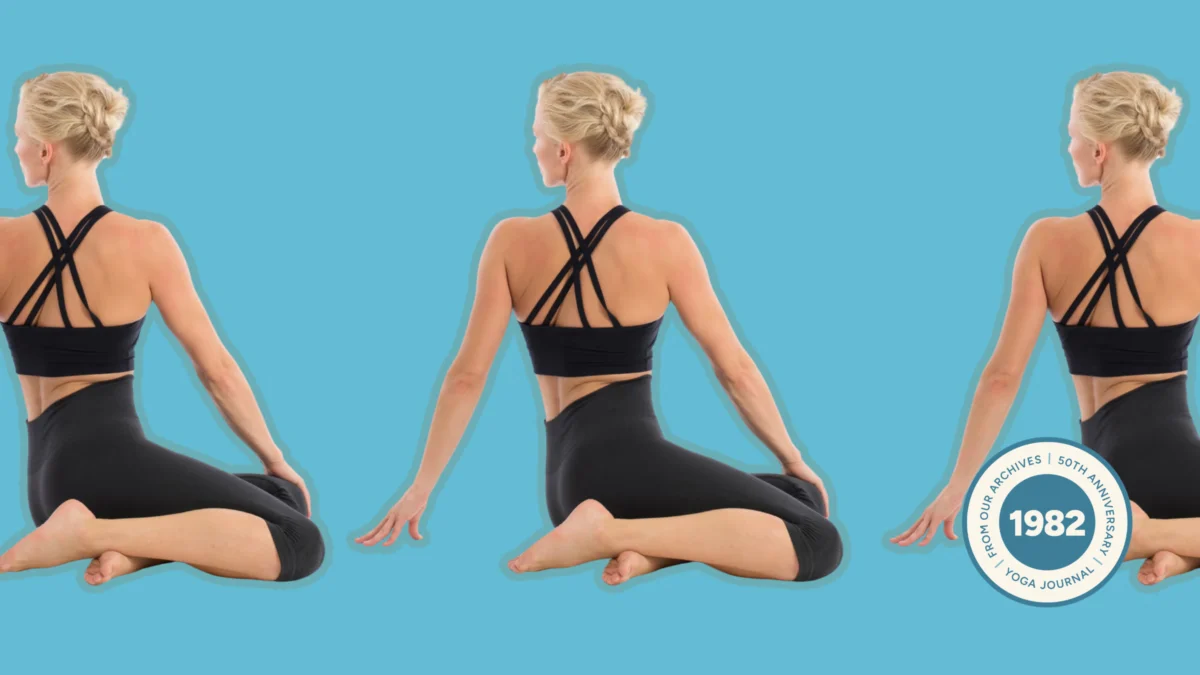
- Preparation: Sit on the floor with both legs extended. Exhale and bend your knees to the left side of your buttocks, tucking the left ankle into the arch of the right foot.
- Stabilization: Ensure both buttocks remain in contact with the floor. If this is challenging, use a folded mat under the right hip to achieve a level base.
- The Engagement: On an exhalation, lift the right arm straight up. Bring it behind the back to catch the left arm just above the elbow. Simultaneously, reach the left arm across to hook under the outside of the right knee.
- The Rotation: Initiate the movement from the base, allowing the pelvis to slide forward slightly as you rotate the torso to the right. Keep the chest open—do not let the shoulder drop toward the floor.
- Completion: Maintain the position for several breaths, focusing on the quality of your exhalation. Repeat on the opposite side.
Supporting Data: Adjustments for Teachers
Teachers play a vital role in ensuring that the Seated Twist remains accessible to students of varying abilities.
- The Wall Modification: Beginners and pregnant women often benefit from using a wall. By sitting with shoulders at right angles to the wall, students can push gently against the surface to create leverage. This is exceptionally effective for targeting the thoracic spine, where tension is most often concentrated.
- Supportive Props: For those struggling with uneven hips, the use of a blanket or a modified sitting position is not a sign of failure, but a sign of intelligent practice. The goal is to facilitate the pose without compromising the integrity of the spinal column.
Conclusion: Embodying the Essence
Ultimately, Bharadvajasana is more than a stretch; it is a meditative movement. When practiced with the intention of revealing the body’s natural beauty rather than forcing it into a predetermined mold, the Seated Twist becomes a vehicle for liberation. By honoring the anatomical limitations of the pelvis and the deep, rhythmic necessity of the breath, the student learns the most important lesson of all: that through persistence, the asana will eventually express itself through a body and mind that are finally, and perfectly, in harmony.