








As the United States approaches a pivotal November election, the national conversation surrounding reproductive rights has reached a fever pitch. While the political spotlight often remains fixed on swing states, a quiet but profound battle is unfolding in one of the nation’s most reliably conservative strongholds: Idaho. This November, Idahoans will head to the polls to decide on a citizen-led initiative that seeks to restore access to abortion care, challenging a restrictive legal framework that has fundamentally altered the state’s medical landscape.
The upcoming vote is more than a policy dispute; it is a profound test of whether the fallout from the overturning of Roe v. Wade and the subsequent medical crises experienced by families can shift the political equilibrium in a deeply red state.
The Human Cost: A Personal Reckoning
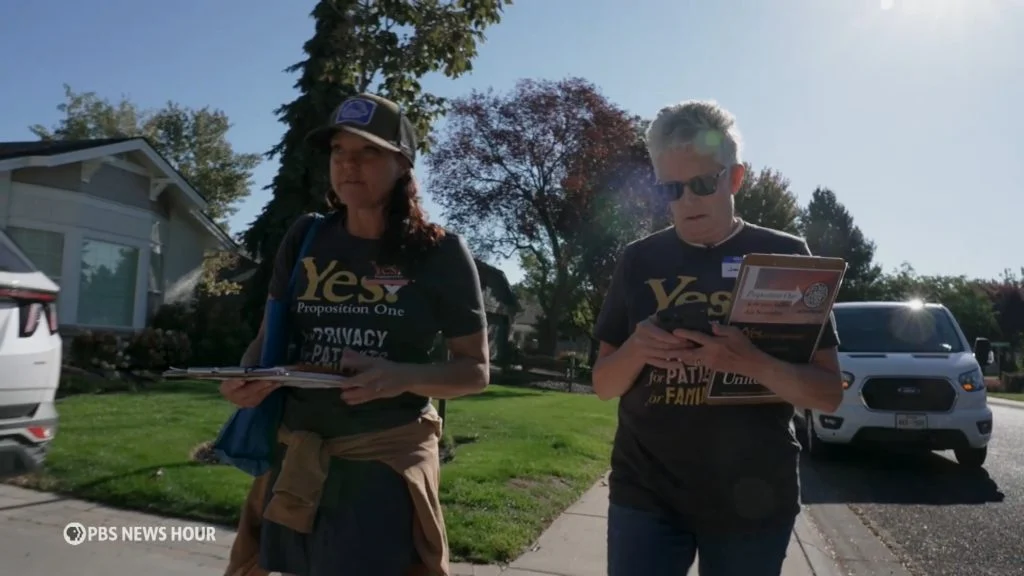
The impetus for this ballot measure—Proposition 1—is rooted in the lived experiences of citizens who have found themselves trapped by the rigid mechanics of Idaho’s current law. Among them is Abby Nichols, whose story has become a rallying cry for proponents of the initiative.
Last year, thirteen weeks into a deeply wanted pregnancy, Nichols received the devastating news that her fetus suffered from a severe, fatal genetic disorder. The pregnancy was, as she described it, "incompatible with life." Despite the medical reality, Nichols’ doctor was unable to intervene due to the state’s near-total abortion ban.
"There’s a piece of you that hopes they can help you," Nichols recounted, reflecting on the helplessness she felt in the exam room. "You’re just thinking, ‘My doctors can help me, because that’s what doctors do.’ But you’ve heard of other women who haven’t received care, and you start to realize that’s you, too."
Forced to travel to Seattle to receive care, Nichols describes the experience as profoundly isolating and traumatic. Her journey, however, did not end with the procedure. It catalyzed a shift in her family’s trajectory, leading them to organize and volunteer for the campaign to pass Proposition 1. Her experience is not an anomaly; it is part of a growing tapestry of stories that supporters hope will humanize the statistics for voters who may have previously identified as anti-abortion.
Chronology of a Crisis: From Roe to Restricted Care
To understand the current volatility in Idaho, one must look at the timeline of the state’s legislative response to the shifting national landscape.
- Pre-2022: For decades, abortion was a legal, albeit debated, medical procedure in Idaho. Public opinion was largely characterized by a conservative, often religious, opposition to the practice.
- Post-Dobbs (2022): Following the Supreme Court’s decision to overturn Roe v. Wade, Idaho’s "trigger law" went into effect, criminalizing nearly all abortions. The law allows for exceptions only to prevent the death of the mother or in cases of rape or incest, provided there is documentation from law enforcement.
- 2023-2024: The enforcement of these laws led to a measurable exodus of medical professionals. Data indicates that Idaho has lost 94 OB-GYNs—nearly one-third of the state’s total—since the ban began. Furthermore, at least three hospitals have shuttered their maternity wards, citing the legal risks and the inability to provide a full spectrum of reproductive care.
- The Present: Citizen-led efforts to place the issue on the ballot gained momentum, culminating in the certification of Proposition 1. The measure proposes allowing abortion up to the point of fetal viability (roughly 24 weeks) and mandates protections for physicians who provide such care.
Supporting Data: The Erosion of Healthcare Infrastructure
The debate over Proposition 1 is frequently framed through the lens of moral philosophy, but the practical implications are grounded in stark economic and public health data. The exodus of 94 OB-GYNs is not merely a staffing issue; it represents a systemic failure of healthcare infrastructure in rural areas.
When maternity wards close, women in remote Idaho communities face longer travel times for prenatal and emergency care. The "chilling effect" on medical practice—where doctors fear prosecution for performing necessary, life-saving procedures—has created a climate of uncertainty that permeates the medical community.
Melanie Folwell, a prominent advocate with Idahoans United for Women and Families, argues that the current legal environment is indifferent to individual values. "The tricky thing about Idaho’s ban is, it doesn’t really care what your personal beliefs are," Folwell notes. "It doesn’t care about your partisanship. It comes for you all the same."
Official Responses and Political Polarization
The political divide over the initiative is sharp, though it does not fall perfectly along partisan lines.
The Opposition
Conservative leaders and many Republican legislators remain steadfast in their opposition. State Senator Camille Blaylock, representing a suburb of Boise, argues that the initiative is built on misinformation. She maintains that the current law is the result of careful, intentional deliberation by the legislature.
"Every word in our current law has been precisely thought about," Blaylock says. She expresses concern that any alteration would open the door to "drastic" changes. For Blaylock, the issue remains a matter of conscience, and she has publicly stated that if the initiative passes, she and other legislators would seek to overturn it. "I answer to my God," she stated, emphasizing her commitment to the existing framework.
The Dissenting Republicans
Conversely, some members of the GOP are signaling a change in tone. State Senator Jim Woodward, who previously voted for the ban, has become a vocal critic of the unintended consequences. "It didn’t take long to understand the problem we had created," Woodward admits. He has advocated for a more nuanced approach, one that accounts for the reality of medical crises and fetal anomalies. Woodward’s shift highlights a growing, if quiet, movement within the conservative base that prioritizes the stability of the healthcare system over the rigidity of the current ban.
Implications: A Bellwether for the Nation
The outcome of Idaho’s vote will serve as a bellwether for the rest of the country. If a state that voted nearly 70 percent for Donald Trump in the last presidential election shows a willingness to soften its stance on reproductive rights, it would signal a profound shift in American politics.
For proponents like Suzanne Gallus, a mother of seven and lifelong Catholic who has become an advocate for the initiative, the argument is simple: the issue is about who holds the power to make medical decisions. "No matter what your personal beliefs are about abortion," Gallus says, "when a personal medical decision comes up, who should be making those hard decisions? Should it be you and your partner and your doctor, or should it be the government?"
The Path Forward
As the election approaches, both sides are digging in. Proponents are banking on the idea that the tangible, negative impact on healthcare—the loss of doctors and the closure of clinics—will outweigh traditional partisan signaling. Opponents are betting that the moral imperative of the "pro-life" cause will remain the primary driver for Idaho’s electorate.
Regardless of the outcome, the Idaho initiative has already succeeded in doing something once thought impossible in such a staunchly conservative state: it has forced a public, uncomfortable, and necessary reckoning with the limits of government intervention in the most intimate aspects of life. Whether that translates into a victory at the ballot box remains the central question of the November cycle.