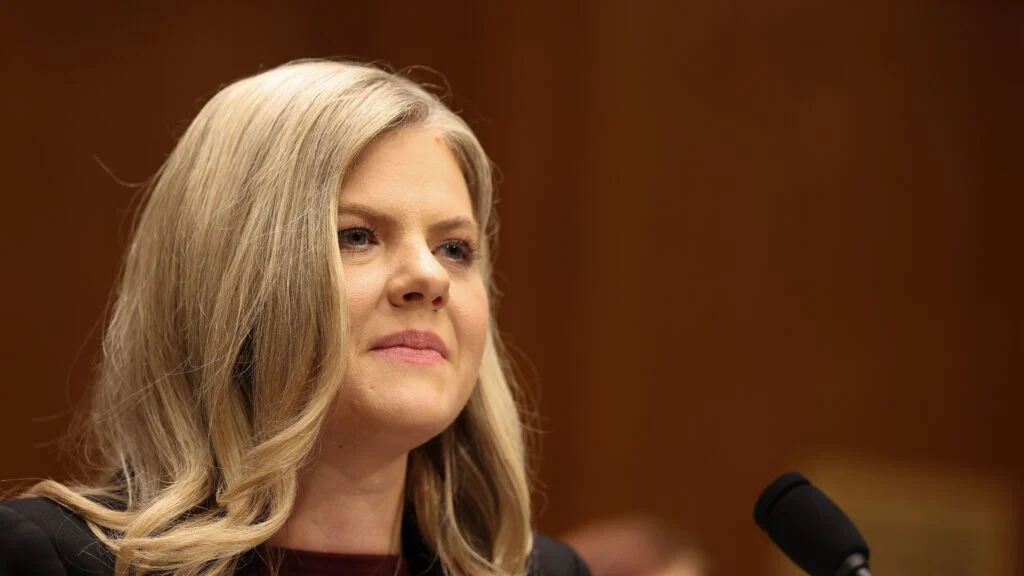
On Thursday, the U.S. Senate Health, Education, Labor, and Pensions Committee convened a high-stakes confirmation hearing for Dr. Heidi Overton, the nominee for commissioner of the Food and Drug Administration (FDA). The session, intended to vet the candidate’s fitness to lead the nation’s premier regulatory agency, quickly transformed into a flashpoint for the ongoing political and legal war over mifepristone—a key medication used for medication abortion and miscarriage management.
As the nominee faced intense questioning regarding her regulatory philosophy, her strategic evasion of direct inquiries into the safety and accessibility of mifepristone left both reproductive rights advocates and independent public health experts deeply alarmed. For critics, the hearing was not merely a procedural step; it was a foreboding sign that the FDA, an agency traditionally insulated from partisan politics, may be poised to align its scientific mandate with the ideological goals of the current administration.
The Chronology of Contention
To understand the gravity of Overton’s nomination, one must look at the decades-long trajectory of mifepristone in the American legal and political system. Approved by the FDA in 2000, the drug has faced an unprecedented level of scrutiny, litigation, and legislative obstruction.
- 2000: The FDA approves mifepristone for the medical termination of pregnancy through seven weeks gestation, marking a turning point in reproductive healthcare.
- 2016/2021: The FDA updates the label, expanding the window of use to 10 weeks and easing some dispensing requirements, reflecting years of robust safety data.
- 2023: The Supreme Court overturns Roe v. Wade, sparking a nationwide surge in state-level restrictions and an increased reliance on medication abortion via telemedicine.
- 2024: In FDA v. Alliance for Hippocratic Medicine, the Supreme Court unanimously rejects a challenge to the FDA’s authority to regulate the drug, citing a lack of standing among the plaintiffs.
- 2026 (May): The Supreme Court issues a stay on a 5th Circuit order that would have reinstated restrictive in-person dispensing requirements, maintaining current access levels while litigation continues.
- September 2026: Dr. Heidi Overton sits before the Senate committee, signaling that the administration intends to re-examine the drug’s regulatory status through the lens of pending litigation.
The narrative of "the American journey"—a term coined by advocates to describe the harrowing logistical and financial burdens faced by patients traveling across state lines—has been a cornerstone of the legal advocacy performed by groups like Reproductive Futures. Yet, as the legal landscape shifts, the battle has moved from the streets and the clinics directly into the administrative offices of the FDA.
Supporting Data: Safety vs. Stigma
Despite the persistent efforts of anti-abortion activists to paint mifepristone as a "dangerous" pharmaceutical, the global and domestic data suggests a vastly different reality. An estimated 7.5 million Americans have safely utilized the drug since its approval. Its safety profile is statistically superior to many common, over-the-counter medications that face no such regulatory hurdles.
For example, acetaminophen—a ubiquitous household staple—is linked to hundreds of deaths annually due to liver toxicity. In stark contrast, serious adverse events associated with mifepristone are exceedingly rare. The FDA itself, even under intense political pressure, has struggled to attribute any deaths directly to the medication with scientific certainty.
Furthermore, the American College of Obstetricians and Gynecologists (ACOG) has long advocated for the use of mifepristone in the management of early pregnancy loss (miscarriage). Despite this, the FDA has declined to officially add miscarriage management to the drug’s label, forcing patients and providers to navigate medically unnecessary red tape during an already vulnerable time.
Official Responses and Political Evasion
The most striking aspect of the recent Senate hearing was Dr. Overton’s calculated ambiguity. When pressed by senators on whether she would uphold the scientific consensus surrounding the safety of mifepristone, Overton chose to "dance around the issue."
This performance did little to quell the concerns of those who see her appointment as an act of administrative capture. The head of Americans United for Life, having previously held multiple consultations with the nominee, has publicly predicted that she will "expose this drug" to renewed scrutiny. During the hearing, when asked about her intentions regarding the FDA’s ongoing safety research study on the drug, Overton confirmed that the matter would be "immediately on [her] desk," suggesting an eagerness to align agency policy with the goals of the current administration—a stance that directly contradicts the historical role of the FDA as a neutral, evidence-based arbiter.
The frustration in the committee room was palpable. Sen. Maggie Hassan (D-N.H.) attempted to gauge the nominee’s independence by asking her to identify a single instance where she disagreed with the White House on matters of public health, including vaccine schedules and food safety. Overton’s failure to answer—or even acknowledge the possibility of such a disagreement—drew sharp criticism from both sides of the aisle. The implication was clear: the nominee views scientific rigor as secondary to the political agenda of the executive branch.
Implications for Public Health and the Biotech Pipeline
The potential implications of a politically compromised FDA are profound. Beyond the issue of reproductive rights, the agency’s credibility is the bedrock of the entire American pharmaceutical industry. A biotech CEO, writing recently in STAT, warned that permitting political or judicial intervention in the FDA’s scientific judgment threatens to destabilize the entire drug approval pipeline. If the approval of a medication can be reversed or restricted based on the political winds rather than clinical data, the confidence that sustains innovation will evaporate.
Moreover, the agency is currently in a state of institutional fragility. Having reportedly shed more than 3,000 staff members over the past year, the FDA is arguably at its most vulnerable point in decades. Replacing an evidence-based leadership culture with one defined by political loyalty risks creating a "fox guarding the hen house" scenario, where public trust in vaccines, food safety protocols, and drug efficacy is sacrificed for short-term political gain.
The Future of Reproductive Access
Despite the administrative maneuvering, the practical reality of abortion access has fundamentally changed. The rise of telemedicine and the utilization of shield laws in pro-choice states have effectively bypassed many of the physical barriers that anti-abortion activists spent decades constructing. Approximately 30% of U.S. abortion patients now utilize telehealth services.
As Sen. Josh Hawley (R-Mo.) noted with visible distress during the hearing, the "genie is out of the bottle." Telemedicine has decoupled the abortion process from the physical clinic, making it significantly harder for state-level bans to reach patients who can access care through encrypted consultations and mail-order pharmacies.
However, the risk remains that the FDA, under new leadership, could attempt to create a federal "chilling effect" by imposing even more draconian registration requirements on pharmacies or clinicians. If the agency succeeds in further restricting mifepristone, it will not stop abortion—it will merely force the medical community to shift toward less ideal, though still effective, regimens like misoprostol-only protocols, or worse, drive patients toward unregulated, black-market alternatives.
Conclusion: A Call for Scientific Integrity
The confirmation of a new FDA commissioner should be a matter of professional qualification and commitment to public health. Instead, the Overton nomination has become a litmus test for the future of science in the United States. If the FDA allows its regulatory decisions to be dictated by those who seek to "expose" medications for political purposes, it will lose the public trust it has spent over a century building.
As we look toward the future, the defense of mifepristone is not merely a defense of a specific drug; it is a defense of the scientific method itself. The protection of reproductive rights as human rights requires a government that respects data over dogma. For now, the medical community, legal advocates, and the public must remain vigilant, as the battle for the integrity of our health institutions has only just begun. The goal remains clear: to protect the medicine, to protect the science, and to ensure that patients have access to the care they deserve, free from the interference of those who would see evidence ignored for the sake of an agenda.